Receiving the 2941 short code text message out of the blue can be a startling experience, especially if it mentions changes to your cellular service that you never requested. In the vast and often confusing ecosystem of automated carrier communications, a 2941 text message is primarily recognized as a legitimate, verified SMS channel used by T-Mobile (and historically Sprint, due to their corporate merger). Its main purpose is to send critical, non-promotional security alerts and system updates to customers. Most notably, this specific four-digit number is triggered to confirm technical actions taken on your cellular account, such as the completion of a SIM card swap, a physical device upgrade, or network activation.
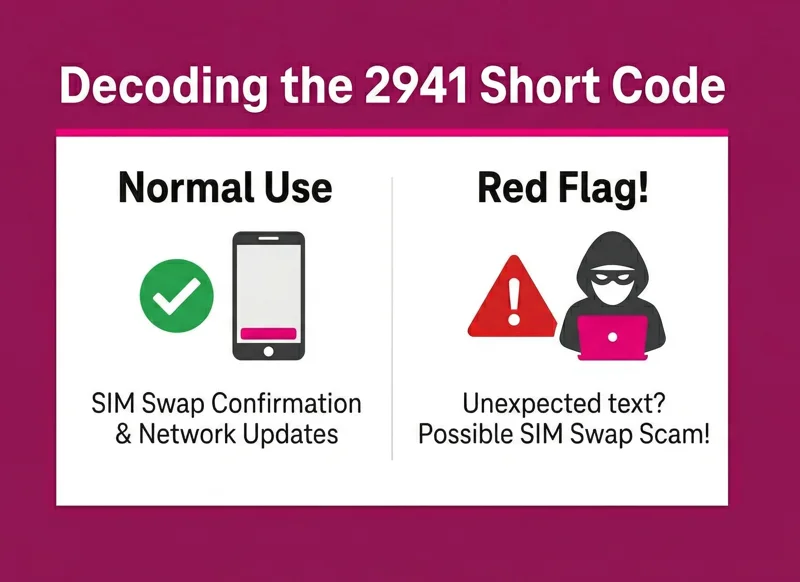
However, understanding the context of this message is vital for your digital security. While the sender is technically legitimate, the trigger for the message might not be. If you receive a 2941 text message t-mobile alert confirming a SIM card change that you did not authorize, you must treat it as an immediate security emergency. This article provides a comprehensive E-E-A-T (Experience, Expertise, Authoritativeness, and Trustworthiness) guide to decoding carrier alerts, preventing fraud, and understanding the broader landscape of mobile short codes.
What Exactly is the 2941 Short Code?
In the telecommunications industry, short codes are specialized 4, 5, or 6-digit numbers utilized by large corporations, banks, and mobile carriers to dispatch high-volume, automated text messages. Unlike standard 10-digit phone numbers, short codes are pre-approved by carriers for Application-to-Person (A2P) messaging, ensuring faster delivery and immunity from standard spam filters.
When it comes to the 2941 short code, T-Mobile utilizes this channel strictly for account and network infrastructure notifications. The most heavily documented use case is the automatic confirmation notice dispatched during a SIM card change or a network migration process. For example, during the “TNX” (T-Mobile Network Experience) migration, where legacy Sprint customers were transitioned to the T-Mobile network, millions of users received notifications from this exact number.
“A typical legitimate alert from 2941 reads: ‘Success\! Your SIM swap is complete. Restart your phone to see our new network in action.’ If you just bought a new phone, this is perfectly normal.”
If you recently visited a T-Mobile store, called customer service to activate a new device, or requested an eSIM transfer, receiving this text is simply the final step of your transaction. It is the carrier’s way of saying the backend technical work is complete.
The Threat Landscape: Is It a SIM Swap Scam?
While the number itself is not inherently a scam, the action it describes could be the result of a malicious attack. A SIM swap scam (or SIM hijacking) is a sophisticated form of fraud where a cybercriminal uses social engineering, phishing, or insider threats to trick a mobile carrier’s customer service representative into porting your phone number to a SIM card controlled by the attacker.
If the hacker is successful, your phone will instantly lose its cellular connection, displaying a “No Service” or “Emergency Calls Only” status. Simultaneously, you may receive a final text from a tmobile short code like 2941 stating that your SIM has been updated. Once the attacker controls your phone number, they can intercept all of your incoming calls and texts, including the crucial Two-Factor Authentication (2FA) codes sent by your bank, email provider, and cryptocurrency wallets.
Immediate Action Plan for Unexpected Alerts
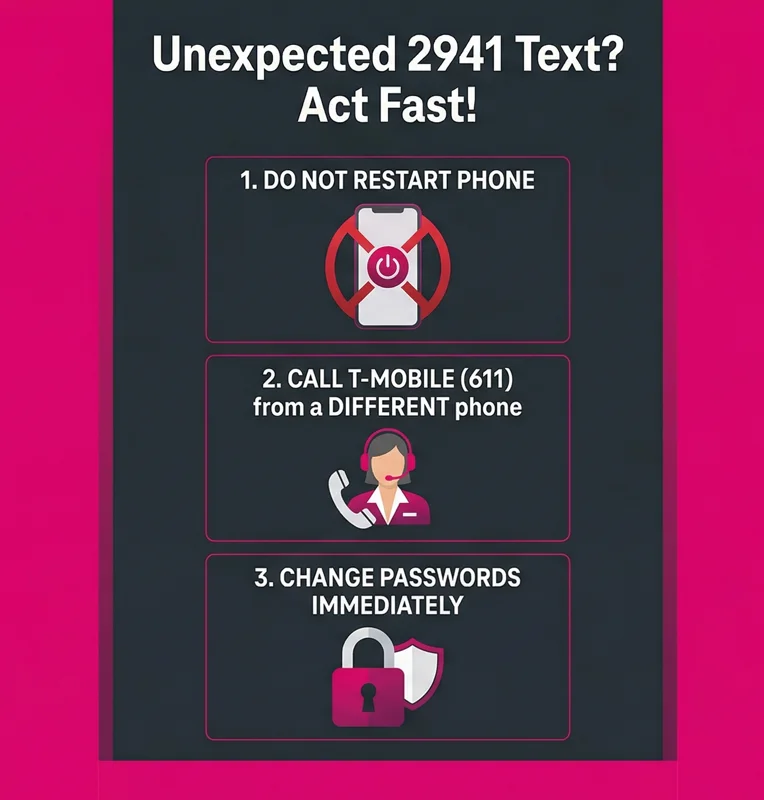
If you receive a text confirming a SIM change that you did not initiate, time is of the essence. Do not ignore the message, and do not assume it is a simple glitch.
| Step | Action to Take | Why It Matters |
|---|---|---|
| 1. Do NOT Restart | Do not reboot your mobile device if you have an active signal. | Rebooting often forces the network to refresh, finalizing the fraudulent SIM transfer. |
| 2. Call T-Mobile | Dial 611 or 1-800-937-8997 from a different phone immediately. | You must bypass the compromised device to speak with the fraud department directly and halt the port out. |
| 3. Secure Accounts | Change passwords for your bank, email, and T-Mobile ID. | Hackers will immediately begin triggering password resets using your compromised phone number. |
For more authoritative guidance on protecting yourself from mobile device fraud, we highly recommend reviewing the official guidelines provided by the Federal Communications Commission. You can read their consumer advice here: FCC Guide on Cell Phone Fraud and SIM Swapping.
T-Mobile and other major carriers use a vast portfolio of short codes to segment their communications. Understanding these variations can help you quickly identify the nature of the text you just received. Carrier infrastructure relies on sequential and categorical numbering blocks to manage different types of automated alerts.
For instance, alongside 2941, you might occasionally encounter the 2938 short code or the 2939 short code. These numbers generally operate within the same internal routing block for T-Mobile and legacy Sprint systems. If you receive a 2939 short code text message, it is typically related to network diagnostic alerts or secondary account verifications. Similarly, the 2942 short code acts as an overflow or companion routing number for device activation sequences. A 2942 short code text message serves almost the exact same administrative purpose as the 2941 alerts, confirming technical provisioning on the network side.
| Short Code | Carrier Association | Primary Function / Alert Type |
|---|---|---|
| 2941 | T-Mobile / Sprint | SIM swap confirmation, physical device activation, network migration. |
| 2938 / 2939 | T-Mobile Infrastructure | Network diagnostic alerts, backend provisioning, secondary verification. |
| 2942 | T-Mobile / Sprint | Companion code for device activation sequences and technical confirmations. |
Unpacking Other Cellular and Verification Alerts
Beyond the internal T-Mobile routing numbers, your phone frequently receives messages from seemingly random strings of numbers. These are usually dedicated A2P gateways used by third-party services, banking institutions, and marketing platforms. Knowing how to categorize them reduces anxiety when unexpected texts arrive.
For example, a 28941 text message or a 20763 short code text message typically belongs to third-party marketing campaigns or retail loyalty programs. These are non-carrier codes leased by businesses to send promotional discounts or shipping updates. Unlike carrier security alerts, these promotional messages are legally required to honor opt-out requests. You can simply reply “STOP” to unsubscribe from their databases.
On the other hand, encountering a 2287 text message usually points to a verification service or a specific app’s two-factor authentication gateway. Similarly, the 71027 short code and the 86041 text message are heavily utilized by enterprise software platforms, cloud services, and financial institutions to deliver one-time passcodes (OTPs) when you attempt to log into your accounts from a new device or browser.
“Never share a verification code sent from any short code with anyone, even if they claim to be calling from T-Mobile or your bank. Customer support will never ask for your texted security PIN.”
How to Manage and Report Carrier Communications
If you find yourself overwhelmed by automated texts, you have tools at your disposal to manage them. However, caution is advised. While you can use your smartphone’s native operating system to block specific numbers, blocking a critical tmobile short code like 2941 is generally a bad idea. If you block this number, you will fail to receive critical alerts in the future if your account is actually under attack.
If you suspect a message from any short code is a phishing attempt—for instance, if it contains a suspicious, scrambled link—do not click it. Legitimate T-Mobile alerts will rarely ask you to click a third-party link to verify a SIM change; they will simply notify you that the change has occurred. If you need to report abusive or spoofed text messages, forward the entire message to the universal carrier spam reporting number.
| Management Strategy | How to Execute | Expected Result |
|---|---|---|
| Standard Opt-Out | Reply “STOP” to the short code. | The sender is legally obligated to remove you from promotional lists. (Note: May not work for mandatory security alerts). |
| Carrier Spam Reporting | Forward the message to 7726 (SPAM). | Your carrier will investigate the sender and potentially block the gateway across the network. |
| Account Lockdown | Call customer service and request a “Port Freeze” or “SIM Protection”. | Prevents any SIM swaps or number porting without an in-person ID verification at a retail store. |
Protecting Your Digital Identity Beyond the Phone
The anxiety surrounding the 2941 short code text message stems from a very real place: our phone numbers have become the master keys to our digital lives. To truly protect yourself, you must minimize your reliance on SMS-based two-factor authentication.
Whenever possible, transition your email, banking, and social media accounts to use authenticator apps (like Google Authenticator or Authy) or physical hardware security keys (like a YubiKey). Because these methods generate codes locally on your device or require physical presence, they are completely immune to SIM swap attacks. Even if a hacker successfully steals your phone number and triggers a 2941 alert, they will not be able to bypass app-based or hardware-based 2FA.
Frequently Asked Questions
What does the 2941 short code text message mean?
It is an automated, legitimate alert sent by T-Mobile to confirm that a technical action, such as a SIM card swap, device activation, or network update, has been completed on your account.
Is the 2941 text message a scam?
The number itself is not a scam; it is an official T-Mobile channel. However, if you receive a message confirming a SIM swap that you did not authorize, it means a hacker is attempting to steal your phone number.
What should I do if I get a 2941 text message t-mobile alert unexpectedly?
Do not restart your phone. Immediately call T-Mobile customer service from a different phone to report an unauthorized SIM swap attempt, and ask them to freeze your account.
Can I block a tmobile short code like 2941?
While your phone allows you to block any number, it is highly discouraged to block official carrier security codes. Doing so means you will miss critical alerts if your account is genuinely compromised in the future.
What is the 2939 short code text message used for?
Similar to 2941, the 2938 and 2939 short codes are used within T-Mobile’s infrastructure for backend provisioning, network diagnostic alerts, and secondary account verifications.
Who sends the 28941 text message or 20763 short code text message?
These are typically third-party, non-carrier short codes used by retail brands, marketing agencies, or loyalty programs for promotional messages. You can usually reply “STOP” to unsubscribe from them.
Should I click links sent in a 2942 short code text message?
You should exercise extreme caution. Only click links if you recently requested an account change and the domain clearly belongs to T-Mobile. If you are unsure, log into your account directly through a web browser rather than clicking the link.
\
Disclaimer: The information provided in this article is for educational and informational purposes only and does not constitute professional technical or legal advice. Carrier short codes and security protocols are subject to change. Always contact your mobile carrier directly for the most accurate and up-to-date information regarding your specific account security.