The tech industry is currently being disrupted by news of openai building a custom smartphone processor with qualcomm and mediatek targeting 300-400 million annual smartphone shipments to dethrone apples iphone. As we navigate through 2026, the traditional smartphone paradigm is facing its most significant existential threat since the launch of the original iPhone. OpenAI has reportedly pivoted from developing niche consumer AI wearables to launching a full-scale assault on the global smartphone market.
The App-Free Revolution: A Paradigm Shift in Mobile Tech
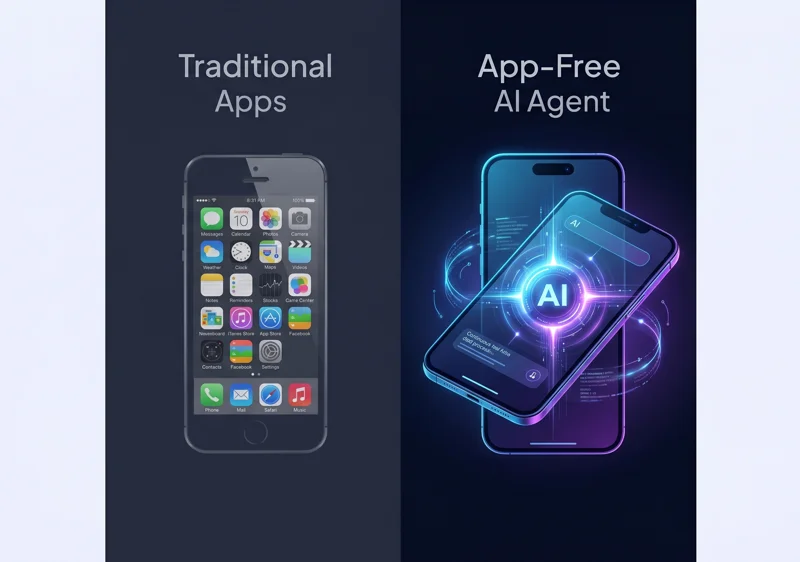
For years, the smartphone experience has been dictated by the app ecosystem. Users download individual applications to perform specific tasks. However, OpenAI envisions a radically different future. By controlling the entire hardware and software stack, the company aims to eliminate the need for traditional apps altogether. Instead of opening a browser, a weather app, or a notes app, users will rely entirely on continuous, real-time AI agent inference.
“The future of the smartphone is not constrained by static applications, but liberated by continuous, real-time AI agent inference.”
This vision requires immense computational power and deeply integrated hardware. Early reports suggested OpenAI was focusing on smaller devices like the screenless “Gumdrop” or AI-powered earbuds codenamed “Sweetpea”. However, renowned analyst Ming-Chi Kuo recently revealed a massive strategic shift. OpenAI realizes that to truly conquer the consumer market, they must dominate the form factor people already use daily. To achieve this, they are collaborating heavily with industry giants to build a custom AI smartphone processor.
| Device Concept | Previous OpenAI Focus (Pre-2026) | New Strategic Focus (2026-2027) |
|---|---|---|
| Form Factor | Wearables, screenless pendants | Full-scale flagship smartphone |
| Primary Interface | Voice only | Voice, visual, contextual multi-modal |
| Processing Base | Primarily cloud-dependent | Heavy on-device + cloud integration |
Hardware Synergies: Qualcomm and MediaTek Collaboration
Developing a custom AI processor is a monumental task. By partnering with Qualcomm and MediaTek, OpenAI is leveraging decades of mobile silicon expertise. The hardware must be specifically designed for complex memory hierarchy management and real-time state collection. The goal is seamless hybrid computing, where the on-device AI handles immediate, context-aware tasks, while heavier computational loads are instantly offloaded to OpenAI’s massive cloud infrastructure. You can read more about Qualcomm’s official advancements in AI to understand the silicon backing this venture.
The End of Apple’s Reign? A Threat to the Ecosystem
Apple’s dominance has historically been secured by its “walled garden”—a tightly integrated ecosystem of hardware, software, and the highly lucrative App Store. OpenAI’s strategy fundamentally attacks this business model. If users interact solely with an AI agent that executes tasks directly, the App Store becomes obsolete. Apple’s services revenue, which forms a massive pillar of their financial success, would face devastating contractions.
“To truly disrupt the dominant player, you must not simply build a better device, but entirely obsolete their core revenue model.”
Furthermore, Apple has struggled to maintain an absolute lead in generative AI, forcing them to rely on third-party models like Google’s Gemini for certain backend processes of their revamped Siri assistant. OpenAI, on the other hand, is building the phone around the AI natively, emulating Apple’s own strategy of vertical integration but with artificial intelligence at the absolute core.
| Business Model Pillar | Apple (Current Strategy) | OpenAI (Projected Strategy) |
|---|---|---|
| Software Delivery | App Store (Fragmented tasks) | Unified AI Agent Inference |
| Revenue Generation | App commissions, hardware sales | Hardware sales, premium AI subscriptions |
| Core Technology Base | iOS and traditional APIs | Custom Silicon + Large Language Models |
Ambitious Targets: 400 Million Shipments
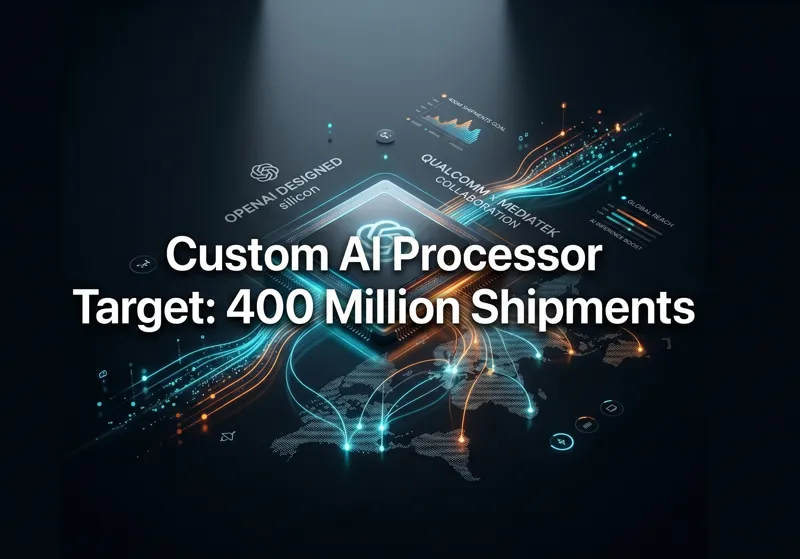
The sheer scale of this ambition is staggering. Targeting 300 to 400 million annual shipments is not merely an attempt to enter the market; it is a declaration of intent to dominate it. Such volume requires a massive supply chain infrastructure. Reports indicate that Luxshare will likely serve as the primary assembler, ensuring that the manufacturing capabilities can meet this unprecedented demand by the projected late 2026 or early 2027 launch windows.
“With shipments targeting the hundreds of millions, this is a volume play designed to aggressively capture and reshape global market share.”
This volume expectation signifies that OpenAI is not building a niche luxury product, but a mainstream consumer device designed to replace the iPhone for the average user globally. The custom smartphone processor will be the beating heart of this operation, defining the limits of what on-device AI can achieve without killing battery life.
| Metric | Projected Details |
|---|---|
| Target Annual Shipments | 300 – 400 Million Units |
| Estimated Launch Window | Late 2026 to Q1 2027 |
| Key Hardware Partners | Qualcomm, MediaTek, Luxshare |
As the smartphone market matures, iteration has slowed down. Consumers are holding onto their devices longer. It takes a monumental shift in utility to trigger a global hardware upgrade cycle. OpenAI’s approach—trading a grid of apps for a deeply integrated, highly intelligent digital agent—might just be the catalyst the industry has been waiting for.
Frequently Asked Questions
Why is OpenAI building its own smartphone processor?
To achieve deep vertical integration, allowing them to optimize the hardware specifically for real-time AI agent inference without relying on traditional app-based operating systems.
Who are OpenAI’s hardware partners for this project?
OpenAI is reportedly collaborating with chip giants Qualcomm and MediaTek for the custom processor, and Luxshare for device assembly.
How many units does OpenAI plan to ship?
Industry analysts project an ambitious target of 300 to 400 million annual smartphone shipments.
What does an “app-free” smartphone mean?
Instead of downloading specific applications, users will interact with a centralized AI agent that executes tasks dynamically across the device and the cloud.
Why is this a threat to Apple?
It threatens Apple’s core revenue model, which heavily relies on the App Store ecosystem. If apps become obsolete, Apple loses a massive financial pillar.
When is the OpenAI smartphone expected to launch?
Current projections suggest the specifications will be finalized by late 2026, with a potential launch in early 2027.
Will the phone rely entirely on the cloud?
No, the custom processor is designed for heavy on-device processing for immediate context, while offloading only the most complex tasks to the cloud.
Disclaimer: This article is for informational purposes only. The details regarding unreleased hardware, corporate strategies, and shipment projections are based on industry analysis, leaks, and reports available as of 2026, and may be subject to change prior to official product launches.