Why Apples HomeView relies so heavily on your iPhone is one of the biggest questions surrounding this year’s most anticipated smart home device release. If you recently purchased the new Apple HomeView, you might be surprised to learn that it does not function entirely independently.
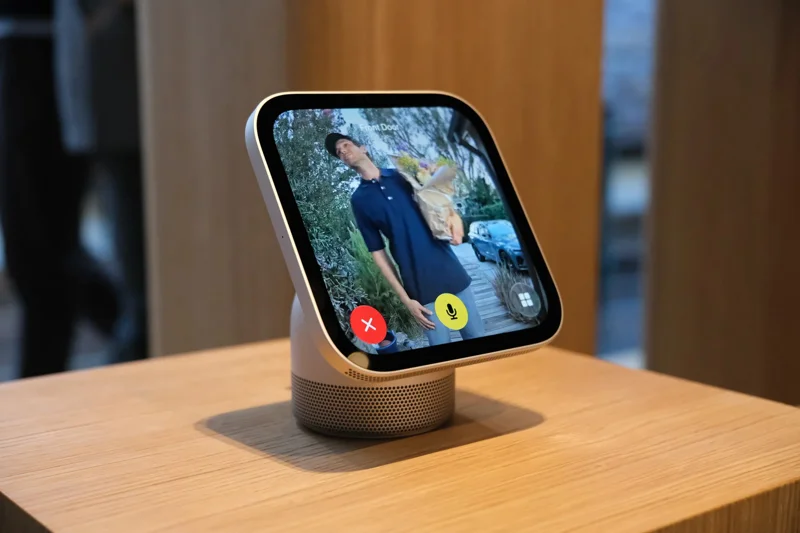
This week marks the official arrival of the long-rumored smart display. It acts as a visual interface, a smart speaker, a FaceTime station, and a digital photo frame. However, without your smartphone nearby, its functionality is severely limited.
Apple has intentionally designed this device to be an extension of your mobile experience. Instead of running native apps, the HomeView system works similarly to CarPlay, projecting your personal ecosystem onto a communal screen.
Understanding Why Apples HomeView relies so heavily on your iPhone
The core reason Why Apples HomeView relies so heavily on your iPhone comes down to a delicate balance between maximum convenience and strict user privacy. Apple CEO John Ternus recently highlighted that your phone is the ultimate intelligent personal hub.
Because your smartphone already holds your most sensitive data, from calendar invites to private messages, transferring all that data to a shared household device poses a massive security risk. Apple wanted to avoid this completely.
To solve this, the smart display mirrors compatible apps you have already installed on your tablet or smartphone. It simply acts as a temporary window into your digital life, ensuring that your data stays exactly where it belongs.
“There’s no product in the world better designed to be your intelligent personal hub than iPhone.”
Smart Home Privacy: Why Apples HomeView relies so heavily on your iPhone
When discussing Why Apples HomeView relies so heavily on your iPhone, we must look at how Apple handles household dynamics. A communal hub must allow anyone to turn off the lights or check the front door camera.
However, that same communal hub should never accidentally reveal your private text messages or ruin a surprise party by displaying a hidden calendar invite to your family members. Privacy is built into the core foundation of this hardware.
For more details on how Apple secures your personal ecosystem across all devices, you can review Apple’s Official Privacy Architecture.
| Device Type | Data Storage Location | Privacy Level |
|---|---|---|
| Apple iPhone | Local Secure Enclave | Maximum Security |
| Apple HomeView | No Local App Storage | Tethered to User Presence |
| Traditional Smart Hubs | Cloud Servers | Vulnerable to Shared Access |
Siri AI Integration and Why Apples HomeView relies so heavily on your iPhone
Another major factor explaining Why Apples HomeView relies so heavily on your iPhone is the advanced Siri AI integration. For Siri to provide highly contextual and conversational answers, it needs access to your apps and routines.
By using your phone as the primary brain, the HomeView can instantly recognize your face and voice. Once verified, it pulls contextual data from your recently unlocked mobile device to give you personalized responses.
When you walk away from the display, your personal information vanishes with you. The data is never posted or permanently housed on the smart display in any way.
“Personal information only surfaces once you’ve been recognized by your face, and your paired iPhone is present and recently unlocked.”
Ecosystem Connectivity and Why Apples HomeView relies so heavily on your iPhone
Beyond security, the reason Why Apples HomeView relies so heavily on your iPhone is to create a seamless Apple ecosystem connectivity experience. Features like Apple’s hand-off action allow you to push music or FaceTime calls instantly to the screen.
Interestingly, this device lacks physical buttons. Apple designed it to be a voice-first device, relying heavily on Siri commands and secondary touch inputs to interact with the mirrored applications.
This design choice forces users to rely on familiar interaction methods. It guarantees a simple, powerful experience without cluttering the device with unnecessary onboard software.
| HomeView Feature | Requires Paired iPhone? | Functionality Details |
|---|---|---|
| Basic Smart Home Controls | No | Anyone can turn on lights or view cameras. |
| Personal Calendar & Messages | Yes | Requires unlocked device and facial recognition. |
| Advanced Siri AI Context | Yes | Pulls data directly from your personal mobile apps. |
Final Thoughts on Why Apples HomeView relies so heavily on your iPhone
Ultimately, understanding Why Apples HomeView relies so heavily on your iPhone helps you appreciate the brilliant engineering behind it. It is not a flaw; it is a meticulously crafted feature designed for the modern smart home.
By avoiding a dedicated App Store for the display, Apple ensures that your shared living spaces remain safe, clean, and entirely tailored to whoever is standing in front of the screen at any given moment.
Frequently Asked Questions
What is the main reason Why Apples HomeView relies so heavily on your iPhone?
The primary reason is to protect user privacy. By mirroring data from your phone instead of storing it on the shared display, your sensitive information remains secure and hidden from other household members.
Can the Apple HomeView function at all without a paired mobile device?
Yes, it can perform basic communal tasks like turning off lights, showing the front door camera, or acting as a standard smart speaker without an unlocked phone nearby.
Does the new HomeView have its own App Store?
No. It operates similarly to CarPlay, utilizing the compatible applications already installed on your paired iOS device rather than downloading standalone software.
How does Siri AI work on this new smart display?
Siri uses built-in facial and voice recognition to identify you, then securely pulls contextual data from your nearby unlocked phone to deliver highly personalized answers.
Will my private text messages show up when my family is in the room?
No. Your personal information only appears when the device recognizes your face and confirms that your securely unlocked smartphone is physically nearby.
The engineering team designed it to be a voice-first interface, relying on Siri commands and secondary touch inputs to keep the design clean and intuitive.
Does this setup improve the overall Apple ecosystem connectivity?
Absolutely. It enables seamless hand-offs for music, Safari recipes, and FaceTime calls, linking your mobile life directly to your kitchen or living room effortlessly.
Disclaimer: This article is for informational purposes only. Device specifications and software features are based on current tech industry announcements and may be subject to future updates.