
The remarkable development of brain implants als voice technology is transforming lives in 2026, offering unprecedented hope to those silenced by severe neurological conditions. For years, patients suffering from amyotrophic lateral sclerosis (A.L.S.) faced a terrifying reality as they gradually lost control of the muscles required for speech. Today, groundbreaking scientific progress is changing that narrative forever.
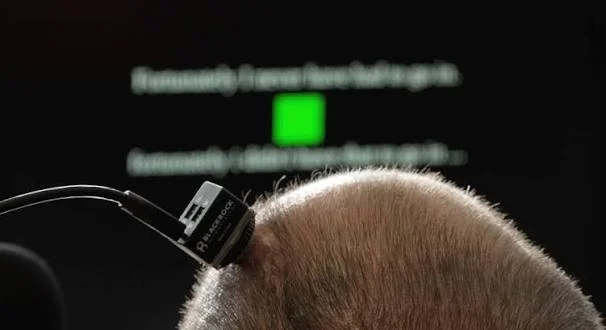
Recent studies in UC Davis neuroscience research have demonstrated that experimental neural interfaces are no longer just science fiction. By successfully decoding brain signals, these advanced devices can now translate thoughts directly into intelligible speech. This incredible breakthrough allows patients to regain their voices, interact naturally, and even sing musical scales.
The Impact of the New brain implants als voice Technology
The latest brain implants als voice trials are crossing the boundary from mere proof-of-concept demonstrations into practical, everyday usefulness. Previously, Brain-computer interface technology required users to spell out words letter by letter or wait for agonizing delays as software translated signals into text and then into robotic speech. This made natural conversation nearly impossible.
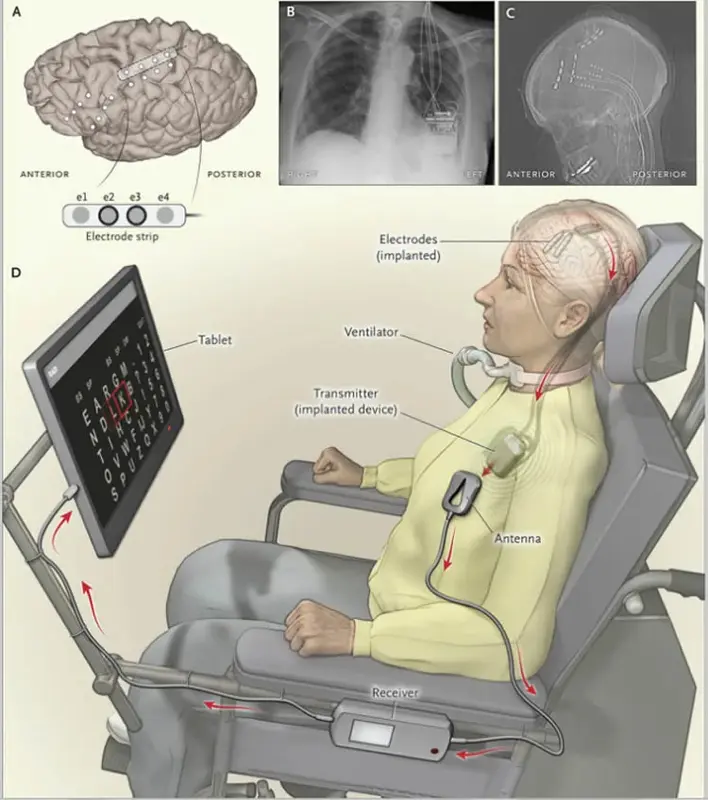
However, the new approach utilizes Real-time AI speech generation to bypass these delays. Electrodes surgically implanted into the brain detect electrical impulses when a person attempts to speak. Powerful artificial intelligence algorithms then decode these signals into phonemes—the fundamental sonic building blocks of words—allowing a computer-generated voice to speak almost instantly.
| Technology Evolution | Previous Limitations | 2026 Advancements |
|---|---|---|
| Speech Delay | Significant lag hindering real conversation | Reduced to a virtually seamless 10-millisecond delay |
| Expression | Monotone, robotic text-to-speech output | Capable of modulating pitch, tone, and even singing |
| Accuracy | Roughly 50% word intelligibility | Up to 94% word intelligibility using refined algorithms |
“This system, for the first time, is good enough for real communication. It’s good enough to sing.”
Singing Again with the brain implants als voice System
One of the most emotional moments in the recent ALS speech recovery advancements involved a 58-year-old former singer, known as patient T21. Her voice had been entirely silenced by the disease. After receiving 384 carefully placed electrodes in her brain, she attempted to modulate the tone of her voice and sing a musical scale. The brain implants als voice system successfully captured the nuances in pitch, allowing her to express joyful and questioning tones.
The experience was incredibly profound. Upon hearing her own generated voice hitting the musical notes, the patient cried tears of joy. These neural implants for paralyzed patients are proving that communication is not just about exchanging basic information; it is about expressing human personality and emotion.
Improving the brain implants als voice Algorithms
A crucial part of this success lies in the software. In recent updates, researchers reanalyzed existing datasets and fine-tuned their decoding algorithms. As a result, the new brain implants als voice technology increased the intelligibility of spoken words to an astonishing 94 percent. This represents a clinically meaningful improvement that drastically enhances the patient’s quality of life.
For someone relying solely on texting through eye-tracking or slow brain-cursors, the mental load is exhausting. A 46-year-old climate activist named Casey Harrell used this brain implants als voice system to generate nearly 2 million words over two years, allowing him to seamlessly converse with family and colleagues.
| Key Milestone | Clinical Impact on Patients |
|---|---|
| 94% Decoding Accuracy | Allows listeners to understand the patient without transcription errors. |
| Pitch Modulation | Enables patients to ask questions, show anger, or express happiness naturally. |
| High Vocabulary Output | Patients can generate millions of words for continuous, daily conversations. |
“Imagine you can only speak just by texting for the rest of your life — that’s not sufficient. You lose the rhythm and timing of human connection.”
The Future of Wireless brain implants als voice Systems
Despite these massive leaps, the current brain implants als voice systems require users to be tethered to external computers through ports in their skulls. The next major frontier in this medical revolution is creating fully implantable, wireless interfaces. Companies in the neuro-tech space are racing to perfect these wireless models, which will allow patients to use the technology anywhere, at any time, without cumbersome cables.
To learn more about the ongoing developments in neuroprosthetics and brain-computer interfaces, you can review the latest conference findings published by the Society for Neuroscience, which highlights cutting-edge research shaping the future of medicine.
In conclusion, the evolution of the brain implants als voice technology is a monumental triumph for science and humanity. By combining intricate surgical techniques with powerful Real-time AI speech generation, we are finally giving a voice back to those who have been trapped in silence for far too long.
Frequently Asked Questions
What exactly is the new brain implants als voice technology?
It is an experimental brain-computer interface that uses surgically implanted electrodes to detect electrical signals in the brain, translating the user’s intent to speak directly into real-time, computer-generated audio.
How does this differ from older communication devices for ALS patients?
Older devices relied on eye-tracking to spell words letter by letter, causing massive delays. The new Brain-computer interface technology decodes phonemes instantly, allowing for natural conversation flow.
Was an ALS patient actually able to sing using this device?
Yes. A 58-year-old former singer successfully utilized the implant to modulate pitch and sing a musical scale, bringing her to tears of joy.
How accurate is the speech generated by these neural implants?
Thanks to advanced AI algorithms developed in recent UC Davis neuroscience research, word intelligibility has reached up to 94 percent.
Are these neural implants for paralyzed patients wireless?
Currently, most highly successful trials involve patients being tethered to a computer via a port in their skull. However, fully wireless versions are actively being developed for future everyday use.
Can the system detect emotion and tone?
Yes, researchers are now focusing on expressive communication. The system can capture nuances in pitch, differentiating between a question, a joyful statement, or an angry tone.
How fast does the brain implants als voice system generate speech?
The latest iterations of this Real-time AI speech generation technology operate with a barely noticeable delay of just 10 milliseconds, making conversations feel highly natural.
Disclaimer: This article is for informational purposes only. We are not affiliated with any medical, financial, or government institution mentioned. Please consult healthcare professionals for medical advice regarding ALS treatments.