This US carrier doesnt want to let you use one phone number on two iPhones, creating unexpected friction for tech enthusiasts eager to streamline their daily mobile workflow.
With the recent release of iOS 27, Apple introduced iPhone Handoff. This feature enables users to seamlessly link a single cellular line to two separate handsets without swapping physical SIM cards.
While major competitors immediately stepped up to adopt the utility, one prominent telecom giant decided to deliberately opt out.
The Stance: This US Carrier Doesnt Want to Let You Use One Phone Number on Two iPhones
Industry observers were astonished to learn that this US carrier doesnt want to let you use one phone number on two iPhones despite surging consumer interest across the country.
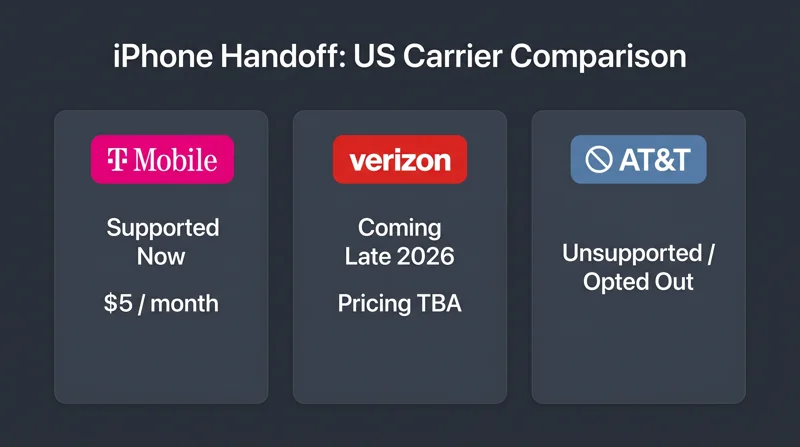
That carrier is AT&T. While T-Mobile and Verizon are pushing forward, AT&T stands as the sole American holdout intentionally declining to integrate the protocol.
Instead of embracing the built-in system, the carrier argues that its current digital profile setups are sufficient for modern mobile subscribers.
“While we see that there could be potential in capabilities like iPhone Handoff, our focus remains on delivering innovations that make life simpler and keep customers connected with confidence.”
This official statement highlights AT&T’s reluctance to add carrier-level support. Consequently, subscribers who carry separate devices for business and personal tasks must rely on older, manual transfer protocols.
| Carrier Name | iPhone Handoff Support | Rollout Timeline | Monthly Pricing |
|---|---|---|---|
| T-Mobile | Fully Supported | Available Now | $5 / month |
| Verizon | Confirmed Roadmap | End of 2026 | To Be Announced |
| AT&T | Declined / Unsupported | No Current Plans | N/A |
Why This US Carrier Doesnt Want to Let You Use One Phone Number on Two iPhones
When asked about the resistance, AT&T representatives pointed toward existing eSIM activation and transfer options across compatible hardware.
From an infrastructure perspective, iPhone Handoff simply accelerates the transfer of cellular credentials. However, the reality remains that this US carrier doesnt want to let you use one phone number on two iPhones automatically.
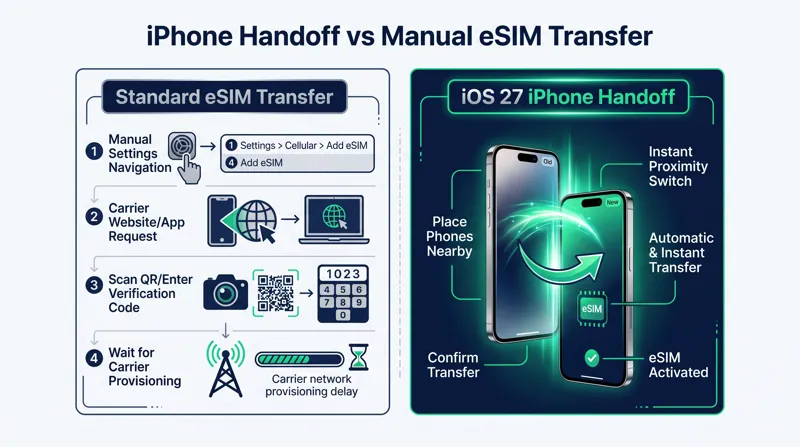
Under conventional methods, moving an active number involves going into settings, re-authenticating, and waiting for network provisioning to complete.
“Existing eSIM activation and transfer options across compatible devices already fulfill everyday switching needs for our customers.”
Apple engineered iOS 27 to bypass this friction entirely. By allowing two registered devices to share one identity sequentially, switching between devices takes seconds rather than minutes.
| Feature Spec | Standard eSIM Transfer | iOS 27 iPhone Handoff |
|---|---|---|
| Setup Speed | Several minutes | Instantaneous proximity pairing |
| User Interaction | Manual verification code entry | One-tap automatic handoff |
| Simultaneous Ring | No (one device active) | No (seamless active switch) |
| Carrier Implementation | Standard GSMA profile | Proprietary carrier entitlement API |
Market Impact: This US Carrier Doesnt Want to Let You Use One Phone Number on Two iPhones
While AT&T pauses, T-Mobile has capitalized on the demand by charging a $5 monthly fee for its dual-device service tier.
Verizon announced it will launch full support by the end of 2026. This leaves AT&T customers questioning why this US carrier doesnt want to let you use one phone number on two iPhones like its primary rivals.
Users who prefer alternating between a compact device during workouts and a larger model for office productivity find themselves stranded on outdated workflows.
Detailed technical documentation available on the official Apple portal outlines that carrier integration requires specific entitlement servers, which AT&T has elected not to deploy.
Subscriber Options When This US Carrier Doesnt Want to Let You Use One Phone Number on Two iPhones
Customers locked into multi-year financing agreements cannot easily switch network providers. For these subscribers, standard eSIM transfers remain the only viable workaround.
Industry analysts speculate that competitive pressure could eventually force a strategic reversal. If customer churn rises, executives may reconsider their stance.
Until then, the fact stands: this US carrier doesnt want to let you use one phone number on two iPhones natively.
Frequently Asked Questions
Why is it reported that this US carrier doesnt want to let you use one phone number on two iPhones?
AT&T has deliberately declined to deploy the necessary backend servers for iOS 27 iPhone Handoff, claiming standard eSIM transfers are sufficient.
What exactly is Apple’s new iPhone Handoff feature in iOS 27?
It is a feature that allows a user to register one phone number across two iPhones and switch connectivity seamlessly between them.
Can two iPhones ring at the exact same moment using this feature?
No, iPhone Handoff lets you switch active cellular connectivity effortlessly between devices, but not operate both simultaneously on cellular calls.
How much does T-Mobile charge to support one number across two iPhones?
T-Mobile launched immediate commercial support for the iOS 27 feature at an introductory price of $5 per month.
When will Verizon subscribers receive access to iPhone Handoff?
Verizon has officially confirmed that it plans to deploy iPhone Handoff support for its wireless network before the end of the year.
Can AT&T customers still move their phone number between two devices?
Yes, customers can still use standard manual eSIM transfer tools, though the process requires manual setup rather than instant handoff.
Will AT&T change its policy regarding iPhone Handoff in the future?
While AT&T currently has no plans to support it, strong customer demand and competitive pressure from T-Mobile and Verizon may prompt a reassessment.
Disclaimer: This article is for informational purposes only. Carrier policies, feature availability, and pricing details are subject to change based on provider announcements.