Samsung Galaxy S26 Ultra users are seeing red over screen issue, and the frustration is quickly spreading across social media. What was supposed to be the most advanced smartphone display of 2026 is now at the center of a major controversy.
The highly anticipated smartphone launched with a revolutionary Privacy Display. This technology was heavily marketed to ensure that no one could spy on your screen while you use it in public.
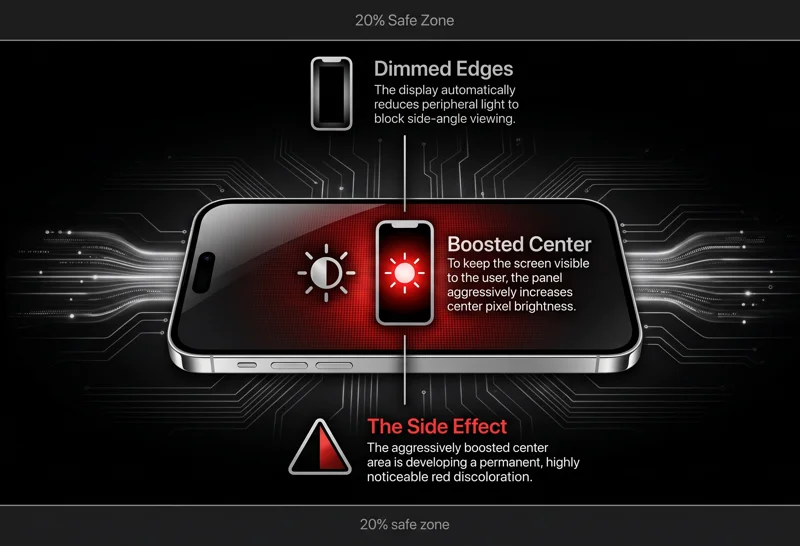
Unfortunately, things have not gone according to plan. While the feature successfully hides your content from prying eyes by disguising it in black and white at side angles, the primary display itself is turning red when viewed straight on.
Why Samsung Galaxy S26 Ultra users are seeing red over screen issue
Device owners are actively complaining that their screens have developed a highly noticeable red cast directly in the middle of the panel. Images of this defect are flooding social platforms and the official Samsung community forum.
This hardware anomaly has caught many early adopters off guard. For a premium device with a premium price tag, this level of visual degradation is unacceptable to the mobile community.
Tech analysts believe this defect is directly tied to the new privacy features. It is no surprise that Samsung Galaxy S26 Ultra users are seeing red over screen issue, given how disruptive this color shift is during daily media consumption.
“While it might disguise what’s written there in black and white, the display itself is turning red right in the center.”
The Tech Behind Why Samsung Galaxy S26 Ultra users are seeing red over screen issue
To understand the root cause, we have to look at how the privacy feature operates. To prevent anyone from getting a glimpse of the screen unless they are looking directly at it, the display manipulates its own brightness.
The panel intentionally dims pixels on the sides and heavily boosts them in the center. Ironically, this boosted center area is exactly where the mysterious red discoloration is showing up for users.
However, there is no concrete evidence so far that the Privacy Display is definitively to blame. Software bugs or hardware degradation could also be contributing factors.
| Display Feature | Intended Function | Reported Negative Side Effect |
|---|---|---|
| Privacy Display | Blocks side-angle viewing | Causes a permanent red cast in the center |
| Pixel Boosting | Increases center brightness | Overheats or discolors local pixels |
| Edge Dimming | Reduces peripheral light | Uneven screen wear over time |
Other Problems While Samsung Galaxy S26 Ultra users are seeing red over screen issue
The red tint is an unfortunate issue to add to a few others that have plagued this device’s launch. In a recent review, Android Police writer Andy Boxall noted three distinct controversies surrounding the phone.
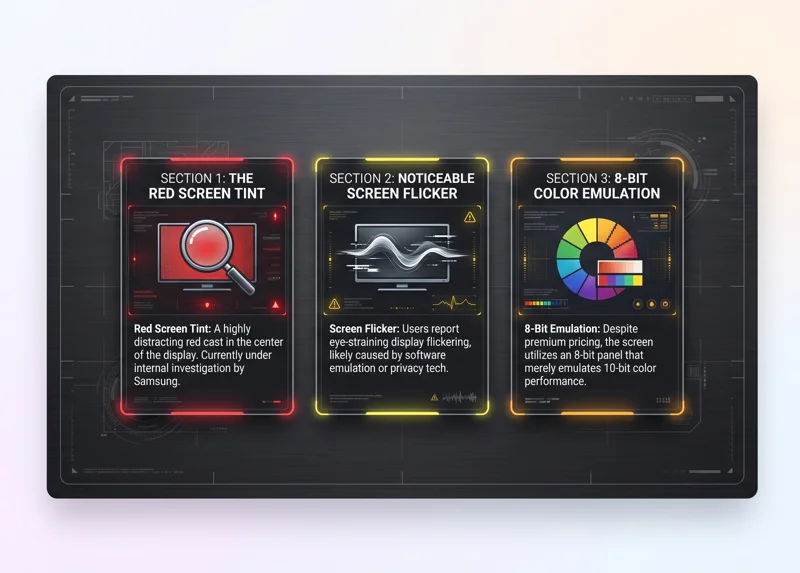
First, the screen emulates but does not actually offer true 10-bit color performance; it is technically an 8-bit panel. Second, there is a highly detectable screen flicker, likely caused by either the 8-bit emulation or the Privacy Display technology.
Finally, photography enthusiasts are unhappy with the switch from the periscope telephoto lens to an All Lenses on Prism (ALoP) type for 5x zoom shots. You can read more complaints on the Samsung Community Forums.
“We are currently examining the matter internally to confirm the cause of the display discoloration.”
Korean news site Newsway reported that Samsung is officially investigating the issue. A spokesperson confirmed the internal examination, though a permanent fix has not yet been announced.
Despite the fact that Samsung Galaxy S26 Ultra users are seeing red over screen issue, many reviewers still gave the phone high marks. Boxall awarded it an 8/10, stating that the privacy feature remains a standout addition, even if overall brightness suffers slightly.
| Known S26 Ultra Issues | User Impact | Current Status |
|---|---|---|
| Red Screen Tint | Severe visual distraction | Under Internal Investigation |
| Screen Flicker | Eye strain and headaches | Pending Software Update |
| 8-Bit Emulation | Lower color accuracy | Hardware Limitation |
Resolving Why Samsung Galaxy S26 Ultra users are seeing red over screen issue
Whether existing and potential customers feel that the phone is worth the high price tag remains to be seen. The ultimate success of this flagship heavily depends on how quickly the manufacturer can issue a fix.
If the red cast is merely a software calibration error linked to the pixel-boosting algorithm, an over-the-air update could resolve the nightmare. However, if the hardware itself is burning out, mass recalls could be on the horizon.
Until then, the fact remains that Samsung Galaxy S26 Ultra users are seeing red over screen issue, and consumer confidence is taking a massive hit.
FAQ Section
What is the main problem with the new device?
Samsung Galaxy S26 Ultra users are seeing red over screen issue, specifically a red cast that appears directly in the middle of the display.
What is the Privacy Display feature?
It is a screen technology designed to make sure no one can spy on your display by dimming the side pixels and making it readable only from a direct angle.
Is the Privacy Display causing the red screen?
While not officially confirmed, the display boosts pixels in the center to maintain visibility, which is exactly where the red discoloration is occurring.
Has Samsung acknowledged the screen defect?
Yes, according to the Korean site Newsway, a Samsung spokesperson confirmed that they are examining the matter internally to confirm the exact cause.
Does the phone have a true 10-bit color display?
No, reviewers have noted that the screen actually uses an 8-bit panel that emulates 10-bit color performance.
Are there other screen issues besides the red tint?
Yes, users and reviewers have also reported a detectable screen flicker, which might be caused by color emulation or privacy tech.
Will a software update fix the red screen?
If the issue is related to the software managing the pixel brightness for the privacy feature, an update could fix it. If it is hardware damage, a replacement will be needed.
Disclaimer: This article is for informational purposes only. The information regarding device defects and ongoing investigations is based on current user reports and media publications as of 2026. Always consult the official manufacturer for warranty and repair claims.