OpenAIs latest features take direct aim at the app store model, fundamentally altering how over a billion weekly users discover and launch software.
During the recent Dev Day announcements, OpenAI unveiled major architectural upgrades to ChatGPT. Rather than remaining a simple conversational assistant, the platform is now morphing into a full-fledged software ecosystem.
By empowering users to launch tools directly in-stream, Apple and Google face their most formidable digital distribution rival in over a decade. The conventional paradigm of mobile marketplaces is shifting rapidly toward conversational execution.
Why OpenAIs latest features take direct aim at the app store model
Industry analysts agree that OpenAIs latest features take direct aim at the app store model by turning the conversational chat interface into a primary launchpad for third-party applications.
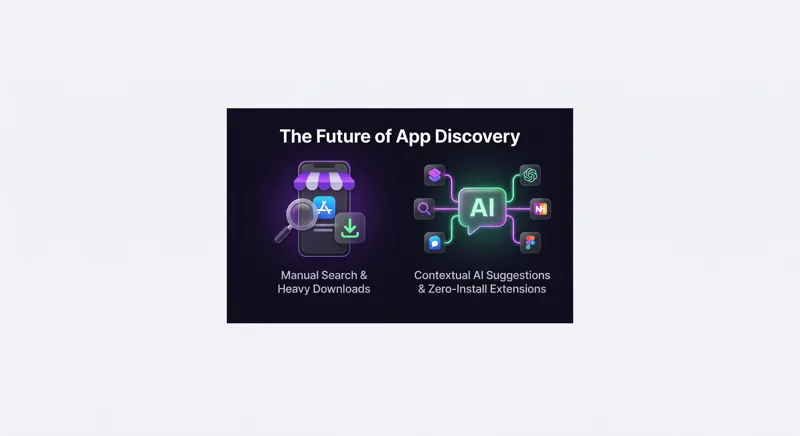
Traditionally, finding software required navigating crowded mobile stores, reading user reviews, and downloading bulky binaries. Now, ChatGPT recognizes user intent and suggests contextual tools on the fly.
Furthermore, developers can now build interactive panels directly inside chat feeds via the updated ChatGPT plugin architecture. Users no longer need to switch screens to complete complex workflows.
“OpenAI is shifting the center of gravity from operating-system app stores to conversational AI interfaces that discover and execute software autonomously.”
How OpenAIs latest features take direct aim at the app store model Through App Discovery
When evaluating distribution channels, OpenAIs latest features take direct aim at the app store model by integrating third-party tools directly inside ongoing conversations.
Users can also take advantage of “Sign in with ChatGPT.” This universal identity layer lets individuals carry their established AI token allowances directly into third-party apps like Notion, Devin, and Vercel.
Developers gain access to an engaged audience of over 1.2 billion users without paying traditional 30% platform cuts. Check the latest developer release guidelines on the Official OpenAI Platform to see available APIs.
| Comparison Factor | Traditional App Stores | OpenAI ChatGPT Ecosystem |
|---|---|---|
| Discovery Channel | Keyword search & top charts | Contextual AI conversational prompts |
| Installation Barrier | Local download & OS installation | Zero-install interactive extensions |
| Identity & Access | Platform account (Apple/Google ID) | Sign in with ChatGPT + AI allowance |
| Execution Method | Manual user navigation | Autonomous AI agents (Dots) |
Autonomous Agents: OpenAIs latest features take direct aim at the app store model
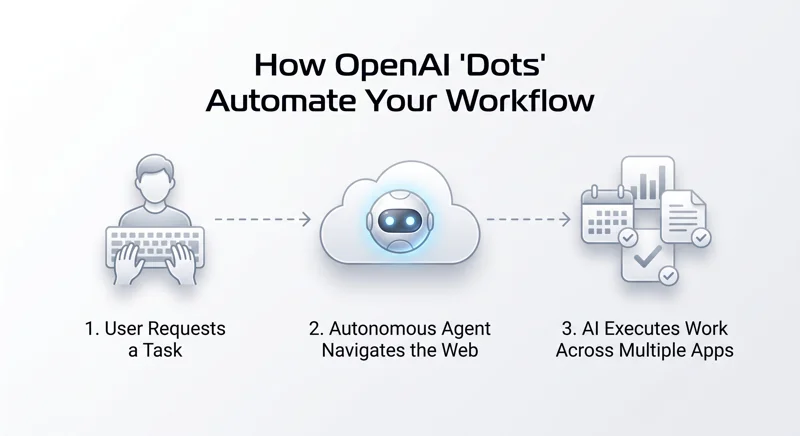
With the introduction of Dots, OpenAIs latest features take direct aim at the app store model because users no longer need to manually search and download applications.
Dots are autonomous AI agents that operate inside dedicated cloud computers equipped with integrated web browsers. Each agent can connect directly to over 4,000 external applications.
Instead of manually downloading separate project management or calendar utilities, you simply instruct your agent to accomplish an objective. The agent locates the right tool and executes the task automatically.
“By allowing users to bring their AI allowance anywhere, OpenAI removes traditional friction points and challenges incumbent software distribution monopolies.”
Enterprise Marketplace: OpenAIs latest features take direct aim at the app store model
Enterprise adoption is another arena where OpenAIs latest features take direct aim at the app store model. OpenAI introduced a specialized B2B marketplace featuring heavyweights like Salesforce, Adobe, and CrowdStrike.
Enterprise buyers can now allocate portions of their existing OpenAI annual software commitments toward approved partner tools. This consolidates procurement under one simplified roof.
Additionally, developers benefit from an overhauled review system reminiscent of Apple’s App Review. Creators can track inspection stages, request human audits, and deploy tool patches without starting from scratch.
| New Architecture Feature | Functional Capability | Market Consequence |
|---|---|---|
| Autonomous Agents (Dots) | Self-executing cloud workflows | Replaces single-purpose utility apps |
| Sign in with ChatGPT | Cross-app identity & AI credit sharing | Circumvents mobile login monopolies |
| Enterprise Marketplace | Unified procurement for B2B tools | Disrupts legacy enterprise software portals |
From enterprise integrations to consumer productivity, OpenAIs latest features take direct aim at the app store model across all major software categories.
As conversational interfaces become our chief operating systems, native app storefronts will likely need to reinvent their core value propositions to retain relevance.
Frequently Asked Questions
In what ways do OpenAIs latest features take direct aim at the app store model?
OpenAIs latest features take direct aim at the app store model by allowing conversational app discovery, in-chat software execution, and zero-download extensions that bypass standard app stores.
What is the primary benefit of “Sign in with ChatGPT”?
It provides a unified identity layer that lets users bring their existing ChatGPT subscription and AI token allowances directly into third-party connected applications.
How do autonomous AI agents (Dots) change how software is used?
Dots run in their own secure cloud containers, using browsers and connected apps on your behalf so you do not need to download or navigate tools manually.
How does ChatGPT app discovery work within a conversation?
When ChatGPT identifies a task that benefits from specialized software, it dynamically suggests the relevant application and allows instant integration inside the current chat.
Does OpenAI have its own enterprise app marketplace?
Yes, OpenAI launched a dedicated enterprise marketplace featuring more than 30 launch partners including Adobe, Figma, ServiceNow, and HubSpot.
Does this update eliminate the need for third-party subscriptions?
Not necessarily. While you can bring your AI allowance to external apps, developers can still maintain their own direct billing relationships and independent memberships.
How does the new ChatGPT plugin architecture benefit developers?
It provides interactive canvas panels inside chat sessions and includes a streamlined review pipeline for updating and debugging extensions efficiently.
Disclaimer: This article is for informational purposes only and is not affiliated with, endorsed by, or sponsored by OpenAI, Apple, or Google.