The debate over grandparents ai images grandkids privacy parents has officially reached a boiling point in households across the country.
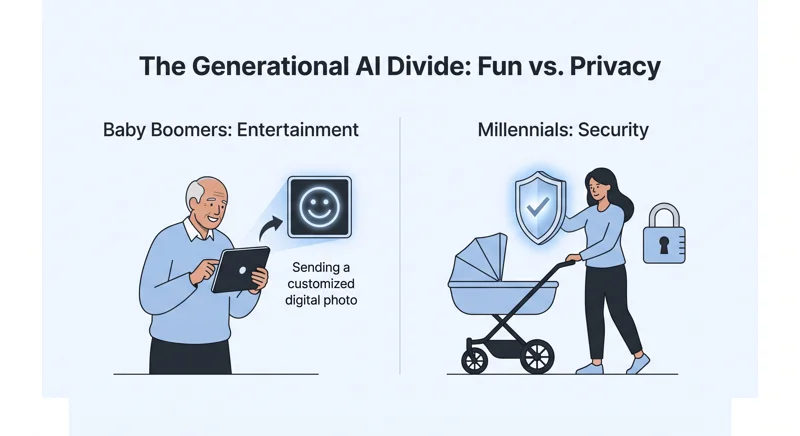
As artificial intelligence tools become more accessible, older generations are having a blast generating whimsical portraits of their families.
However, millennial parents are strongly pushing back against this new trend.
They see this innocent digital tinkering as a massive security nightmare that puts their children’s biometric data at risk.
The Growing Conflict: grandparents ai images grandkids privacy parents
When young parents visit their older relatives, they are increasingly greeted by bizarre, AI-generated caricatures of their toddlers.
Many boomers use tools like Grok or ChatGPT to put their grandchildren’s faces onto cartoon bodies, like riding the Polar Express or sitting on Santa’s lap.
While the older generation thinks these customized digital portraits are adorable, the parents of these children feel incredibly unsettled.
This dynamic has created a fierce grandparents ai images grandkids privacy parents dispute that is dividing families during the holidays.
“We all aren’t educated enough about what AI companies are doing with our content.”
Millennials who grew up witnessing the evolution of the internet understand that nothing uploaded online is ever truly private.
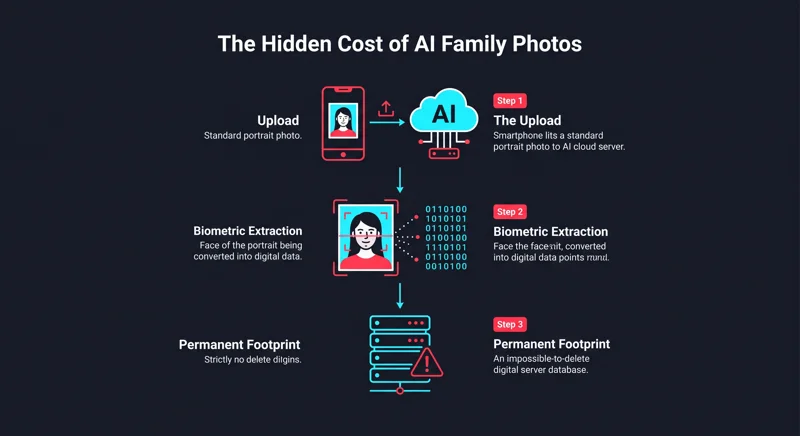
There are valid concerns about open-source artificial intelligence models utilizing uploaded family photos for machine learning training.
Young parents fear that the cute holiday card sent by a grandparent might eventually end up in a database used by malicious actors.
For more insights on digital consumer protection, you can review the guidelines provided by the Federal Trade Commission (FTC).
| Generation | View on Social Media | AI Usage Sentiment |
|---|---|---|
| Baby Boomers | Fun sharing platform for friends | Harmless entertainment and cute eCards |
| Millennials | Permanent public record | High risk of data exploitation and deepfakes |
| Gen Z | Curated digital footprint | Major biometric privacy concern |
Understanding why grandparents ai images grandkids privacy parents fears are escalating
The friction is not just about a generational misunderstanding of technology; it is about the real threat of deepfake exploitation.
Lawsuits have already been filed against AI companies for allegedly generating exploitative deepfake images from normal photos.
When grandparents upload images of minors to these unvetted platforms, they are unwittingly surrendering control over that child’s likeness.
The core of the grandparents ai images grandkids privacy parents argument centers on consent, which a toddler obviously cannot provide.
“Different generations have varying consensus about what the point of social platforms even is anymore.”
Clawing back your image once it is ingested into an artificial intelligence neural network is practically impossible.
Parents are trying to establish firm boundaries, but these rules are frequently ignored by relatives who think they are just having fun.
Analyzing the grandparents ai images grandkids privacy parents generational divide
The differences in how these generations perceive digital platforms stem directly from their own relationships with privacy.
Baby Boomers grew up in an era where privacy was the default, so they do not naturally anticipate digital context collapse.
Conversely, Millennials experienced the chaotic shift from anonymous chatrooms to the highly publicized era of Facebook and cancel culture.
This historical context is why the grandparents ai images grandkids privacy parents conversation is so incredibly difficult to navigate safely.
| Family Member | Action Taken | Perceived Outcome |
|---|---|---|
| Grandmother | Uploads baby photo to AI generator | Creates a cute customized coloring book |
| Mother | Requests photo deletion | Protects child from future data misuse |
| Uncle | Posts AI edit to Facebook | Normalizes unauthorized biometric sharing |
Many young people are turning to platforms like TikTok and Reddit to vent about this phenomenon, jokingly calling it “grandmAIslop.”
They share stories of flawless AI graduation posters and absurd birthday videos that make them extremely uncomfortable.
Setting firm boundaries regarding the grandparents ai images grandkids privacy parents issue is crucial for protecting the next generation.
Parents must clearly communicate that Mark Zuckerberg and open-source models are not their friends, and family photos should stay offline.
Frequently Asked Questions about grandparents ai images grandkids privacy parents
Why is the grandparents ai images grandkids privacy parents debate trending right now?
It is trending because older generations are rapidly adopting generative AI tools for fun, while younger parents are becoming hyper-aware of digital security risks.
Are there real risks involved in the grandparents ai images grandkids privacy parents conflict?
Yes, uploading photos of minors to AI generators can lead to biometric data scraping and the potential creation of malicious deepfakes.
How do millennials view the grandparents ai images grandkids privacy parents situation?
Millennials view it as a severe boundary violation and a massive digital security nightmare for their children’s future.
Why do older relatives ignore the grandparents ai images grandkids privacy parents warnings?
Many older adults view AI as a harmless entertainment tool and struggle to grasp the permanent, public nature of internet data.
Can the grandparents ai images grandkids privacy parents dispute be solved legally?
Currently, privacy laws lag behind AI advancements, making it very difficult to legally remove a child’s likeness once an AI model ingests it.
What tools trigger the grandparents ai images grandkids privacy parents fears the most?
Chatbots like Grok, ChatGPT, and various online custom image generators that require photo uploads are the primary concerns for parents.
What should families do about the grandparents ai images grandkids privacy parents divide?
Families should sit down and establish strict, clear rules about digital consent and absolutely prohibit uploading photos of minors to AI platforms.
Disclaimer: This article is for informational purposes only and does not constitute legal or professional privacy advice.