google vibe coding first android app gemini ai studio is officially a reality in 2026, marking a massive shift in how average users create personal software.
Yesterday, I built my very first mobile application. Then, I made two more. I accomplished all of this in just one afternoon using a seamless prompt-to-phone experience.
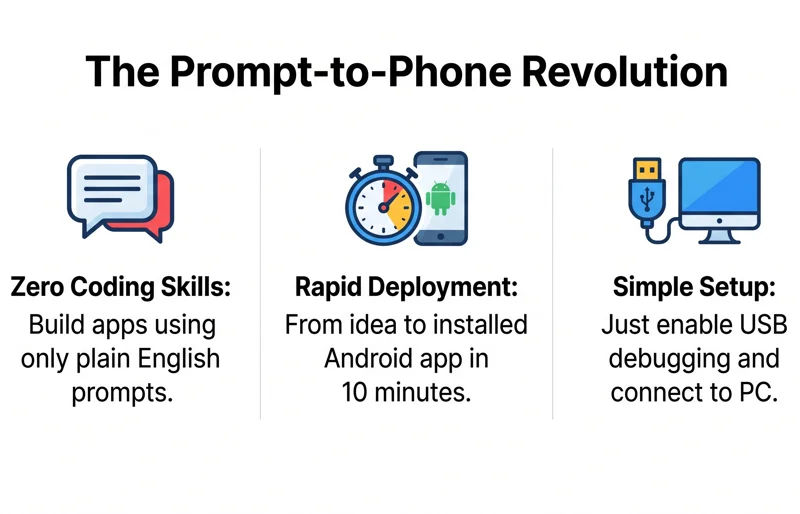
For the first project, I literally typed a mere 148 words into my web browser and walked away. Ten minutes later, the complete program was installed and running.
The era where you needed extensive programming skills to build functional tools is rapidly fading. The personal software revolution is finally coming to your pocket.
Understanding google vibe coding first android app gemini ai studio
The concept of google vibe coding first android app gemini ai studio revolves around describing what you want and letting the artificial intelligence handle the heavy lifting.
To get started, I only had to prep my physical smartphone by enabling standard USB debugging mode and plugging it directly into my PC.
As advertised by the tech giant, the platform literally did everything else for me. I typed in my desired words, hit install, and voilà: a working program.
| Development Method | Time Required | Coding Skills Needed |
|---|---|---|
| Traditional Coding | Weeks to Months | High (Java/Kotlin) |
| Google AI Studio | 10 Minutes | None (Prompting only) |
The seamless process of google vibe coding first android app gemini ai studio
The beauty of google vibe coding first android app gemini ai studio is that it sprints ahead automatically. It does not force you to make detailed structural plans unless you want to.
There is a realistic future where the average person can make complicated smart home gadget routines work effortlessly, even with zero traditional programming skills.
“The personal software revolution is here, bringing prompt-to-phone app creation directly to consumers with zero coding experience.”
Evaluating my google vibe coding first android app gemini ai studio results
After the initial excitement of google vibe coding first android app gemini ai studio, I tried actually using my three newly created mobile applications.
The projects included a simple calorie counter and two games. To be completely honest, their initial versions were kind of bad and lacked professional polish.
However, that is the nature of iteration. Just when I started to enjoy refining them and trying to make them better, I hit a major roadblock.
| App Created | Initial Prompt Length | Initial Quality Assessment |
|---|---|---|
| Calorie Counter | 148 Words | Basic but functional |
| MOOD Text Adventure | Conversational | Needed manual refinement |
| Workout Tracker | Iterative | Good enough for daily use |
Friction points in google vibe coding first android app gemini ai studio
The system informed me that I had reached my daily computational limit. I would either have to pay a subscription fee or wait until the next day for more generating power.
So yes, there is still noticeable friction. But it is incredibly impressive how much you can accomplish before hitting those commercial paywalls.
Confronted with this sudden upsell, my very first reaction was surprisingly positive: I actually considered paying for a couple of months to keep building.
Creating games with google vibe coding first android app gemini ai studio
When exploring google vibe coding first android app gemini ai studio, I decided to build a Doom-like text adventure game called MOOD (Modern Online Oratory Dungeon).
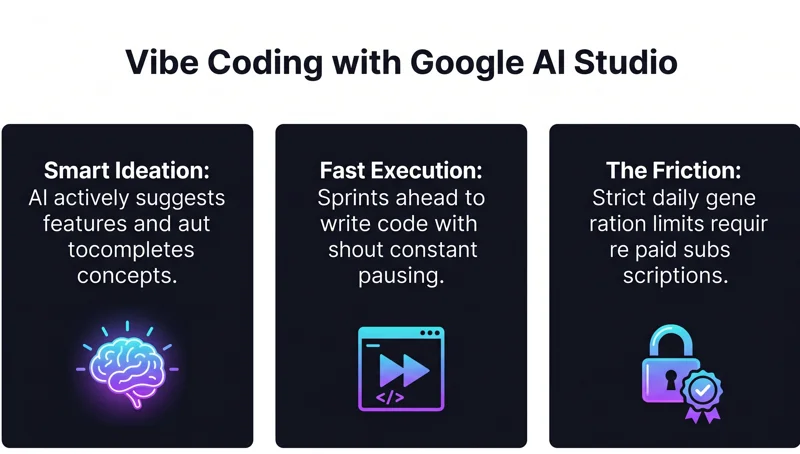
I typed my basic concept into the interface. The artificial intelligence immediately began typing additional ideas itself, attempting to autocomplete my creative thoughts.
“Unlike other platforms that constantly ask for permission, this system sprints ahead automatically, writing code rapidly while you guide the creative vision.”
It suggested procedural generation and turn-based combat. While I wanted a classic, curated map layout, I agreed to the turn-based mechanics and let the system auto-generate the map code.
It even suggested adding hidden secrets and a satisfying progression system. Once I finalized the prompt, it was completely off to the races.
For developers and curious users wanting to read more about this underlying technology, visit the Official Google AI for Developers portal.
| Platform Aspect | User Experience |
|---|---|
| Idea Generation | Proactive, suggests features automatically |
| Code Execution | Sprints ahead without constant pausing |
| Monetization | Strict daily limits forcing paid upsells |
Frequently Asked Questions (FAQs)
What does it mean to vibe code an application?
It means writing plain English prompts describing what you want, allowing the artificial intelligence to autonomously generate the underlying code and structure.
Do I need programming skills to use this tool?
No, the system is designed so that an average person with zero traditional programming skills can create functional mobile programs.
How long does it take to generate a working prototype?
In many cases, it takes as little as 10 minutes from typing your initial prompt to having the software installed on your physical smartphone.
Is the generated software completely perfect on the first try?
No, initial generations can be rough or lack polish, requiring the user to iterate and ask the system to refine specific features.
Are there limits to how much you can generate for free?
Yes, the platform enforces strict daily computational limits, after which users are prompted to pay for a subscription or wait until the next day.
Do I need any special hardware setup?
You simply need to enable standard USB debugging mode on your smartphone and connect it directly to your PC to use the prompt-to-phone feature.
Does the system ask for permission before writing every line of code?
No, unlike some competing tools, it sprints ahead automatically based on your initial prompt, though you can manually inspect the code if desired.
Disclaimer: This article is for informational purposes only. Features, pricing, and capabilities of generative AI development tools are subject to change based on official software updates and regional availability.