The tech world is buzzing today as a major google pixel 11 face unlock leak has surfaced, leaving many Android enthusiasts questioning the future of Google’s biometric security strategies. According to recent insider reports, Google’s next flagship smartphone lineup will not be adopting the highly anticipated, dedicated facial recognition hardware known internally as “Project Toscana.” This revelation comes as a surprise to industry analysts who expected the upcoming Pixel generation to feature a massive leap forward in Android biometric security to rival Apple’s ecosystem.
The Fall of Project Toscana: What We Know
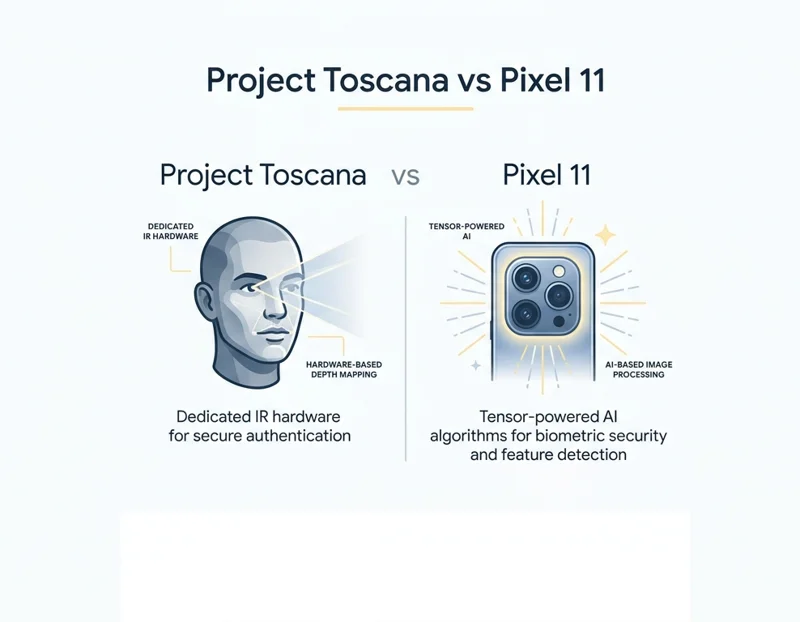
For months, rumors surrounding the Project Toscana leak suggested that Google was developing a proprietary hardware module designed specifically for advanced, 3D facial mapping. The expectation was that this hardware would debut in the Pixel 11 series, offering an unparalleled level of speed and security that could operate seamlessly in low-light conditions. However, the latest intel suggests that Google has pivoted away from this dedicated hardware approach for the upcoming release cycle.
| Feature | Expected Project Toscana | Reported Pixel 11 Reality |
|---|---|---|
| Hardware | Dedicated IR Emitter & Dot Projector | Camera-Based (Tensor Processed) |
| Low-Light Performance | Excellent (No screen flash required) | Moderate (Relies on ambient/screen light) |
| Security Level | Class 3 (Highest Biometric Tier) | Class 3 (Achieved via ML algorithms) |
Instead of introducing a complex new physical array, it appears the tech giant will continue relying heavily on the advanced machine learning capabilities of its custom silicon. The Tensor-powered Pixels have demonstrated remarkable capability in utilizing a standard front-facing camera for secure unlocks, but the absence of dedicated hardware means the Pixel 11 might not offer the hardware parity some consumers were hoping for.
The decision to scrap Project Toscana indicates Google’s deep confidence in its Tensor AI to achieve hardware-level security through software innovation.
A Brief History of Google’s Biometric Journey
To understand the weight of this google pixel 11 face unlock leak, we must look at Google’s fluctuating history with biometric authentication. While fingerprint sensors have been the steadfast primary means of unlocking Android devices, face unlock has been a priority for the iPhone, prompting Google to experiment heavily in this domain.
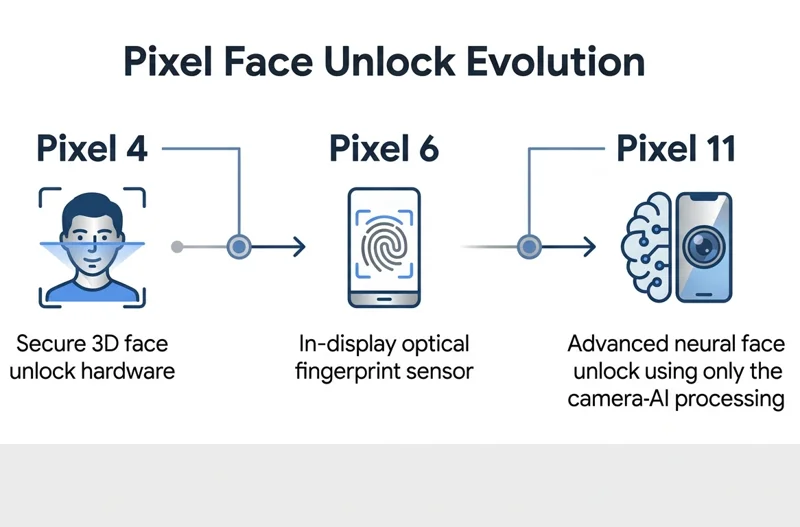
In 2019, the Google flagship smartphone lineup took a massive swing with the Pixel 4 series. This device went all-in on IR-powered face unlock, featuring a large top bezel housing a complex array of sensors, including a dot projector and infrared cameras. It was fast, secure, and worked in pitch darkness. However, subsequent generations abandoned this hardware in favor of under-display fingerprint scanners and hole-punch cameras to maximize screen real estate.
| Pixel Generation | Primary Biometric Security | Face Unlock Mechanism |
|---|---|---|
| Pixel 4 Series | Facial Recognition | Dedicated IR-powered hardware array |
| Pixel 6 Series | Fingerprint (Under-display) | None |
| Pixel 8 & Newer | Fingerprint & Face | Camera-based, Tensor ML powered (Class 3) |
Recently, Google brought face unlock back, utilizing the power of Tensor chips. By combining high-resolution camera data with sophisticated machine learning algorithms, modern Pixels achieve a level of security strong enough for banking apps, moving beyond the simple, easily fooled 2D camera unlock seen on cheaper devices. For more details on Android’s security tiers, you can review the official documentation on the Android Open Source Project.
The Rivalry: Pixel vs. iPhone Face ID
The cancellation of Project Toscana has significant implications for Google’s competition with Apple. Apple’s Face ID remains the gold standard for dedicated facial recognition hardware in the mobile space. Consumers expect top-tier biometric features when paying premium prices for a flagship device.
Without dedicated IR hardware, the Pixel 11 will need to prove that its AI-driven camera unlock is truly flawless in every lighting condition to compete with Face ID.
If the Google flagship smartphone lineup continues to rely solely on camera-based solutions, it places immense pressure on the next-generation Tensor processor to deliver flawless performance. The main drawback of camera-based systems, even highly secure ones, is their performance in extreme low light, where dedicated IR-powered face unlock systems effortlessly succeed.
| Smartphone Flagship | Face Unlock Tech | Low-Light Capability |
|---|---|---|
| Apple iPhone 15 Pro | Face ID (TrueDepth Camera) | Exceptional (IR mapping) |
| Expected Google Pixel 11 | Tensor-Powered Camera ML | Good (Requires ambient/screen light) |
| Samsung Galaxy S24 Ultra | Standard Camera 2D | Poor (Not Class 3 secure) |
Frequently Asked Questions
What is the latest google pixel 11 face unlock leak?
The leak reveals that Google has canceled plans to include a dedicated facial recognition hardware system, known as “Project Toscana,” in the upcoming Pixel 11 smartphones.
What was Project Toscana?
Project Toscana was rumored to be an advanced hardware array, possibly including IR sensors and dot projectors, designed to provide hardware-level 3D face mapping similar to Apple’s Face ID.
Will the Pixel 11 still have face unlock?
Yes, it is expected to continue using the camera-based, Tensor-powered facial recognition seen in recent Pixel generations, which is highly secure but relies on machine learning rather than dedicated IR hardware.
Is the current Pixel face unlock secure enough for banking?
Yes, starting with the Pixel 8 series, Google upgraded its camera-based face unlock to a Class 3 biometric standard, making it secure enough for banking apps and payments.
How did the Pixel 4 handle face unlock?
The Pixel 4 used IR-powered face unlock hardware, which functioned perfectly in complete darkness, but Google abandoned this bulky hardware in later models.
Why might Google have scrapped Project Toscana?
While unconfirmed, it is likely due to the success of their Tensor AI in achieving Class 3 security without the need for expensive, space-consuming dedicated hardware sensors.
How does this impact Android biometric security overall?
It shows a growing trend where advanced AI and machine learning can replace physical hardware sensors, keeping device costs down and maximizing screen-to-body ratios.
Disclaimer: This article is for informational purposes only. The information provided is based on unverified leaks and industry rumors regarding unreleased products. Features and specifications are subject to change by the manufacturer.