Google hasn’t shown any reason for ‘Googlebook’ laptops to exist, so why should we be excited? This urgent question is currently dominating technology forums following the recent hardware announcements at “The Android Show” in 2026. As the company attempts to merge its mobile ecosystem with desktop computing, tech enthusiasts are left feeling profoundly underwhelmed by the overall presentation.
The core concept of replacing a traditional operating system with a blown-up Android platform sounds highly ambitious. However, early previews of this new hardware reveal a stark lack of exclusive functionality. The fundamental issue remains clear: if a premium device fails to offer unique productivity tools, its market value plummets instantly in a highly competitive landscape.
The Underwhelming Reveal: Google hasn’t shown any reason for ‘Googlebook’ laptops to exist, so why should we be excited?
When analyzing the upcoming Googlebook Android laptop, the highlighted feature set feels remarkably recycled. The main presentation leaned heavily on new Gemini AI laptop features. Yet, simply injecting artificial intelligence into a device does not automatically justify the creation of a completely new hardware category.
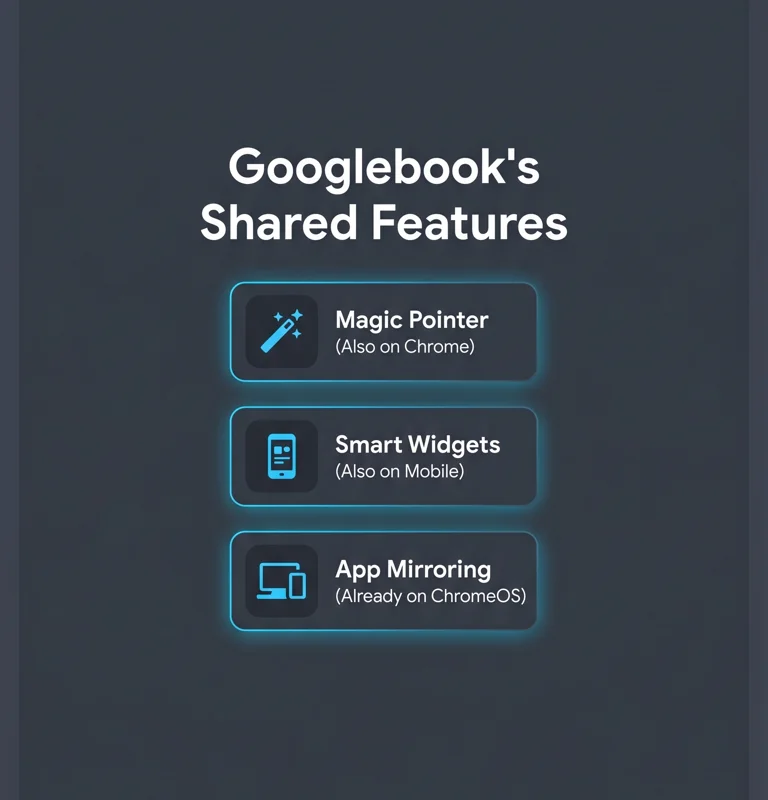
For instance, the newly announced “Magic Pointer” cursor is undoubtedly clever. It allows users to quickly activate Gemini with a simple wiggle gesture. However, since this exact feature is simultaneously rolling out to the standard Chrome browser, we are forced to ask again: Google hasn’t shown any reason for ‘Googlebook’ laptops to exist, so why should we be excited?
| Feature Showcased | Googlebook Exclusivity | Overall Verdict |
|---|---|---|
| Magic Pointer Gesture | No (Coming to Chrome browser) | Helpful, but not a system seller |
| Create your Widget | No (Also on Android phones) | Recycled mobile feature |
| Smartphone App Mirroring | No (Existed on ChromeOS for years) | Standard ecosystem function |
Beyond the software, the announcement ended by vaguely praising “premium hardware” and a signature “Glow Bar.” Flashy lights and premium metals are nice, but they do not solve the functional gaps. Consumers require tangible software benefits that cannot be achieved on their current mobile devices.
“A glowing hardware bar and recycled Android widgets do not create a compelling reason to abandon established desktop ecosystems in 2026.”
Evaluating the ChromeOS replacement strategy: Google hasn’t shown any reason for ‘Googlebook’ laptops to exist, so why should we be excited?
ChromeOS historically carried a mixed reputation, but it secretly became quite powerful over the years. With built-in support for both Linux applications and mobile apps, it offered a versatile, lightweight desktop experience. Scrapping this architecture strictly in favor of a larger Android interface seems like a massive step backward for productivity enthusiasts.
To better understand this strategic shift, we can look at broader industry trends regarding Google’s AI development. The company is clearly trying to build an AI-first machine. Unfortunately, AI generally does not care what screen size it operates on. Generating an image via a prompt is just as fast on a modern smartphone as it is on a laptop.
| Device Type | Primary 2026 Use Case | AI Capability |
|---|---|---|
| Modern Smartphone | Communication, quick edits, daily tasks | Extremely High (NPU integrated) |
| Traditional Laptop | Heavy multitasking, professional software | Extremely High (Dedicated GPUs) |
| Proposed Googlebook | Web browsing, light widget interaction | High, but redundant |
The Desktop Gap: Google hasn’t shown any reason for ‘Googlebook’ laptops to exist, so why should we be excited?
In 2026, the smartphone is the primary device that gets everything done for younger generations. Laptops now strictly exist as specialized tools for tasks that a smartphone cannot handle efficiently. This includes advanced workflows like heavy video rendering, complex coding, and professional photo editing.
This is precisely where the new Google platform currently fails. Android is a powerful mobile operating system, but unless major strides are taken to bring proper desktop-class applications to the table, the hardware will struggle. The lack of full professional suites, like the proper Adobe creative cloud, leaves a massive void.
“When competing against powerhouses like the MacBook Neo, delivering just a scaled-up mobile experience is a recipe for commercial disappointment.”
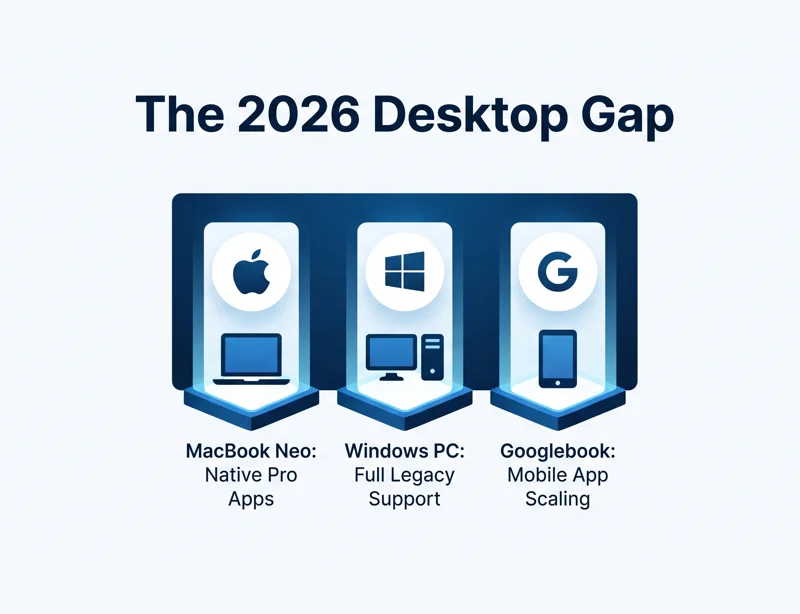
Apple is actively changing the narrative with its powerful MacBook Neo competitor, offering seamless integration without sacrificing desktop-level power. Meanwhile, public opinion of standard Windows devices might be fluctuating, but they still run essential legacy software that businesses demand.
| Platform | Desktop App Support | Market Position in 2026 |
|---|---|---|
| Apple macOS (MacBook Neo) | Flawless native pro apps | Leading premium creative choice |
| Microsoft Windows | Universal legacy support | Corporate and gaming standard |
| Google Android (Googlebook) | Limited to mobile app scaling | Uncertain, lacking clear professional utility |
As it stands today, the tech giant needs to pull out all the stops before the official retail launch. The phrase “it is not ready yet” is no longer a valid excuse in today’s fast-paced market. Until they demonstrate true desktop utility, Google hasn’t shown any reason for ‘Googlebook’ laptops to exist, so why should we be excited?
Frequently Asked Questions
What exactly is the new Googlebook?
It is an upcoming premium laptop developed by Google that reportedly merges the ChromeOS and Android ecosystems into a single, AI-focused operating system.
Why do critics say Google hasn’t shown any reason for ‘Googlebook’ laptops to exist, so why should we be excited?
Critics feel this way because the previewed features, like the Magic Pointer and smart widgets, are already available on regular Android phones or the Chrome browser, offering no exclusive laptop benefits.
What is the Google Magic Pointer?
It is a new cursor feature designed to easily activate Gemini AI tools on-screen with a simple physical wiggle gesture.
Will this new device completely replace standard ChromeOS laptops?
Industry rumors strongly suggest this new Android-based architecture is intended to be a long-term ChromeOS replacement for premium Google hardware.
How does it compare to a modern MacBook Neo competitor?
Currently, it falls short for professionals because it lacks support for heavy desktop-class applications, relying mostly on scaled-up mobile apps instead.
Does the laptop feature any unique hardware?
The only officially teased unique hardware feature is a mysterious “Glow Bar,” though its practical utility remains entirely unknown at this time.
Can I run professional video editing software on it?
As of the latest previews, there is no confirmation of proper desktop-class software support like the full Adobe suite, making professional editing highly unlikely.
Disclaimer: This article is for informational purposes only and is based on early industry previews, rumors, and opinions regarding unreleased 2026 hardware.