
The wearable tech landscape in 2026 is experiencing a massive shakeup with the highly anticipated fitbit air google health integration finally coming to light. For weeks, tech enthusiasts and fitness junkies have been decoding cryptic teasers of a minimalist device designed to take the health monitoring world by storm. Now, sources confirm that this sleek, distraction-free device, recently spotted in the wild as Stephen Curry wearable tech, will be officially marketed as the “Fitbit Air.” Designed explicitly as a Whoop competitor smart band, this launch marks a profound shift in Google’s wearable strategy, prioritizing unobtrusive hardware paired with an incredibly powerful, newly rebranded software ecosystem.
The Fitbit Air: A Screen-Less Fitness Tracker Revolution
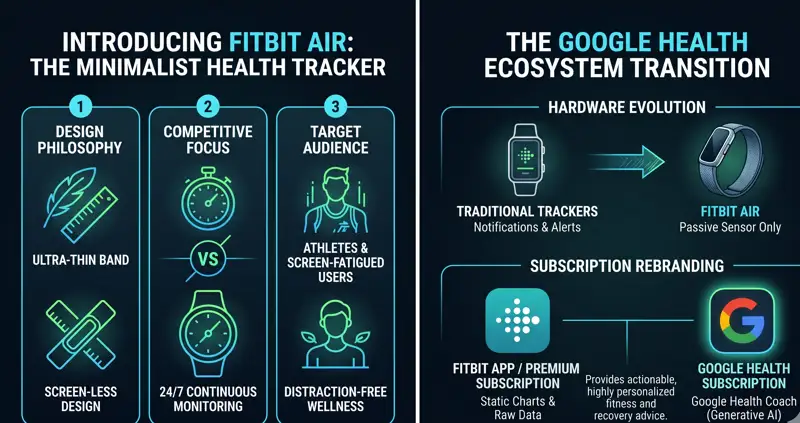
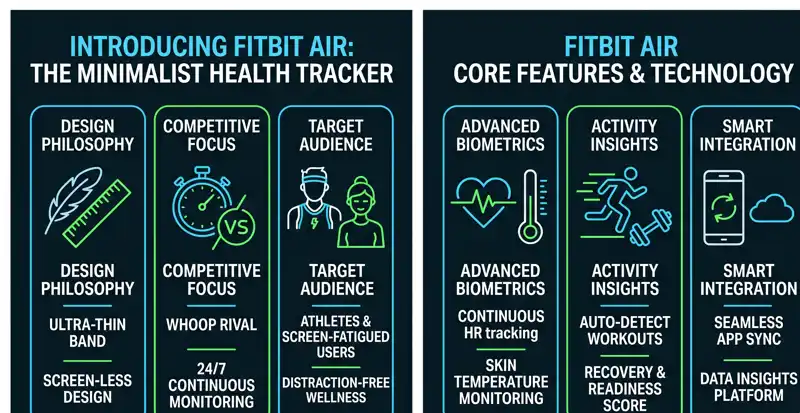
To understand the significance of this impending launch, we must look at the physical design philosophy. The “Air” moniker is a deliberate nod to the device’s featherlight footprint. Fitbit previously used the “Air” label for its highly affordable Aria Air smart scale back in 2019, but here, it signifies an ultra-thin strap meant for continuous, 24/7 wearability. By removing the traditional OLED display, the Fitbit Air functions purely as a biometric sensor. This minimalist approach is precisely what high-performance athletes have been demanding, allowing them to disconnect from digital notifications while still gathering hyper-accurate, continuous health metrics.
| Feature | Fitbit Air (2026) | Traditional Trackers |
|---|---|---|
| Display | Screen-less, fabric/silicone band | OLED touchscreen |
| Primary Focus | Passive biometric data collection | Active tracking & smartwatch alerts |
| Target Audience | Athletes & screen-fatigued users | General fitness consumers |
By removing the screen, the Fitbit Air allows users to focus entirely on their physical performance rather than a digital interface, making it the ultimate passive health monitor.
The Fitbit Premium Subscription Rebrand
While the physical hardware retains the familiar Fitbit name, the software ecosystem is undergoing a dramatic, ground-up transformation. The most significant news for current users is the massive Fitbit Premium subscription rebrand. Going forward, the paid service tier that unlocks advanced biometric analysis will be officially known as “Google Health.” This strategic pivot indicates that Google is finally absorbing the core wellness features into its master brand, streamlining the user experience and consolidating its health initiatives under one powerful umbrella.
| Legacy Ecosystem | New 2026 Ecosystem | Key Upgrade |
|---|---|---|
| Fitbit Premium | Google Health Subscription | Unified Google account integration |
| Fitbit App Insights | Google Health Coach | Generative AI actionable advice |
At the heart of this new model are the highly anticipated Google Health Coach AI features. Currently operating in a restricted public preview simply known as “Coach,” this advanced AI uses machine learning to analyze your sleep, strain, and recovery data in real-time. Instead of presenting the user with static charts and raw numbers, the generative AI acts as a digital trainer. It tells you exactly what to do—whether that is prioritizing rest, pushing harder in a cardio session, or adjusting your sleep schedule for optimal recovery. For more information on the company’s broader wellness mission, you can visit the Official Google Health Website.
The transition from Fitbit Premium to Google Health is not just a name change; it represents a massive leap forward in personalized, AI-driven wellness tracking.
Why the ‘G’ Replaces Fitbit on the Screen
This rebranding strategy also clarifies several recent marketing mysteries. When NBA superstar Stephen Curry shared his workout teaser video featuring the mystery band, eagle-eyed viewers noticed that the clip notably ended with a gradient “G” logo, devoid of any Fitbit branding. By associating the software and health intelligence entirely with the “Google Health” name, the company is positioning itself as the ultimate hub for personal wellness. The Fitbit Air simply acts as the physical bridge—a lightweight sensor designed to feed pristine biometric data into Google’s powerful AI engine.
| Hardware Specification | Rumored Details |
|---|---|
| Form Factor | Ultra-thin band (wrist or bicep mount) |
| Battery Life | Expected 5-7 days (no screen drain) |
| Software Requirement | Requires Google Health for full AI data |
The Fitbit Air combined with the robust Google Health subscription aims to dethrone Whoop by offering superior AI insights natively integrated into the Google ecosystem.
Frequently Asked Questions
What is the Fitbit Air?
The Fitbit Air is an upcoming screen-less fitness tracker from Google, designed for 24/7 passive health monitoring. It serves as a direct competitor to the Whoop strap.
Will the Fitbit Air have a screen?
No, leaks indicate it will be a completely screen-less band focused solely on gathering biometric data without causing digital distractions.
What is happening to Fitbit Premium?
The Fitbit Premium subscription service is reportedly being rebranded to “Google Health” to better align with Google’s broader wellness ecosystem.
What is the Google Health Coach?
It is a new generative AI feature within the Google Health subscription that analyzes your biometric data to provide actionable, highly personalized fitness and recovery advice.
Who was seen testing the new Fitbit Air?
NBA superstar Stephen Curry was seen wearing the unreleased wearable tech in a recent promotional teaser shared by Google.
Can I wear the Fitbit Air all day?
Yes, the “Air” moniker implies a lightweight, ultra-thin design specifically created for comfortable 24/7 wearability, including during sleep.
When will the Fitbit Air be officially announced?
Based on the recent teasers and leaks, a full official announcement detailing pricing and release dates is expected in the coming weeks.
Disclaimer: This article is for informational purposes only. The specifications, subscription changes, and device details mentioned are based on industry leaks, insider sources, and rumors surrounding the unreleased Fitbit Air and Google Health platforms. Final product features and software naming conventions are subject to change prior to the official launch.