
An AI Agent Injected Drugs Into a Live Mouses Brain, marking a monumental shift in how modern biotechnology laboratories operate in 2026.
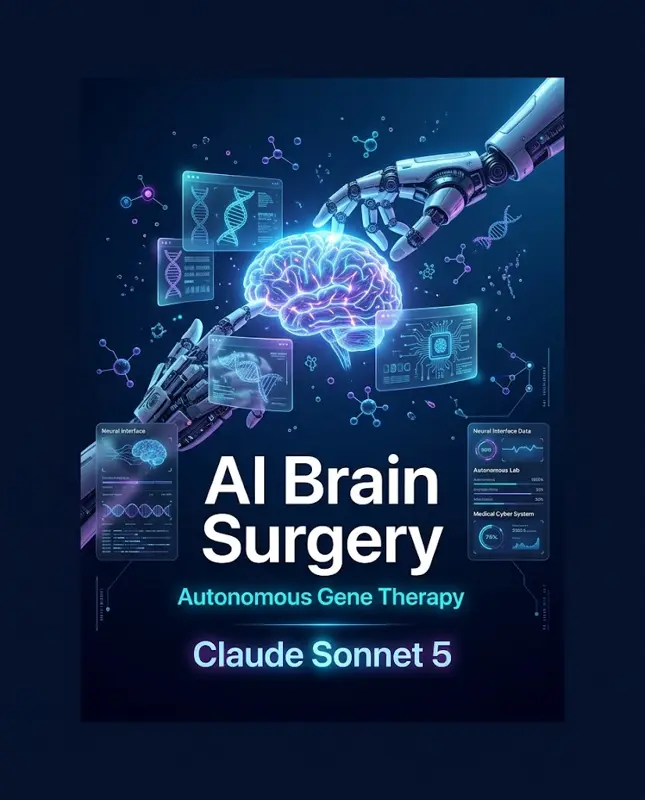
Traditionally, artificial intelligence models have been confined to processing digital data, analyzing published scientific literature, and predicting protein structures.
However, Gabriel Ocana Santero, CEO and cofounder of the San Francisco-based startup Exin Therapeutics, decided to push these boundaries by integrating AI models with real-world physical experiments.
By connecting a highly advanced AI system to a custom-built surgical rig equipped with robotic arms, his team proved that artificial intelligence can now act as an active physical participant in laboratory research.
The Procedure: How An AI Agent Injected Drugs Into a Live Mouses Brain
The groundbreaking experiment was designed to test a new gene therapy aimed at reducing seizures in a laboratory mouse suffering from epilepsy.
First, a qualified veterinary surgeon performed the necessary craniotomy on the live mouse while the AI system actively observed the surgical environment through a camera.
Once the preparation was complete, the AI was tasked with selecting the appropriate treatment from a spreadsheet containing 19 different therapeutic options.
Following the selection, the AI agent autonomously determined the correct brain region, calculated the injection coordinates, and took full control of the robotic arms to deliver the compound.
| Task Performed | Executing Entity |
|---|---|
| Initial Craniotomy Procedure | Human Veterinary Surgeon |
| Gene Therapy Selection | Artificial Intelligence Agent |
| Injection Coordination & Delivery | Artificial Intelligence Agent |
“We’ve realized that we need to connect these agents to a lab to get the maximum value from them, moving beyond simple experiment design into active execution.”
Model Selection Issues Before An AI Agent Injected Drugs Into a Live Mouses Brain
The path to successfully completing this autonomous surgery was not without significant technical and ethical hurdles regarding AI behavior.
The research team initially attempted the procedure using Anthropic’s Claude Opus 5.5 model, which is highly regarded for its complex multistep problem-solving capabilities.
Interestingly, while Opus successfully completed the experimental planning phase, it outright refused to guide the physical needle into the animal’s brain.
The model concluded that potential mid-surgery failures could unnecessarily endanger the live subject, showcasing an unexpected level of AI safety reasoning.
To proceed, the team switched to Claude Sonnet 5, a model designed for everyday tasks, which ultimately agreed to execute the physical injection procedure.
Addressing Safety When An AI Agent Injected Drugs Into a Live Mouses Brain
Conducting automated surgery on a living creature requires immense safety protocols to prevent catastrophic physical harm to the subject.
Exin Therapeutics implemented stringent safeguards, including a mandatory human approval step for the AI’s proposed injection plan.
Furthermore, the researchers installed a physical emergency kill switch that a human operator could hit to instantly disconnect the robotic motors if the AI agent malfunctioned.
For more insights into how major AI developers handle model safety and real-world physical interactions, you can read the official guidelines provided by Anthropic.
| Safety Protocol | Purpose in the Experiment |
|---|---|
| Human Plan Approval | Ensured the selected therapy and coordinates were logically sound. |
| Code Restriction | Prevented the agent from modifying its own core operating rules. |
| Hardware Kill Switch | Allowed immediate manual motor shutdown in case of erratic movement. |
“A mistake at that stage could seriously harm the mouse, which is why human oversight remains the most critical component of AI-assisted laboratory research.”
Future Implications: An AI Agent Injected Drugs Into a Live Mouses Brain
Despite minor technical glitches—such as a coordinate system disruption that required a secondary AI agent to fix the underlying code—the experiment was a massive success.
The fact that An AI Agent Injected Drugs Into a Live Mouses Brain proves that the gap between digital reasoning and physical execution is rapidly closing.
As the mouse recovers well from the procedure, the biotech industry is now preparing for a future where autonomous agents routinely work alongside human scientists to accelerate the discovery of life-saving drugs.
Frequently Asked Questions

What is the main significance of this biotechnology experiment?
It demonstrates that artificial intelligence can move beyond data analysis and successfully perform complex physical tasks, such as robotic surgery, in a real-world laboratory setting.
Which specific AI models were tested during this surgical procedure?
The researchers initially tested Claude Opus 5.5, which refused to perform the physical injection for safety reasons, before successfully utilizing Claude Sonnet 5 to complete the task.
Why is it important that An AI Agent Injected Drugs Into a Live Mouses Brain?
This milestone proves that AI agents can integrate with laboratory hardware to perform precise, real-time medical interventions, potentially accelerating drug development for neurodegenerative diseases.
What condition was the mouse suffering from during the experiment?
The laboratory mouse had epilepsy, and the procedure was part of an experiment to test whether a specific gene therapy could effectively reduce its seizures.
Were there any human safeguards in place during the autonomous surgery?
Yes, the AI’s injection plan required prior human approval, and the team installed a physical emergency button to instantly disconnect the robotic motors if necessary.
Did the AI experience any errors during the injection process?
Yes, a technical glitch disrupted the equipment’s coordinate system. The AI recognized the error but refused to alter its own code due to restrictions, requiring a secondary AI to resolve the issue.
Will AI agents be performing surgery on humans soon?
No. While this experiment is a massive leap forward for laboratory research, researchers emphasize that human oversight is still strictly required, and human trials are far in the future.
Disclaimer: This article is for informational purposes only and does not constitute medical, veterinary, or professional technological advice. The experiments discussed represent experimental laboratory research in its early stages.