If you have recently noticed a missed call from the 767 area code, you are certainly not alone. Thousands of smartphone users across the United States have reported receiving mysterious, brief phone calls from this exact prefix. Many people instinctively call back, assuming it is an urgent message from a local business or a friend. However, returning these calls can lead to significant financial consequences. In this comprehensive guide, we will explore everything you need to know about this specific phone number prefix. We will cover its geographic location, the reasons behind these sudden calls, and the proactive steps you can take to safeguard your mobile device.
Understanding the True Location of the 767 Area Code
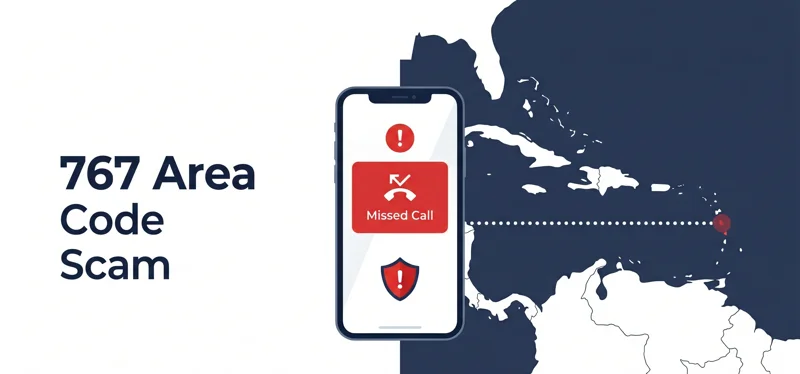
Before dialing back an unknown number, it is crucial to identify its origin. The 767 area code is not a domestic United States phone number. Instead, it serves the Commonwealth of Dominica, an island nation located in the Caribbean Sea. Because Dominica is part of the North American Numbering Plan (NANP), calls originating from this region look deceptively similar to standard US domestic numbers.
This similarity is exactly why the 767 area code is frequently utilized in global telecommunications fraud. Scammers rely on the fact that American consumers are accustomed to ten-digit dialling. When you see a number starting with this prefix, your smartphone might not immediately flag it as an international call. Consequently, many individuals answer or return the call without hesitation.
The telecommunications infrastructure in Dominica is modernized, allowing international calls to be routed seamlessly. Unfortunately, this also means bad actors can easily purchase blocks of numbers within the 767 area code. They use automated dialing systems to target US area codes massively, attempting to exploit the seamless nature of the NANP system.
The Problem: The Infamous 767 Area Code One-Ring Scam
The primary reason you are receiving unexpected calls from the 767 area code is likely due to the “Wangiri” or “One-Ring” scam. The mechanics of this fraudulent activity are relatively straightforward but highly effective. Fraudsters program computers to dial thousands of random mobile numbers across North America. The system lets the phone ring only once or twice before automatically disconnecting.
The immediate goal of a 767 area code scammer is to exploit human curiosity. When you look at your screen and see a missed call, your natural inclination is to find out who was trying to reach you. If you are expecting an important delivery, a job interview call, or news from a family member, you are even more likely to press the callback button.
Once you dial the 767 area code back, the trap is sprung. You are not calling a standard mobile or landline number. Instead, you are dialing an international premium-rate number. These numbers are functionally similar to the 900 numbers that were popular in the 1990s. The scammers own or lease these premium lines and collect a portion of the exorbitant connection fees and per-minute charges.
How Scammers Keep You on the Line
Returning a call to a 767 area code number can result in charges ranging from $15 to $30 just for the initial connection. Furthermore, you may be billed several dollars for every minute you remain on the line. To maximize their illicit profits, scammers employ various psychological tactics to prevent you from hanging up immediately.
You might hear a recorded message claiming you have won a tropical vacation or a massive cash prize. Alternatively, the 767 area code scammers might use a fake emergency recording, such as someone pretending to be a medical professional or law enforcement officer. Some sophisticated operations even use generic hold music, tricking you into waiting for a “customer service representative” who never arrives.
By the time you realize the call is illegitimate and hang up, the damage is done. The charges are applied directly to your monthly cellular bill. Because you technically initiated the outgoing call, disputing these charges with your mobile carrier can be a complex and frustrating process. This makes the 767 area code one of the most profitable tools for international fraudsters.
Your best defense against mobile fraud is a simple rule: if you do not recognize the number, do not answer, and never call back.
Recognizing Legitimate vs. Fraudulent 767 Area Code Calls
While the vast majority of unsolicited calls from this region are spam, there are rare instances where a 767 area code call might be legitimate. For example, if you have family residing in Dominica, or if you conduct international business with companies based in the Caribbean, you might receive genuine communications. Therefore, it is important to know how to differentiate between a real caller and a scammer.
A legitimate caller will typically leave a detailed voicemail explaining who they are and why they are calling. They will let the phone ring for a normal duration, rather than hanging up after a single ring. Furthermore, if you are expecting correspondence from the Caribbean, a genuine 767 area code contact will usually follow up with an email or a text message if they cannot reach you by voice.
Conversely, fraudulent calls exhibit distinct patterns. They often occur at unusual hours, such as the middle of the night, to catch you off guard and increase the chances of a groggy callback. They rarely leave voicemails, and if they do, the message is usually an automated, high-pressure recording demanding immediate action. By paying attention to these red flags, you can safely navigate incoming calls.
| Call Characteristic | Legitimate Call | Likely Scam |
|---|---|---|
| Ring Duration | Rings 4-6 times, goes to voicemail | Rings only once or twice |
| Voicemail Left | Yes, with clear context and name | No voicemail, or an automated robotic threat |
| Time of Call | Normal business hours in the Caribbean | Middle of the night or early morning |
| Frequency | Occasional, based on your relationships | Multiple rapid-fire calls from similar numbers |
The Solution: How to Block and Report the 767 Area Code
Taking immediate action is the only way to stop the relentless influx of unwanted calls. Fortunately, modern smartphones and mobile carriers offer robust tools to combat 767 area code scams. The first and most immediate step is to utilize the native blocking features built into your device’s operating system.
Blocking Calls on iOS and Android
If you are an iPhone user, silencing the 767 area code is straightforward. Open your Phone app, navigate to your recent calls list, and tap the information icon (the small ‘i’ in a circle) next to the suspicious number. Scroll down to the very bottom of the screen and tap “Block this Caller.” Additionally, you can enable the “Silence Unknown Callers” feature in your general settings to automatically send numbers not in your contacts to voicemail.
For Android users, the process is quite similar. Open the standard Phone application and locate your recent call history. Long-press on the offending 767 area code number and select “Block/Report Spam” from the pop-up menu. Many Android devices, particularly Google Pixel and Samsung models, have excellent built-in spam filtering that you can toggle on in your dialer settings.
Leveraging Carrier Tools and Third-Party Apps
While device-level blocking is effective for individual numbers, scammers frequently spoof new digits within the 767 area code. To combat this, you should activate the free spam-blocking services provided by your cellular carrier. AT&T offers ActiveArmor, Verizon provides Call Filter, and T-Mobile utilizes Scam Shield. These network-level protections intercept known fraudulent numbers before your phone even rings.
If you need even stronger protection against the 767 area code, consider downloading reputable third-party applications. Apps like Truecaller, Nomorobo, and Hiya maintain massive, user-updated databases of spam numbers. They can automatically identify and block international premium-rate scams, providing an extra layer of security for your daily communications.
| Blocking Method | Pros | Cons |
|---|---|---|
| Native OS Blocking (iOS/Android) | Free, built-in, very easy to use immediately | Only blocks individual numbers, not prefixes |
| Carrier Spam Apps (Scam Shield, etc.) | Network-level blocking, high accuracy | Premium features often require a monthly fee |
| Third-Party Apps (Truecaller, Hiya) | Massive community-driven scam databases | Requires granting access to your contact list |
What to Do If You Already Answered a 767 Area Code Call
If you accidentally answered a call from the 767 area code, do not panic. Simply answering the phone usually does not incur the massive premium charges associated with this scam. The real danger lies in dialing the number back. If you answered, simply hang up immediately. Do not speak, do not press any buttons to “opt-out,” and do not provide any personal information.
However, if you fell victim to the one-ring scam and dialed the 767 area code back, you must act quickly. First, contact your mobile service provider immediately. Explain that you were a victim of a Wangiri scam and ask them to remove the international premium charges from your upcoming bill. Most major carriers are aware of this issue and will reverse the fraudulent charges if you report them promptly.
Next, you should ask your carrier to completely block all outgoing international calls from your mobile device. Unless you regularly travel abroad or have family overseas, disabling international dialing is the ultimate safeguard against the 767 area code and similar global telecom scams.
Reporting 767 Area Code Fraud to Authorities
To help telecommunications authorities track down and dismantle these criminal operations, you should report any 767 area code scam calls you receive. Every report helps build a database of spoofed numbers, allowing carriers to update their network filters and protect other vulnerable consumers.
In the United States, the primary agency handling telecommunications fraud is the FCC. They have dedicated portals for consumers to log complaints regarding international caller ID spoofing and the one-ring scam. By taking five minutes to file a report, you contribute to a safer digital environment for everyone.
For more detailed information on consumer protection and to file an official complaint regarding these fraudulent activities, you can visit the official website of the Federal Communications Commission (FCC).
767 Area Code Frequently Asked Questions
Where is the 767 area code located exactly?
The 767 area code is assigned to the Commonwealth of Dominica, an island country situated in the Caribbean Sea. It is part of the North American Numbering Plan.
Is the 767 area code toll-free?
No, it is absolutely not toll-free. It is an international number. Calling a 767 area code number from the US will incur international long-distance fees, and if it is a scam, massive premium-rate charges.
Why did a 767 area code number only ring once?
This is the signature of the “One-Ring Scam.” Scammers let it ring once and hang up, hoping you will be curious enough to call them back on their expensive premium-rate line.
Can my phone be hacked just by answering a 767 area code call?
Generally, answering the call will not hack your phone or install malware. The scam relies purely on tricking you into returning the call and paying astronomical per-minute telephone billing rates.
How much does it cost if I call back a 767 area code scammer?
Depending on the specific premium line setup by the fraudsters, you could be charged an initial connection fee of $15 to $30, plus an additional $2 to $9 for every minute you stay connected.
Should I text the 767 area code number to see who it is?
No. Texting the number will confirm to the scammers that your phone line is active. This will result in your number being sold to other telemarketing and scam networks, increasing your daily spam volume.
How do I stop all 767 area code calls permanently?
The most effective permanent solution is to ask your mobile phone carrier to block all outgoing and incoming international calls on your account. You should also utilize carrier-provided spam filtering applications.
Disclaimer: This article is for informational purposes only. Do not consider this legal or financial advice. Always consult your mobile carrier for official billing disputes.