Xiaomi launches new Xring chip partners with TSMC for production sources say, marking a bold leap forward in the smartphone manufacturer’s mission to gain complete control over its hardware supply chain.
As the consumer electronics sector navigates intense competition in 2026, major device vendors are shifting toward custom proprietary silicon. Developing in-house processors allows manufacturers to tailor performance, optimize battery efficiency, and reduce heavy reliance on third-party suppliers.
Inside the Breakthrough: Xiaomi launches new Xring chip partners with TSMC for production sources say
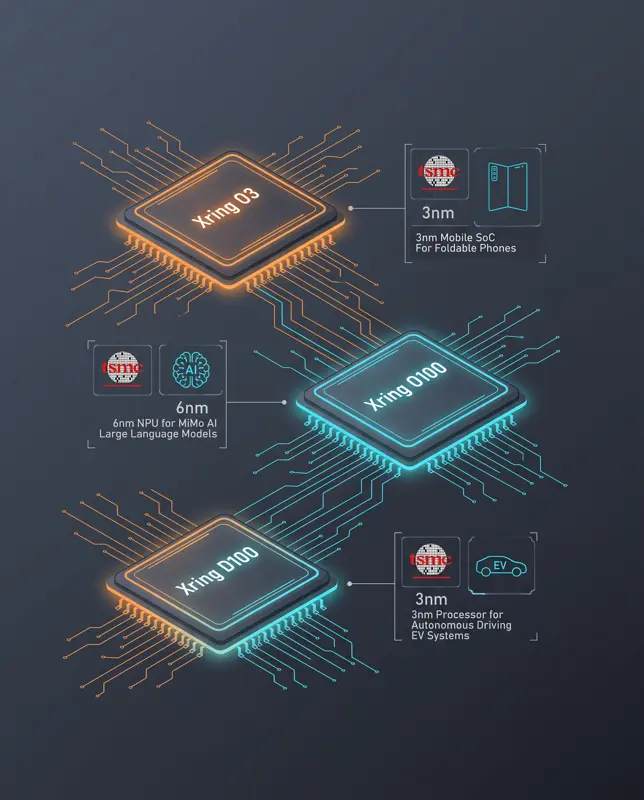
Industry insiders report that the newly unveiled Xring O3 processor is being manufactured on TSMC’s cutting-edge 3-nanometre node. This represents a monumental technological leap compared to the first-generation Xring O1 chipset introduced last year.
By leveraging advanced semiconductor fabrication, the Beijing-based tech giant aims to compete directly against premium flagship silicon from Apple, Samsung Electronics, and Huawei.
Xiaomi’s direct partnership with TSMC for custom 3nm silicon signals an aggressive bid to reshape the balance of power in the global smartphone market.
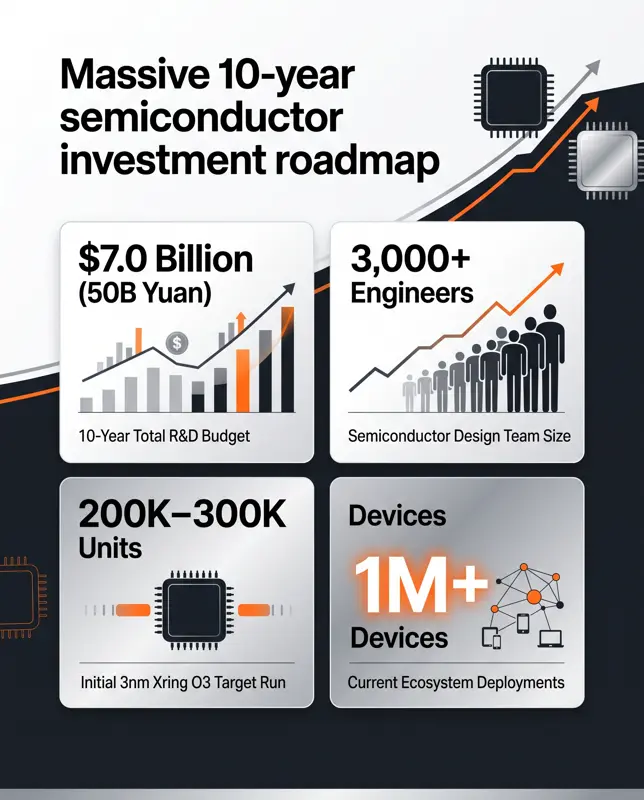
According to supply chain estimates, the company is aiming for an initial production run of 200,000 to 300,000 units. The flagship processor is expected to debut inside an upcoming premium folding smartphone.
| Chip Model | Process Node | Target Application | Production Status |
|---|---|---|---|
| Xring O3 | TSMC 3nm | Flagship Foldable Smartphones | Mass Production |
| Xring O100 | TSMC 6nm | MiMo LLM On-Device AI NPU | Deployment Next Year |
| Xring D100 | TSMC 3nm | Autonomous Driving Systems | Deployment Next Year |
Strategic Silicon Expansion: Xiaomi launches new Xring chip partners with TSMC for production sources say
This semiconductor expansion extends far beyond smartphones. The company has committed more than 50 billion yuan ($7.0 billion) across a ten-year investment cycle to develop comprehensive in-house silicon.
The dedicated semiconductor engineering workforce has grown rapidly to over 3,000 specialists. Alongside the O3 mobile processor, Xiaomi contracted TSMC to manufacture dedicated artificial intelligence and automotive chips.
Challenging Rival Ecosystems: Xiaomi launches new Xring chip partners with TSMC for production sources say
The premium foldable market represents a crucial battlefield. In regional markets, Huawei currently leads foldable smartphone shipments with significant market share, followed by competitors like Honor and Oppo.
Deploying custom silicon in top-tier foldables gives the company greater architectural flexibility to introduce differentiated software features and AI capabilities. Financial analysts track these corporate developments via official Reuters business reporting covering global supply chains.
In-house processors provide mobile brands with vital bargaining power against surging third-party component prices during memory crunches.
| Strategic Metric | Investment & Shipment Figures |
|---|---|
| 10-Year Semiconductor Budget | 50 Billion Yuan (~$7.0 Billion USD) |
| Capital Invested to Date | Over 20 Billion Yuan (~$3.0 Billion USD) |
| Chip Design Team Size | 3,000+ Semiconductor Engineers |
| Xring O1 Lifetime Ecosystem Deployments | Over 1 Million Connected Devices |
Market Impact: Xiaomi launches new Xring chip partners with TSMC for production sources say
Global smartphone shipments face broader economic headwinds driven by escalating component and memory costs. Transitioning to proprietary silicon safeguards gross margins while reinforcing product exclusivity.
With cumulative deployments of previous Xring hardware already topping one million devices across tablets, smartwatches, and phones, the new 3nm generation positions the brand for sustained independence.
Frequently Asked Questions
What is the main announcement regarding Xiaomi’s custom silicon?
Industry leaks confirm that Xiaomi launches new Xring chip partners with TSMC for production sources say, unveiling the 3nm Xring O3 processor.
Which foundry is fabricating the new Xring O3 processor?
Taiwan Semiconductor Manufacturing Company (TSMC) is manufacturing the chip using its advanced 3-nanometre fabrication technology.
What device is expected to debut the Xring O3 chipset?
The processor is targeted to power Xiaomi’s upcoming flagship folding smartphone to challenge rivals in the premium segment.
How many units of the Xring O3 are planned for initial production?
Sources indicate an initial shipment target of approximately 200,000 to 300,000 units.
Are there other custom processors in development?
Yes, Xiaomi has developed the 6nm Xring O100 NPU for on-device AI and the 3nm Xring D100 for autonomous driving systems.
How much capital is invested in this semiconductor project?
The company has planned a 10-year investment exceeding 50 billion yuan ($7.0 billion), with over 20 billion yuan invested so far.
Why are smartphone manufacturers developing custom silicon?
In-house chips reduce reliance on external suppliers like Qualcomm and MediaTek while offering customized performance and cost stability.
Disclaimer: This article is for informational purposes only. Details regarding unreleased chipsets, foundry contracts, and product roadmaps are based on industry reporting, anonymous sources, and financial disclosures, and may change upon final product launches.