For anyone wondering why underwater turbines not popular tidal energy explained in detail reveals a fascinating mix of incredible technological potential and massive physical barriers. While solar panels and wind farms dominate the global renewable energy conversation in 2026, the immense power of our oceans remains largely untapped.
The concept of placing massive, spinning turbines beneath the waves makes perfect sense in theory. It is virtually identical to wind power, but it utilizes the natural, relentless motions of the planet’s oceans. This method generates little to no carbon pollution, offering a highly attractive alternative to fossil fuels.
However, despite the clear benefits, widespread adoption remains stubbornly low. To fully grasp this, we must dive deep into the ocean tidal power pros and cons, analyzing everything from energy density to severe environmental challenges.
The True Potential: why underwater turbines not popular tidal energy explained
One of the biggest advantages of tidal power is its sheer strength. Because water is significantly denser than air, even a slow-moving ocean current can generate a massive renewable energy power output. This density allows underwater turbines to capture more kinetic energy than standard wind turbines.
Furthermore, tides are entirely predictable. Unlike wind, which can unexpectedly die down, or solar power, which relies on cloudless days, the ocean’s tides are governed by the gravitational pull of the Sun and Moon. This predictability makes tidal energy highly reliable on a daily basis.
Tidal power offers an incredibly dense and mathematically predictable energy source, yet it remains one of the most underutilized renewable technologies worldwide.
Additionally, tidal energy is a near-zero-carbon solution. A single kilowatt-hour of energy produced by a tidal turbine generates only about 0.05 pounds of carbon dioxide. This is exponentially less than traditional coal or oil power plants.
| Energy Source | Predictability | Carbon Footprint |
|---|---|---|
| Tidal Power | Extremely High (Astronomical) | Near-Zero |
| Wind Power | Moderate (Weather Dependent) | Near-Zero |
| Solar Power | Moderate (Daylight/Weather) | Near-Zero |
Financial Barriers: why underwater turbines not popular tidal energy explained
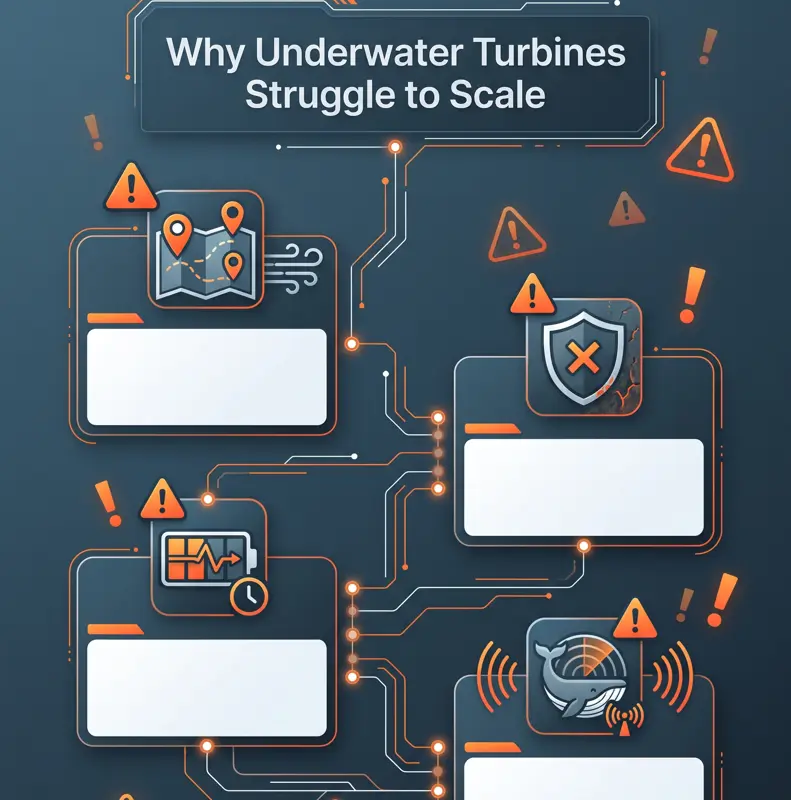
If the power output is so great, what is holding us back? The primary answer lies in the massive tidal power plant installation costs. Building, transporting, and installing massive steel structures on the turbulent ocean floor is a logistical nightmare.
Seawater is incredibly corrosive. Equipment must be built to withstand not only the physical crushing pressure of the ocean but also the constant chemical degradation from saltwater. Maintenance is extremely difficult, requiring specialized diving teams and expensive underwater robotics.
Operating these systems is costly. Recent data indicates that running tidal operations can be significantly more expensive per megawatt-hour compared to traditional onshore wind operations. You can read more about marine energy research at the official marine energy data portal.
Ecology and Zoning: why underwater turbines not popular tidal energy explained
Beyond the financial strain, the underwater turbine environmental impact cannot be ignored. Installing massive spinning blades underwater poses a direct physical threat to marine life, including fish and marine mammals.
Moreover, large installations can disrupt local tidal flow fields, causing sediment buildup or erosion. Studies have also shown that the electromagnetic frequencies generated by underwater cables can interfere with the magnetic pathfinding abilities of migratory species like sharks and whales.
The harsh marine environment makes building, protecting, and maintaining underwater turbines both mechanically challenging and financially draining.
Zoning is another massive hurdle. Turbines cannot just be placed anywhere. They require very specific coastlines with optimal depths—deep enough to avoid surface turbulence but shallow enough to maintain current velocity. Only a handful of countries have these perfect geographical conditions.
| Pros of Tidal Energy | Cons of Tidal Energy |
|---|---|
| Highly predictable energy generation | Extremely high upfront and maintenance costs |
| High energy density (water vs. air) | Strict geographical and zoning limitations |
| Near-zero carbon emissions | Potential harm to local marine ecosystems |
FA