
‘They will ruin my life”: Microsoft threatens to wield ‘Digital Crimes Unit’ over exploit disclosures — causing uproar in the cybersecurity community’ in what is rapidly becoming the most controversial tech story of 2026. The balance between massive tech corporations and independent researchers has always been precarious, but recent events have shattered that fragile trust.
The tech world is currently reeling from unverified but highly explosive claims made by a security researcher known by the alias Nightmare Eclipse. Following severe alleged intimidation, Eclipse chose to bypass standard protocols entirely.
Instead of waiting for a quiet patch, this expert publicly disclosed six major Windows security vulnerabilities. This drastic move of whitehat hacker retaliation was allegedly triggered by intense corporate bullying rather than a desire for financial gain.
The Origins of ‘They will ruin my life”: Microsoft threatens to wield ‘Digital Crimes Unit’ over exploit disclosures — causing uproar in the cybersecurity community’
Typically, independent security experts submit their findings directly through the official Microsoft Security Response Center. The goal is to safely patch vulnerabilities before malicious state-backed actors can exploit them.
In theory, the Microsoft bug bounty program is designed to reward these ethical hackers handsomely. However, industry insiders have long complained that actually receiving fair compensation is incredibly difficult and full of bureaucratic roadblocks.
Nightmare Eclipse claims that after reporting these critical flaws, they were not met with gratitude. Instead, they were explicitly told that the corporation would ruin their life. The alleged weaponization of the Microsoft Digital Crimes Unit against a reporting researcher has sparked massive outrage.
“It was soo bad at some point I was wondering if I was dealing with a massive corporation or someone who is just having fun seeing me suffer.”
The Fallout: ‘They will ruin my life”: Microsoft threatens to wield ‘Digital Crimes Unit’ over exploit disclosures — causing uproar in the cybersecurity community’
By releasing these exploits into the public domain, the researcher has forced the tech giant’s hand. Millions of systems relying on Windows and Azure architectures are temporarily exposed until emergency patches can be successfully deployed globally.
This incident has validated the long-standing frustrations of many independent ethical hackers. The resulting cybersec community uproar is deafening, with many professionals sharing their own past horror stories of ignored reports and unpaid bounties.
| Vulnerability Type | Affected System | Potential Risk Level |
|---|---|---|
| Privilege Escalation | Windows 11 Core | Critical |
| Remote Code Execution | Azure Cloud Services | Severe |
| Authentication Bypass | Microsoft 365 | High |
Timeline of ‘They will ruin my life”: Microsoft threatens to wield ‘Digital Crimes Unit’ over exploit disclosures — causing uproar in the cybersecurity community’
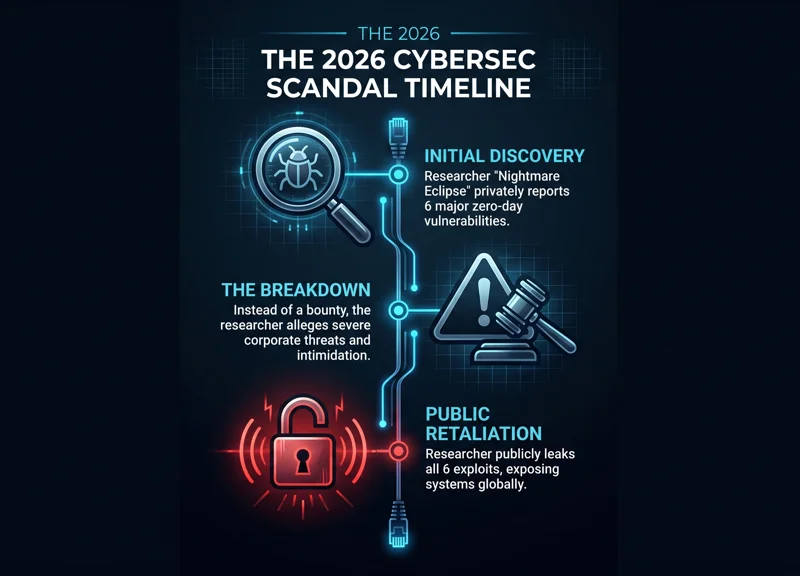
To fully understand the gravity of this 2026 scandal, it is essential to trace how a routine bug disclosure escalated into a full-blown public crisis. The timeline reveals a deep breakdown in professional communication.
Eclipse mentioned that usually, they would go through the exhausting process of begging a company to fix a bug. In this specific scenario, however, they claim the corporation “mopped the floor” with them and played childish games.
When an individual feels stripped of everything, they often resort to a “scorched earth” strategy. Disclosing six distinct zero-day flaws at once is an unprecedented move that highlights a deeply broken relationship.
| Phase | Event Description |
|---|---|
| Initial Discovery | Eclipse identifies 6 major exploits and contacts the corporation privately. |
| The Breakdown | Instead of a bounty, alleged threats regarding life ruination are issued. |
| Public Retaliation | All six exploits are published openly online for the world to see. |
When a corporation prioritizes intimidation over collaboration, the entire digital ecosystem becomes far more vulnerable to malicious attacks.
A Broken Ecosystem: ‘They will ruin my life”: Microsoft threatens to wield ‘Digital Crimes Unit’ over exploit disclosures — causing uproar in the cybersecurity community’
The current state of vulnerability reporting is heavily skewed in favor of massive tech conglomerates. Independent researchers invest countless hours hunting for bugs, only to be met with silent treatment or, in Eclipse’s alleged case, severe intimidation.
This dynamic creates a dangerous chilling effect. If ethical hackers fear legal retaliation more than they desire bug bounty payouts, they will either stop looking for flaws or sell them on the dark web to malicious actors.
Tech giants must reform their disclosure pipelines immediately. Building trust with the independent security community is not just good public relations; it is a critical necessity for global digital defense.
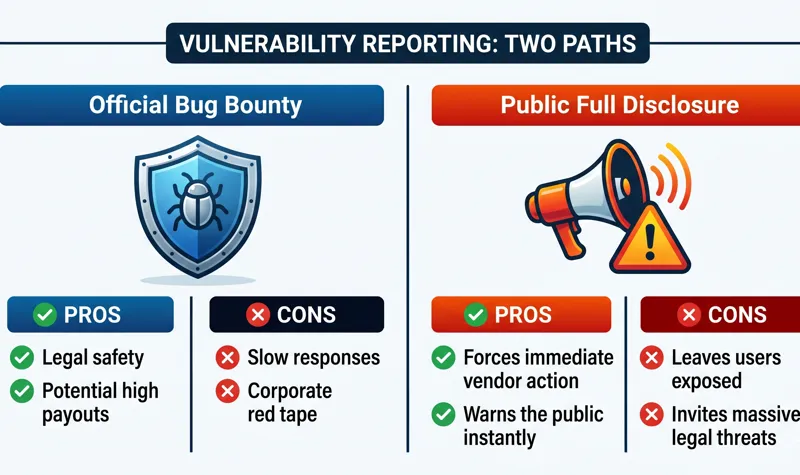
| Approach | Pros | Cons |
|---|---|---|
| Official Bug Bounty | Legal safety, potential high payouts, safe patching process. | Slow responses, arbitrary payout denials, corporate red tape. |
| Public Full Disclosure | Forces immediate vendor action, warns the public instantly. | Leaves users exposed, invites massive legal threats. |
Frequently Asked Questions
Who is Nightmare Eclipse?
Nightmare Eclipse is the alias of an independent cybersecurity researcher who recently leaked six major Windows vulnerabilities online.
Why did the researcher leak the vulnerabilities publicly?
The researcher claims they faced extreme personal threats and intimidation from the company instead of receiving fair compensation for their findings.
What is a bug bounty program?
It is a reward system offered by tech companies where ethical hackers are paid for privately reporting security flaws so they can be fixed safely.
Are the claims of intimidation verified?
As of now, Nightmare Eclipse’s specific claims of threats remain unverified, though other researchers have previously voiced similar frustrations regarding payment disputes.
What is the Microsoft Digital Crimes Unit?
The DCU is a specialized corporate team designed to fight global cybercrime, but the researcher alleges its power was threatened against them inappropriately.
How does this leak affect average computer users?
Publicly disclosing exploits before they are patched means that malicious hackers can potentially use them against everyday users until an official update is released.
What is a whitehat hacker?
A whitehat hacker is an ethical computer security expert who tests systems for vulnerabilities in order to improve security rather than cause harm.
Disclaimer: This article is for informational purposes only. The claims regarding corporate threats are based on unverified public statements made by a security researcher. Users should always ensure their software is updated to the latest available security patches.