
A Zoom Screen Sharing Bug Let Anyone Take Over Other Devices on a Call, marking one of the most alarming cybersecurity discoveries of 2026. As remote work and digital collaboration continue to dominate the global corporate landscape, the tools we rely on daily are under intense scrutiny. Recently, cybersecurity researchers uncovered a severe flaw in a leading video conferencing platform, proving that an everyday action like sharing your screen could lead to total device compromise.
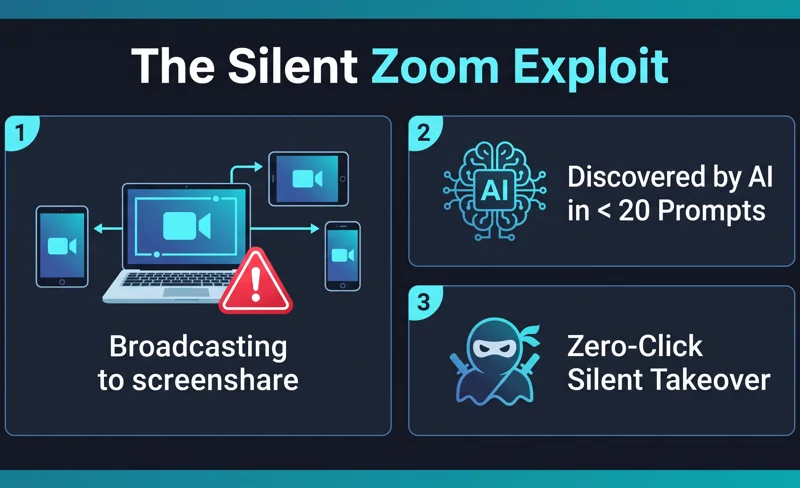
The revelation that a single vulnerability could grant attackers unrestricted access to a machine is a stark reminder of the fragile nature of software security. This wasn’t just a minor glitch; it was a silent exploit that required zero interaction from the victim. The attacker only needed to be on the same conference call to initiate the hijacking process.
Understanding How A Zoom Screen Sharing Bug Let Anyone Take Over Other Devices on a Call
To fully grasp the severity of the situation, we must look at the mechanics of the exploit. The core issue was deeply embedded within the real-time annotation protocol. When participants use the screen-sharing feature, the software activates a complex set of proprietary functions designed to allow users to draw, highlight, and interact with the shared screen.
Because these components are often obscure and highly complex, they can harbor overlooked mistakes. A Zoom Screen Sharing Bug Let Anyone Take Over Other Devices on a Call because this annotation protocol lacked proper input validation and memory safeguards. This failure allowed an attacker to inject malicious commands directly into the memory space of other participants’ devices.
| Vulnerability Aspect | Detail |
|---|---|
| Affected Component | Real-time Annotation Protocol |
| Trigger Mechanism | Screen Sharing Activation |
| Victim Interaction | None Required (Silent Exploit) |
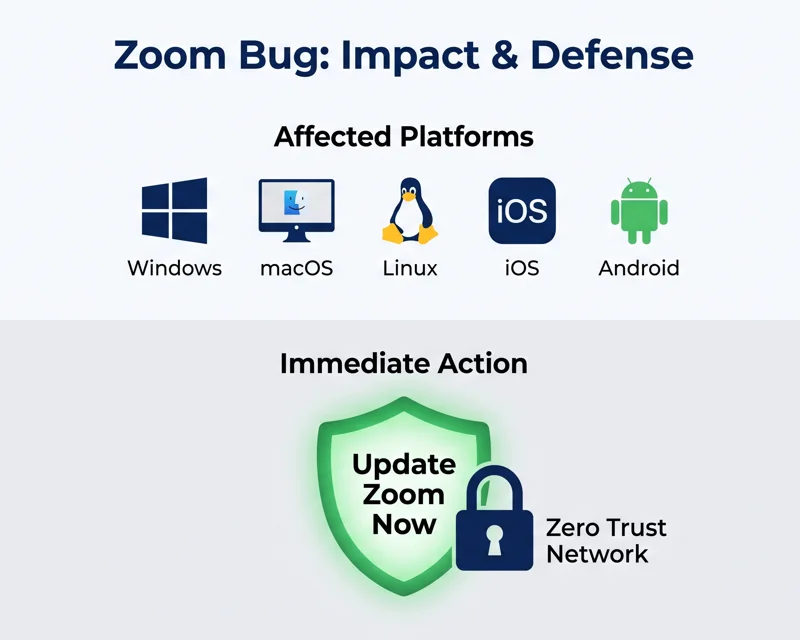
| Impacted OS | Windows, macOS, Linux, iOS, Android |
“The barrier to entry for discovering catastrophic software flaws is dropping rapidly, changing the landscape of enterprise security forever.”
The AI Connection: Why A Zoom Screen Sharing Bug Let Anyone Take Over Other Devices on a Call
Perhaps the most shocking element of this incident is how the flaw was discovered. Researchers utilized publicly available artificial intelligence models to hunt for vulnerabilities. In the past, finding a zero-day exploit of this magnitude would have required a dedicated team of highly skilled security professionals working for months.
In this case, it took fewer than 20 prompts for the AI system to identify the weakness and generate a working exploit. This democratizes hacking capabilities, making it easier for both security researchers and malicious actors to find critical flaws. The fact that A Zoom Screen Sharing Bug Let Anyone Take Over Other Devices on a Call with such minimal human effort highlights a terrifying evolution in cyber threats.
Organizations must now realize that the speed of attack development is accelerating exponentially. For more insights on mitigating advanced threats, professionals can consult resources provided by the Cybersecurity and Infrastructure Security Agency. Staying informed through official channels is critical when dealing with sophisticated, AI-generated exploits.
Anatomy of the Attack: A Zoom Screen Sharing Bug Let Anyone Take Over Other Devices on a Call
Once the vulnerability was triggered, the attacker gained complete control over the host or participant’s machine. They could execute arbitrary code, harvest sensitive credentials, and pivot to other systems within the enterprise network. This lateral movement is the ultimate goal of advanced persistent threats.
Joining a virtual meeting is generally considered a low-risk activity. Users naturally let their guard down, assuming trust in a corporate or semipublic webinar environment. This false sense of security made the vulnerability particularly dangerous, as a successful attack would leave absolutely no visual or audible trace on the victim’s end.
| Event | Timeline (2026) |
|---|---|
| Initial AI Prompting | Early June |
| Vulnerability Discovered | Under 24 Hours Later |
| Private Disclosure | Mid June |
| Public Security Advisory & Patch | Late June / Early July |
“If an attacker can take over your device simply by joining the same virtual room, the fundamental trust we place in everyday communication tools is completely broken.”
Securing Your Workspace Against A Zoom Screen Sharing Bug Let Anyone Take Over Other Devices on a Call
Fortunately, the vendor responded rapidly once the researchers disclosed the findings. Both server-side mitigations and client-side patches were deployed across all supported operating systems. However, a patch is only effective if users actually install it. It is imperative that every individual and IT department immediately forces updates for their communications software.
To prevent future incidents where A Zoom Screen Sharing Bug Let Anyone Take Over Other Devices on a Call, enterprises should adopt a Zero Trust architecture. This means strictly limiting the permissions granted to third-party applications and continuously monitoring endpoint activity for anomalous behaviors, such as unexpected child processes spawning from a video conferencing client.
Users should also practice basic cyber hygiene. Avoid joining public links hosted by unverified entities, and consider utilizing network segmentation to isolate work devices from personal home networks. As AI continues to accelerate the discovery of software flaws, proactive defense is the only viable strategy.
Frequently Asked Questions
How exactly did A Zoom Screen Sharing Bug Let Anyone Take Over Other Devices on a Call?
The flaw existed in the real-time annotation protocol. Attackers could manipulate the screen-sharing feature to silently inject malicious code into the memory of other participants’ devices without requiring any clicks or interaction from the victims.
Is it true that A Zoom Screen Sharing Bug Let Anyone Take Over Other Devices on a Call using AI?
Yes. Security researchers used public artificial intelligence models and uncovered this complex zero-day vulnerability in fewer than 20 prompts, drastically reducing the time and effort traditionally required for bug hunting.
Which operating systems were affected by this vulnerability?
The vulnerability impacted all major platforms supported by the application, including Windows, macOS, Linux, iOS, and Android devices.
Did the victim have to click a malicious link during the meeting?
No. This was a zero-click exploit. The victim only had to be present in the same meeting where screen sharing was active for the attacker to execute the takeover.
Has the software company fixed this critical security flaw?
Yes. The vendor has issued comprehensive security advisories and rolled out both server-side fixes and client-side patches to fully address the vulnerability.
What should I do right now to protect my computer and data?
You must immediately check for updates in your video conferencing application and ensure you are running the latest version. Enable automatic updates if the feature is available.
Could this vulnerability be used to hack into an entire company network?
Absolutely. Once an attacker uses the exploit to take over a single employee’s device, they can steal network credentials and move laterally to compromise the entire corporate infrastructure.
Disclaimer: This article is for informational purposes only and does not constitute professional cybersecurity advice. Always consult with certified IT professionals regarding your system security and software updates.