When analyzing UX trends, the insights of the steve krug dont make me think author frictionless internet pioneer are incredibly relevant today. The digital landscape has evolved aggressively since the early days of the web, leading to a massive crisis in how we consume online media.
Back in 2000, his foundational book revolutionized how we interact with digital spaces. He advocated for intuitive, easy-to-navigate interfaces where buttons looked like buttons and text was highly readable.
His core philosophy was simple: websites and apps should just work, effortlessly. However, the modern implementation of this philosophy has taken a dark turn in recent years.
Today, that exact philosophy has been twisted. The steve krug dont make me think author frictionless internet visionary looks at the digital landscape of 2026 and expresses genuine horror at what tech companies have built.
Tech giants took the concept of a seamless web and engineered it into an addictive psychological trap. Instead of helping users accomplish their digital chores quickly, modern platforms trap them in endless doomscrolling loops.
“It is not frictionlessness that ruined the internet, but bad actors who made bad products addictively friction-free.”
The original goal of user experience was to save time and reduce mental fatigue. Now, multi-billion dollar companies leverage these exact same psychological principles to monopolize human attention at the cost of public mental health.
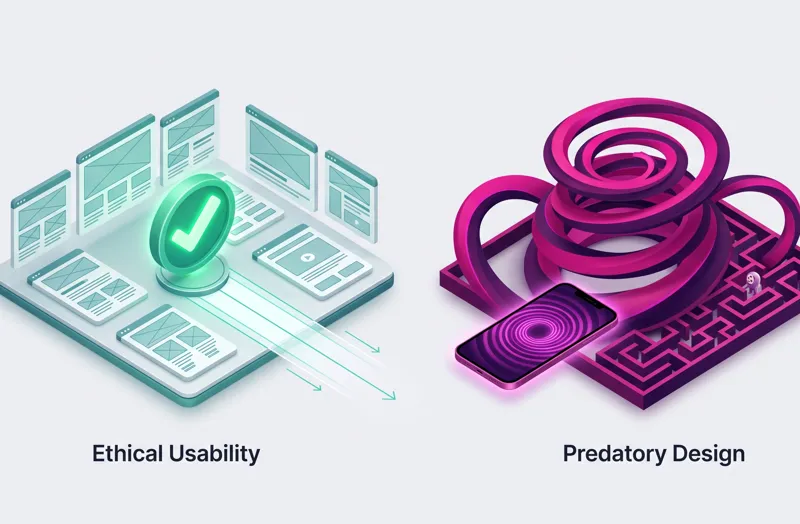
There is a massive difference between good usability and predatory design. The steve krug dont make me think author frictionless internet expert separates these modern interfaces into two distinct categories.
Good frictionlessness means making it easy to pay a bill, submit a form, or cancel a subscription. It empowers the consumer. Bad frictionlessness means removing all stopping cues so users stare at algorithmic video feeds for hours without blinking.
To understand ethical user experience, you can review established guidelines and historic design frameworks from the Nielsen Norman Group, which emphasize true user advocacy.
| UX Design Concept | Ethical Usability (Krug’s Vision) | Predatory Usability (2026 Reality) |
|---|---|---|
| Navigation Paths | Clear paths to accomplish specific tasks | Infinite scroll with hidden exit options |
| Primary User Goal | Save the user’s time and mental energy | Maximize screen time and engagement metrics |
| Handling Friction | Removed for chores, kept for user safety | Completely eliminated to force habituation |
Many wonder if the Meta engineers building endless reels are actually following these classic usability principles. According to the steve krug dont make me think author frictionless internet creator, the answer is a resounding no.
A true UX designer acts as a user advocate above all else. If a digital product leaves the user feeling worse, lonely, or addicted, it violates the core ethics of foundational web design.
Because of rising loneliness and screen addiction, a massive counter-movement has emerged across the United States in 2026. People are actively turning to dumbphones and lockout apps to forcefully add friction back into their daily routines.
The steve krug dont make me think author frictionless internet master actually applauds this growing trend. He admires those who realize that hyper-optimized modern tech is no longer improving their lives.
“The man who told the world ‘Don’t Make Me Think’ is now cheering for tech users who are begging to think more.”
These friction-maxxers are taking back control by rejecting the seamless feeds that rob them of their time, prioritizing analog hobbies and real-world interactions instead.
If he could redesign social platforms today, he would implement strict, intentional friction to protect users. He suggests capping follower counts at 100 to prevent toxic virality and echo chambers.
Furthermore, the steve krug dont make me think author frictionless internet advocate believes short-form videos should only be found via manual search or direct subscriptions, never spoon-fed by a relentless algorithm in large, unavoidable doses.
| Platform Feature | Current Social Media Status | Proposed High-Friction Model |
|---|---|---|
| Follower Limits | Unlimited, encouraging viral echo chambers | Capped at 100 to keep networks personal |
| Video Consumption | Auto-playing, algorithm-driven feeds | Search-only, manual subscription access |
As we navigate the complexities of 2026, the ongoing steve krug dont make me think author frictionless internet debate proves that making the internet easier isn’t always making it a better place to be.
Frequently Asked Questions
The core idea is that websites should be intuitive and self-evident, allowing users to accomplish their goals without unnecessary mental strain or confusion.
No, he believes his philosophy is about user advocacy. He argues that social media companies hijacked the concept of ease to maximize profit rather than help users.
Why are people switching to dumbphones in 2026?
Users are seeking more friction in their digital lives to combat screen addiction, plummeting literacy, and the loneliness epidemic caused by hyper-optimized apps.
He is horrified by them, comparing the infinite scroll and algorithmic spoon-feeding to shaking a laser pointer in front of a kitten strictly for corporate profit.
He advocates for capping follower counts at 100 to reduce virality and forcing users to actively search for content rather than relying on automated video feeds.
Is website usability actually getting better or worse in 2026?
Despite visual smoothing across the web, the expert believes usability is worsening because essential tasks like canceling subscriptions are intentionally hidden behind dark patterns.
How can tech designers practice ethical UX today?
Designers must act as true user advocates, prioritizing the mental health, privacy, and time of the consumer over relentless engagement and retention metrics.
Disclaimer: This article is for informational purposes only. The views expressed regarding internet usability, social media design, and digital habits reflect the context of recent industry interviews and ongoing tech debates.