Richard Garriott Wants To Take Ultima Back From EA Using Obscure Legal Quirks, setting up one of the most fascinating intellectual property battles in video game history.
The eccentric gaming icon, widely known as “Lord British,” recently shocked the industry by announcing his plans to reclaim the iconic role-playing series he built decades ago.
Instead of spending millions to buy back the rights from Electronic Arts, the veteran designer intends to leverage a specific provision in United States copyright law.
This bold maneuver could completely redefine the legal landscape for classic RPG series revival projects and historical software properties moving forward into the future.
The Hidden Strategy Behind Why Richard Garriott Wants To Take Ultima Back From EA Using Obscure Legal Quirks
For decades, fans have wondered why a true mainline entry hasn’t emerged since the disappointment of Ultima IX back in 1999.
Garriott revealed that he repeatedly attempted to collaborate with Electronic Arts every decade to organize a proper revival of the historic franchise.
According to his recent statements, the corporate publisher would routinely express initial interest, begin discussions, and then abruptly abandon talks altogether.
Frustrated by these continuous corporate holding patterns, Garriott has decided to take full advantage of a legal ticking clock embedded inside copyright legislation.
This historical context explains why the phrase Richard Garriott Wants To Take Ultima Back From EA Using Obscure Legal Quirks is making massive waves across the internet today.
| Historical Milestone | Year Occurred | Financial & Intellectual Details |
|---|---|---|
| Origin Systems Founded | 1983 | Established by Richard Garriott to fully control the franchise production. |
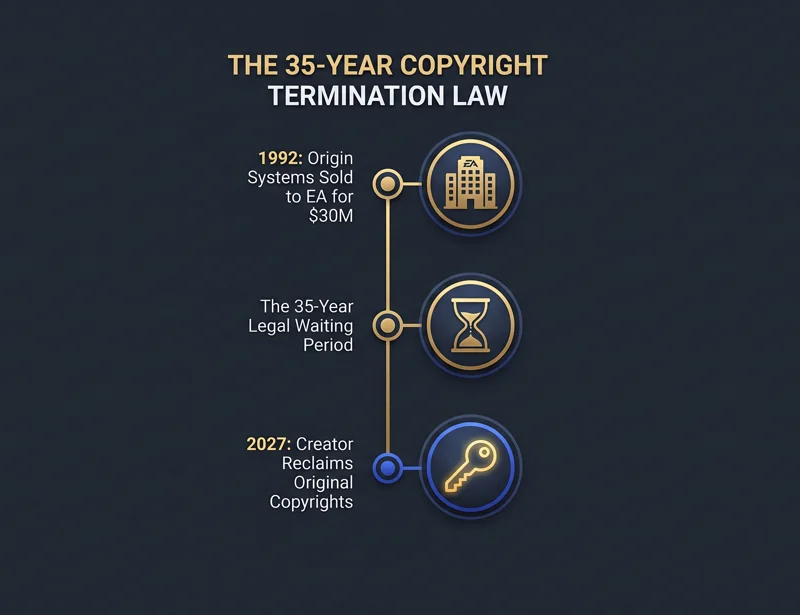
| Origin Systems Acquisition by EA | 1992 | Purchased for $30 million, giving Electronic Arts full property rights. |
| The Copyright Reclaiming Window | 2027 | The exact year the 35-year copyright termination law window officially opens. |
Breaking Down the 35-Year Copyright Termination Law
The core mechanism fueling this legal gambit stems from the United States Copyright Act, which includes a special provision for independent creators.
This statutory law dictates that original authors can legally terminate a previous transfer of copyrights after a strict period of 35 years has elapsed.
Because the historic Origin Systems acquisition concluded in 1992, the critical deadline for reclaiming the underlying code and narrative universe arrives next year.
This rare legal loophole allows the original creator to legally reclaim ownership of his core creative works without paying a single dollar to the publisher.
“Every decade, I tried to work with EA on a revival of the franchise. They always started talking, then abandoned talks just as quickly.”
The Critical Catch: EA Trademark Ownership vs. Reclaimed Copyrights
While the strategy sounds flawless on paper, the ongoing realization that Richard Garriott Wants To Take Ultima Back From EA Using Obscure Legal Quirks introduces a very complex hurdle.
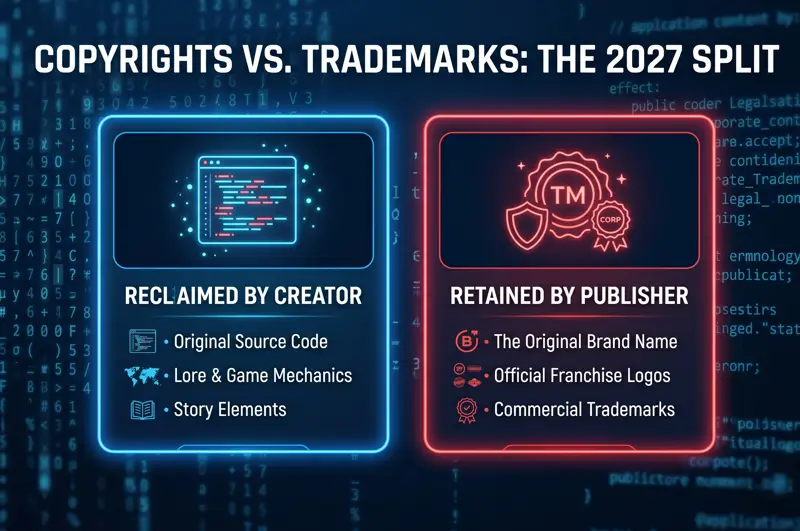
The core mechanism of the 35-year law applies exclusively to underlying creative copyrights, completely excluding commercial trademarks.
Electronic Arts will legally retain the exclusive commercial trademark ownership for the word mark and brand name of the franchise indefinitely.
Consequently, Garriott faces a unique situation where he can legally develop a mechanical continuation of his universe but cannot call it by its original name.
The resulting game would contain all the traditional lore, structural mechanics, and world-building elements, but wrapped inside a distinctively fresh brand layout.
| Legal Property Type | Current Corporate Owner | Post-Termination Status (2027) |
|---|---|---|
| Original Source Code & Creative Lore Copyrights | Electronic Arts (EA) | Reclaimed entirely by Richard Garriott |
| Commercial Brand Trademarks | Electronic Arts (EA) | Retained permanently by Electronic Arts |
What the Future Holds for the Lord British Game Developer Legacy
The community is eagerly anticipating how this complex dynamic will play out as the strict legal timeline approaches.
The eccentric developer has built an extraordinary reputation over the years, spending his fortune on space travel and medieval castle construction.
This upcoming corporate showdown is simply the next theatrical chapter in the grand career of the legendary Lord British game developer.
To trace the foundational history of independent video game development legal guidelines, visit the official United States Copyright Office website.
Garriott has already directed dedicated fans to keep an eye on his upcoming panel appearance at Dragon Con in Atlanta.
By that point, he intends to have a fully cohesive framework assembled detailing exactly what this historic legal reclamation means for the future of gaming.
“I hope to have more technical thoughts together about what this legal reclamation will actually mean for the community by the time Dragon Con arrives.”
Ultimately, the news that Richard Garriott Wants To Take Ultima Back From EA Using Obscure Legal Quirks signals a major warning shot to massive publishers sitting silently on legendary dormant franchises.
Frequently Asked Questions
Is Richard Garriott purchasing the franchise back from Electronic Arts directly?
No, he is not buying the property. He plans to use an obscure 35-year copyright termination law to reclaim the creative rights completely free of charge.
What does the statement Richard Garriott Wants To Take Ultima Back From EA Using Obscure Legal Quirks mean for players?
It means the original creator is attempting to bypass corporate gatekeepers to produce a spiritual and mechanical continuation of his classic RPG series.
Will the new game be officially called by its original franchise name?
No. Because EA retains the official brand trademark ownership, Garriott can use the underlying story and code but must market the title under a completely different name.
What is the exact law being used to execute this legal maneuver?
He is utilizing the 35-year copyright termination provision within the United States Copyright Act, which allows original authors to revoke rights transfers after 35 years.
When was the original development studio sold to Electronic Arts?
Richard Garriott formally sold his original development label, Origin Systems, to Electronic Arts back in 1992 for a reported sum of $30 million.
When was the last mainline installment of the franchise published?
The last core mainline entry to be officially released to the public was published by Electronic Arts all the way back in 1999.
Where will the developer reveal more details about this corporate legal plan?
The creator has explicitly noted that he will share his structured thoughts and roadmap during his scheduled appearance at Dragon Con in Atlanta.
Disclaimer: This article is for informational purposes only. Intellectual property legal disputes, corporate trademark statuses, and game development roadmaps are subject to shifting judicial interpretation and corporate agreements.