
A groundbreaking Plant-to-animal organelle transplant is fundamentally changing the future of medical treatments in 2026. For decades, the biological boundary between flora and fauna seemed absolute. Today, scientists are proving that the machinery of plants can successfully operate inside mammals.
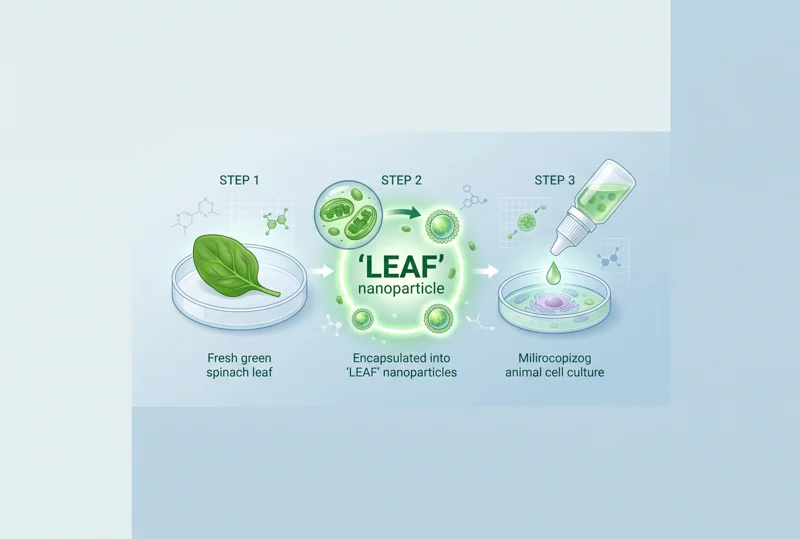
Could spinach extracts be the next ultimate treatment for severe dry-eye disease? Researchers have discovered that photosynthetic machinery harvested from ordinary supermarket spinach can actually be transplanted into the eyes of mice.
Once inside, this machinery transforms ambient light into molecules that carry energy, effectively taming severe ocular inflammation. This is not science fiction; it is the reality of modern bionanotechnology.
The Botanical Breakthrough: Understanding the Plant-to-animal organelle transplant
The concept of a Plant-to-animal organelle transplant initially sounds like a laboratory party trick. However, researchers from the National University of Singapore took inspiration from nature—specifically sea slugs that steal photosynthetic machinery from algae.
By blending, filtering, and centrifuging leafy greens, scientists successfully isolated chloroplasts. These are the natural engines that transform light into energy. They found that mammalian cells eagerly internalize these structures without immediate rejection.
To determine the best source for this Plant-to-animal organelle transplant, researchers tested various vegetables. Regular spinach provided the most robust and active photosynthetic machinery compared to other common greens.
| Vegetable Type | Scientific Name | Photosynthetic Yield Status |
|---|---|---|
| Regular Spinach | Spinacia oleraceae | Maximum Yield (Optimal) |
| Red Spinach | Amaranthus tricolor | Moderate Yield |
| Water Spinach | Ipomoea aquatica | Low Yield |
We are stealing the entire technology that has evolved over millions of years in plants and are able to transplant it into the animal system, marking a new era in medicine.
LEAF Nanoparticles Therapy and a Plant-to-animal organelle transplant
To make the Plant-to-animal organelle transplant viable for medical use, the extracted spinach grana were encapsulated into nanoparticles dubbed “LEAFs”. When applied to mammalian cells in a petri dish, the cells absorbed the LEAF particles within hours.
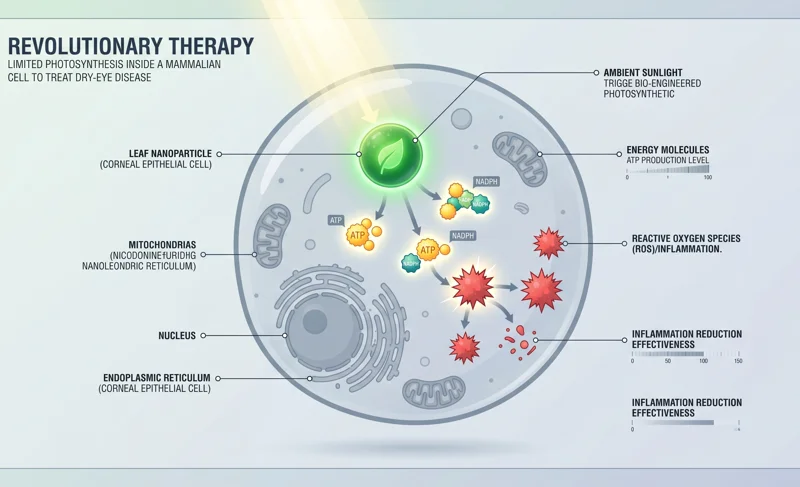
Once absorbed, these LEAFs engage in a limited form of photosynthesis. They transform light into chemical energy, specifically producing the vital energy-carrying molecules ATP and NADPH.
While they do not produce carbohydrates like full plants, this partial photosynthesis is more than enough to trigger a massive therapeutic response in animal tissues suffering from oxidative stress.
| Component | Cellular Function | Therapeutic Outcome |
|---|---|---|
| ATP Molecule | Cellular Energy Carrier | Boosts cell repair speed |
| NADPH Molecule | Electron Donor | Neutralizes damaging molecules |
| LEAF Nanoparticles | Delivery System | Safely penetrates mammalian tissue |
Taming Inflammation with Sunlight: The Future of the Plant-to-animal organelle transplant
The practical application of a Plant-to-animal organelle transplant is currently focused on treating dry-eye disease. This irritating condition is driven by the harmful build-up of reactive oxygen species on the eye’s surface.
In animal models, LEAF-filled eye drops successfully utilized ambient light to produce NADPH. This molecule rapidly neutralized the reactive oxygen species inflammation, effectively curing the mice of their symptoms without the need for artificial light therapy.
The efficiency of this Spinach chloroplasts dry-eye treatment is staggering. The required doses are so tiny that the faint green tinge of the LEAF particles remains completely invisible to the naked eye after application.
This is really pushing the boundaries of what is medicine. By bridging the gap between flora and fauna, we unlock therapies previously thought impossible.
Currently, scientists are preparing for human clinical trials based on this successful Plant-to-animal organelle transplant. Economically, the treatment is highly viable; a mere 20 cents worth of supermarket spinach can produce enough nanoparticles to treat fifty patients for an entire month.
As the scientific community watches closely, experts suggest this is just the beginning. Researchers are already exploring how to apply Photosynthesis in mammalian cells to other tissue types beyond the cornea. For more detailed clinical insights, you can read the official research publications directly in the Cell scientific journal.
| Development Stage | Subject Focus | Current Status |
|---|---|---|
| Phase 1 | In-vitro Mammalian Cells | Completed Successfully |
| Phase 2 | Live Mouse Models | Completed Successfully |
| Phase 3 | Human Clinical Trials | In Preparation (2026) |
Frequently Asked Questions
What exactly is a Plant-to-animal organelle transplant?
It is a groundbreaking scientific procedure where specific cellular machinery from plants, like chloroplasts, are extracted and successfully integrated into animal cells to perform specialized functions.
How does spinach help cure dry-eye disease?
Spinach contains highly efficient chloroplasts. When converted into LEAF nanoparticles and applied as eye drops, they use ambient light to produce molecules that neutralize the inflammation causing dry-eye.
Will this Plant-to-animal organelle transplant turn my eyes green?
No. The doses required for the therapeutic effect are microscopic, so the faint green tinge of the plant extracts is completely invisible once administered.
Can human cells actually perform photosynthesis now?
Mammalian cells can perform a limited form of photosynthesis when injected with LEAF particles, creating chemical energy (ATP and NADPH) but not fully generating carbohydrates like a plant.
Is this Plant-to-animal organelle transplant expensive to produce?
Surprisingly, no. The raw material is incredibly cheap, with just a handful of standard supermarket spinach capable of treating dozens of patients for a month.
Does the patient need to stare at bright lights for the treatment to work?
No additional artificial light exposure is necessary. Normal ambient light encountered during daily activities is enough to power the encapsulated plant machinery.
Are there other uses for a Plant-to-animal organelle transplant?
While currently focused on the cornea and dry-eye disease, researchers are actively exploring how to transplant plant-derived organelles into other tissue types to treat various inflammatory conditions.
Disclaimer: This article is for informational purposes only. Experimental medical procedures, including nanotherapeutics and organelle transplants, are currently undergoing clinical trials. Always consult a licensed medical professional before considering new health treatments.