Recent leaks suggest the pixel 12 to features tensor g7 chip, a move that signals Google’s continued commitment to its “AI First” philosophy despite hardware enthusiasts’ demands for raw power. While the tech world in 2026 is currently focused on the upcoming Pixel 11 series, insiders have already pulled back the curtain on the 2027 hardware roadmap. This revelation confirms that for the foreseeable future, the “Google experience” will rely on custom silicon rather than off-the-shelf high-performance processors.
Since the introduction of the first Tensor chip in 2021, the company has diverged from the path taken by Samsung and Apple. While competitors race for higher clock speeds and peak gaming performance, the Tensor line has been built to optimize machine learning tasks. However, as flagship prices continue to climb toward the $1,000 mark, users are questioning if the pixel 12 to features tensor g7 chip is enough to satisfy the modern consumer.
The Lajolla Reveal: Why the pixel 12 to features tensor g7 chip Matters
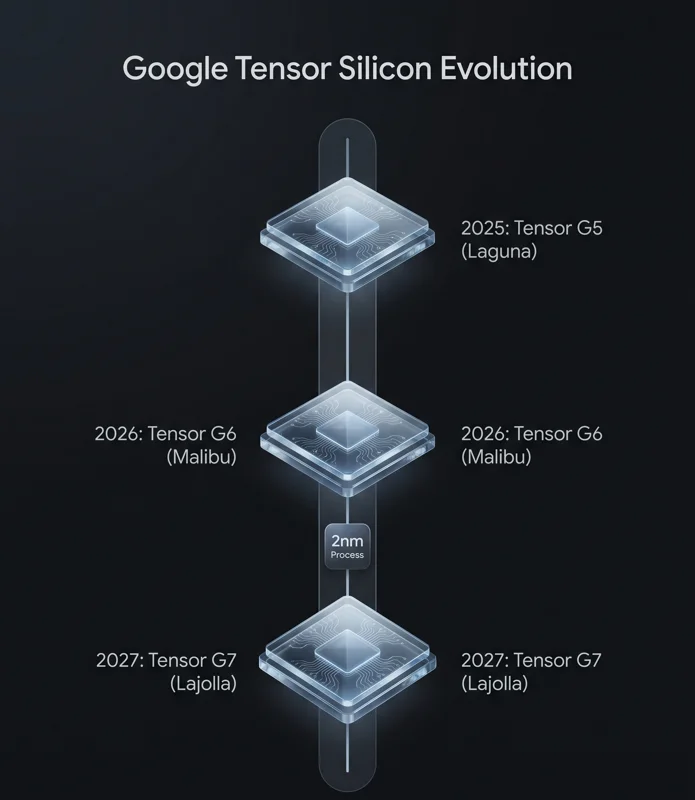
According to the highly respected industry tipster Mystic Leaks, the processor destined for the 2027 lineup has entered the early development phase under the internal codename “Lajolla.” This name refers to the scenic coastal neighborhood of La Jolla in San Diego, maintaining the tradition of using California-inspired geography for internal chip projects. The fact that the pixel 12 to features tensor g7 chip is already being discussed highlights how far in advance these hardware cycles are planned.
For context, each generation of Tensor has followed a similar naming pattern. These codenames represent more than just labels; they signify a specific iteration of Google’s vision for integrated hardware and software. By controlling the chip design, the manufacturer can tailor the hardware to its specific photography and voice-processing algorithms.
| Device Generation | Processor Name | Internal Codename |
|---|---|---|
| Pixel 10 (2025) | Tensor G5 | Laguna |
| Pixel 11 (2026) | Tensor G6 | Malibu |
| Pixel 12 (2027) | Tensor G7 | Lajolla |
Technical Expectations for the pixel 12 to features tensor g7 chip
While architectural specifics are still coming to light, the industry expects the manufacturer to utilize an advanced 2nm process node. This shift should theoretically provide better thermal efficiency and battery longevity. However, the pixel 12 to features tensor g7 chip might still inherit a significant weakness: the GPU. Rumors suggest that the GPU architecture may remain largely unchanged from the Tensor G6, which itself is rumored to be a minor refinement of the G5.
This stagnation in graphics processing is a major point of contention for “hardcore” users. If the pixel 12 to features tensor g7 chip continues to use older GPU variants, the gap between it and Snapdragon or Apple-powered devices will only widen. For a phone sold at flagship prices, this performance ceiling is becoming increasingly difficult for reviewers to ignore.
“Google’s strategy seems to be ‘AI First, Performance Last,’ a gamble that relies on software magic to compensate for midrange silicon power.”
Performance Comparison: pixel 12 to features tensor g7 chip vs The World
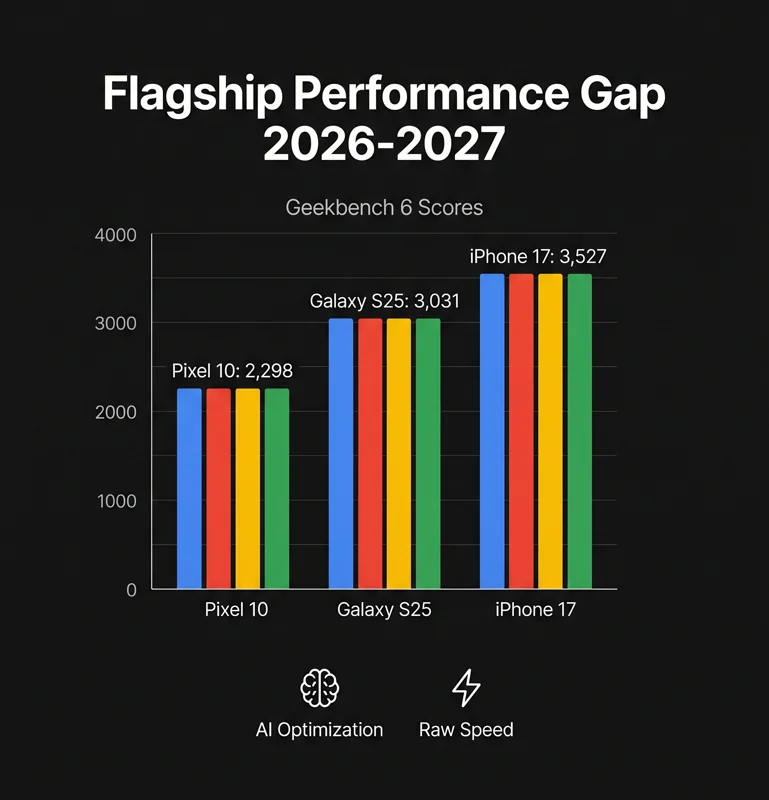
The core of the frustration for many Pixel fans is the “raw power” gap. When you compare a current device to an iPhone or a high-end Galaxy, the benchmark scores are starkly different. The latest Pixel models often lag behind by as much as 30% to 40% in Geekbench and GPU stress tests. This trend is expected to continue when the pixel 12 to features tensor g7 chip officially hits the market.
For everyday tasks—scrolling social media, sending emails, and light photo editing—the difference is negligible. However, for mobile gaming, high-resolution video exporting, and intensive multitasking, the midrange performance of the chip becomes apparent. The decision to stick with the pixel 12 to features tensor g7 chip means that these devices may never be the “gaming beasts” that some fans desire.
| Performance Metric | Pixel Series (Estimated) | Snapdragon 8 Gen 6 / Apple A20 |
|---|---|---|
| AI Processing (NPU) | Industry Leading | High Performance |
| Raw Multi-Core (CPU) | Mid-Range Flagship | Top-Tier Flagship |
| Gaming Stability (GPU) | Moderate (Frame drops) | Exceptional |
The AI Advantage: Why the pixel 12 to features tensor g7 chip Exists
Despite the criticism, the manufacturer has several valid reasons to remain loyal to the Tensor architecture. The custom chip allows for unparalleled integration with Google’s proprietary AI features. Tools like real-time Call Screening, Magic Editor, and advanced HDR post-processing rely on the Tensor’s specific NPU (Neural Processing Unit) design.
Furthermore, this vertical integration allows for a longer support window. By controlling the chip, the company can comfortably offer 7 years of software and security updates, a feat that is much harder to achieve when relying on third-party silicon providers. You can track official software support timelines on the Official Pixel Support site.
| Benefit | Impact on User Experience |
|---|---|
| Camera Processing | Immediate AI enhancements and computational photography. |
| Voice Intelligence | On-device translation and ultra-accurate dictation. |
| Longevity | Better optimization for long-term OS updates and security. |
“The real question for 2027 is whether consumers will continue to pay $800+ for superior software when the competition begins to match their AI features while offering double the raw power.”
Final Verdict on the pixel 12 to features tensor g7 chip
In conclusion, the leaked details regarding the pixel 12 to features tensor g7 chip paint a picture of a company that is confident in its niche. Google is not trying to beat Apple or Samsung in a spec war; it is trying to redefine what a “smart” phone actually is. However, for those who value longevity in high-performance tasks like gaming, the continued use of midrange silicon remains a significant hurdle to widespread adoption among enthusiasts.
Frequently Asked Questions (FAQ)
What is the main finding regarding the Pixel 12 hardware?
Leaks confirm the pixel 12 to features tensor g7 chip, codenamed “Lajolla,” which maintains the focus on AI over raw processing speed.
Will the Tensor G7 chip be good for gaming?
Based on previous trends and the pixel 12 to features tensor g7 chip leaks, it will likely offer “midrange” gaming performance, potentially trailing behind Snapdragon flagships.
Why does Google use Tensor instead of Snapdragon?
Tensor allows Google to better optimize exclusive AI features like Magic Editor, Call Screening, and real-time translation.
What is the codename for the Pixel 12 processor?
The Tensor G7, which the pixel 12 to features tensor g7 chip, is internally known as “Lajolla.”
How much will the Pixel 12 likely cost?
While unconfirmed, the Pixel series typically targets the $799 to $999 range, maintaining flagship pricing despite midrange silicon performance.
When will the Pixel 12 be released?
Following the usual release cycle, the Pixel 12 is expected to launch in the fall of 2027.
Will the Tensor G7 support the latest 2nm technology?
Analysts believe the pixel 12 to features tensor g7 chip will utilize the 2nm process for improved power efficiency and heat management.
Disclaimer: This article is for informational purposes only. The information regarding the pixel 12 to features tensor g7 chip is based on unverified industry leaks and early hardware rumors. Official specifications may change before the final product release.