The current landscape of the American housing market has thrust the pittsboro north carolina master planned development into the national spotlight, serving as a fascinating case study of rapid urban expansion. In what was once a quiet, rural enclave known for its dark skies and historic downtown, a monumental shift is underway. Pittsboro, a quaint town historically home to around 5,000 residents, is currently the epicenter of one of the largest residential and commercial construction booms in the United States. Driven by the colossal Chatham Park project, this tiny municipality located just 35 miles from Raleigh is projected to swell to a population of over 60,000 within the next two decades. This incredible 1,100% population growth is not just changing the skyline; it is fundamentally altering the economic, social, and environmental fabric of the region.
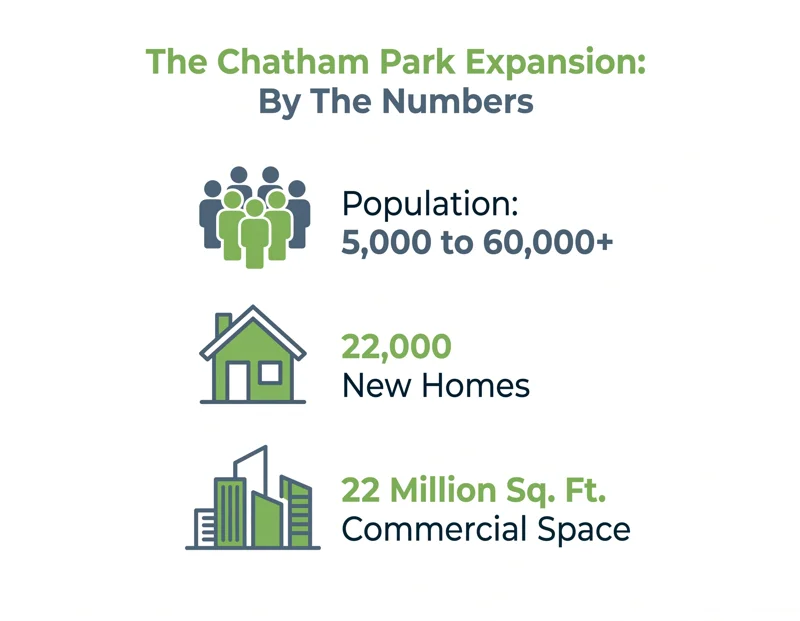
As the nation grapples with an unprecedented shortage of housing inventory, master-planned communities have emerged as a highly favored, albeit controversial, solution. Unlike organic town growth, where neighborhoods evolve piecemeal over generations, master-planned communities are essentially sprawling new cities built from scratch. A single corporate entity typically orchestrates the construction of homes, streets, shopping centers, medical facilities, and office parks simultaneously. For Pittsboro, this means the rapid introduction of 22,000 new homes and a staggering 22 million square feet of commercial space. However, this hyper-accelerated growth leaves longtime locals and town officials scrambling to manage the massive logistical and cultural implications.
The Mega-Development Impact: Reshaping the Research Triangle
To truly understand the magnitude of this transformation, one must look at Pittsboro’s geographical advantage. The town is situated on the lucrative edge of the Research Triangle region—an economic powerhouse anchored by three major research universities in Raleigh, Durham, and Chapel Hill. Over the past decade and a half, the Triangle has attracted roughly half a million new residents, driven by a booming tech and biotechnology sector. As Raleigh’s suburban sprawl has continuously pushed outward, small surrounding municipalities like Pittsboro have become prime targets for developers seeking cheaper, expansive tracts of land.
| Metric | Pre-Development (2010s) | Projected Completion (2040s) |
|---|---|---|
| Population | Approx. 5,000 | 60,000+ |
| Total Homes | Under 2,500 | 22,000+ New Units |
| Commercial Space | Minimal Local Retail | 22 Million Sq. Ft. |
| Town Infrastructure | Basic Rural Services | New Hospitals, Schools, Transit Hubs |
The primary architects behind this massive shift are the founders of Preston Development Company, Tim Smith and Julian “Bubba” Rawl. Recognizing the inevitable growth of the Research Triangle in the early 2000s, they secured the financial backing of James Goodnight, the founder of the global analytics software firm SAS and the wealthiest individual in North Carolina. Together, they quietly purchased thousands of acres of land around Pittsboro. Preston Development is no stranger to town-building; in the 1990s, they were largely responsible for transforming Cary, NC, from a modest town into a sprawling, affluent suburb where the population doubled in just ten years.
“The main driver was looking at growth patterns in the region and predicting and planning based on land and resources available for growth. We are not just building houses; we are laying the foundation for a vibrant, self-sustaining city of the future.”
The Disney Factor: Asteria Enters the Picture
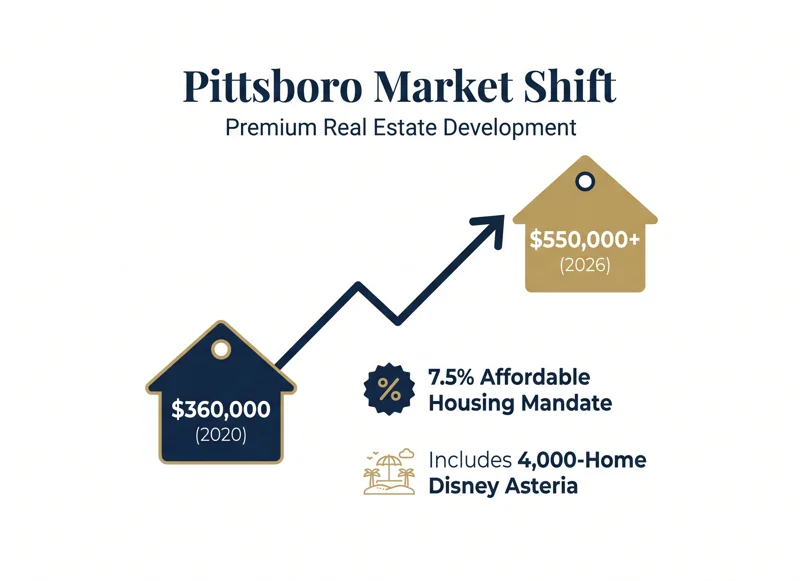
Adding another layer of complexity to Pittsboro’s evolution is the recent arrival of the Walt Disney Company. In 2023, Preston Development sold a 1,500-acre parcel of land within the Chatham Park boundaries to Disney to create “Asteria,” a Storyliving by Disney community. Set to open for sales in 2027, this highly publicized sub-development will feature 4,000 single-family homes, townhouses, and duplexes, specifically targeting older adults and Disney enthusiasts. This introduction of a massive global brand has only accelerated the spotlight on Pittsboro, guaranteeing a massive influx of out-of-state buyers seeking a curated, resort-style living experience within the North Carolina Piedmont.
The Resident Dilemma: Weighing Progress Against Preservation
While the architectural renderings and economic projections paint a picture of prosperity, the reality on the ground in Pittsboro is fraught with tension. Longtime residents, many of whom have lived in the area for generations, are grappling with the rapid erosion of their town’s unique, slow-paced identity. The small, locally-owned diners, barbershops, and hardware stores that define downtown Pittsboro are now sitting in the shadow of impending big-box retail and high-density neighborhoods.
The economic impact on the local housing market has been swift and brutal for those not already in the property market. Before the first major wave of Chatham Park homes hit the market, Pittsboro remained relatively affordable. However, the influx of high-earning tech workers and out-of-state retirees has triggered a real estate frenzy.
| Economic Indicator | 2020 Statistics | 2026 Current Averages |
|---|---|---|
| Average Home Price | $360,000 | $550,000+ |
| Property Tax Burden | Low / Rural Standard | Increasing rapidly to fund services |
| Affordable Housing Stock | Organically available | Restricted (Developer mandated 7.5%) |
Many citizens cite the loss of their natural environment as a primary grievance. The dark, star-filled skies that initially drew people away from Raleigh’s light pollution are fading. Furthermore, town officials and vocal board members, such as John Bonitz, have continuously raised the alarm regarding the logistical nightmare of such rapid residential growth. Unlike commercial properties that generate massive tax revenue with minimal public service requirements, residential neighborhoods are incredibly costly for a municipality to maintain. The town must suddenly fund expanded police departments, fire stations, miles of new sewer lines, greenways, and road repairs.
“We are guaranteeing that taxes will have to increase to pay for police, fire, and to pay for the repair and replacement of miles of greenways, roads, sidewalks, and parks. The financial burden of this sprawl is resting directly on the shoulders of existing taxpayers.”
Finding the Balance: Amenities vs. Sprawl
Conversely, there is a vocal contingent of both new arrivals and long-term residents who welcome the progress. For decades, Pittsboro lacked essential modern conveniences. The promise of a new hospital, specialized medical clinics, high-end retail, and diverse culinary options means residents will no longer have to commute 45 minutes to Raleigh or Chapel Hill for basic necessities. The development is also injecting youth into a town whose demographic previously skewed much older than the regional average, bringing new families, state-of-the-art schools, and community sports facilities.
For more information on regional growth and urban planning data within the state, you can review the public resources available at the Official North Carolina State Government Portal.
Managing the Unprecedented Boom in 2026
As of 2026, the battle over Pittsboro’s soul is largely playing out in local government chambers. The town recently established a brand-new, dedicated department solely to oversee planning, streamline development reviews, and desperately try to manage the chaotic mushrooming of the area. Recent local elections hinged entirely on the platform of “managed growth,” with winning commissioners promising to hold developers accountable to their infrastructure promises.
| Sub-Project Name | Developer | Key Features |
|---|---|---|
| Chatham Park (Core) | Preston Development | Mixed-use, commercial hubs, diverse housing |
| Asteria | Storyliving by Disney | 4,000 homes, resort amenities, 55+ focus |
| MOSAIC | Various Partners | Entertainment, retail, luxury apartments |
In November of last year, the town’s Board of Commissioners approved a controversial proposal allowing Preston Development to build on an additional 5,000 acres with minimal ongoing authorizations. This move terrified opponents who felt it gave the developers a blank check to define the town’s future. Yet, for the families already moving into the completed sections of Chatham Park, the vision is fulfilling its promise. They seek a quiet, walkable neighborhood with modern amenities that retains a welcoming community spirit.
“It is about how to develop land to support the growing community without taking away from the existing community. There is a delicate, difficult balance to be had, but the future of Pittsboro depends on finding it.”
Ultimately, Pittsboro serves as a macrocosm for the modern American housing crisis and the shift toward master-planned living. Can a 5,000-person rural town absorb a 22,000-home mega-community without losing its soul? As bulldozers continue to clear the Carolina pine forests and new families unpack their boxes, the answer is being written in real-time.
Frequently Asked Questions
What is Chatham Park in Pittsboro, NC?
Chatham Park is a massive master-planned community being built in Pittsboro, North Carolina. It spans thousands of acres and will eventually include over 22,000 homes and 22 million square feet of commercial space, fundamentally transforming the local area.
Who is the developer behind Chatham Park?
The project is spearheaded by Preston Development Company, led by founders Tim Smith and Julian “Bubba” Rawl, in partnership with James Goodnight, the billionaire founder of the software company SAS.
How will the development affect Pittsboro’s population?
The development is projected to cause explosive population growth, expanding Pittsboro from a historic population of around 5,000 residents to an estimated 60,000 or more over the next two decades.
What is the Disney Asteria community?
Asteria is a 1,500-acre residential community located within the Chatham Park area, developed by Storyliving by Disney. It will feature 4,000 homes and targets Disney enthusiasts and older adults, with sales expected to begin in 2027.
Why are some residents opposed to the master-planned development?
Many longtime locals are concerned about increased traffic, the loss of rural character (such as dark night skies), higher property taxes needed to fund new infrastructure, and rising home prices that may price out original residents.
Has the housing market in Pittsboro changed since the development started?
Yes, drastically. The average home price in Pittsboro surged from approximately $360,000 in 2020 to well over $550,000 in recent years, reflecting the high demand and premium nature of the new construction.
Are there any affordable housing requirements for Chatham Park?
After lengthy negotiations with the town, Preston Development agreed to designate 7.5 percent of the new homes built within the project as affordably priced to help mitigate the housing cost crisis.
Disclaimer: This article is for informational purposes only. Real estate developments, market statistics, and government policies are subject to change. Readers should consult official local government resources and professional financial advisors regarding real estate decisions.