oura ring5 vs ultrahuman ring-pro is the most highly anticipated wearable technology debate of 2026.
If you are looking for an easy way to track your key health data but do not want to wear an unsightly wrist strap, a smart ring is the ultimate solution.
Not only are smart rings designed to blend in seamlessly with your everyday wardrobe, but they also offer superior biometric accuracy.
Arteries in the finger give optical sensors a significantly cleaner pulse signal that is up to 100 times stronger than at the wrist.
With this impressive technology in mind, a smart ring is undoubtedly a great choice for fitness enthusiasts.
But how do you choose between the two biggest contenders on the market today?
Design and Comfort in the oura ring5 vs ultrahuman ring-pro Debate
When it comes to everyday wearables, physical design, weight, and overall comfort are absolutely paramount.
The Oura Ring 5 is officially hailed as the world’s smallest smart ring, making it an incredible feat of modern engineering.
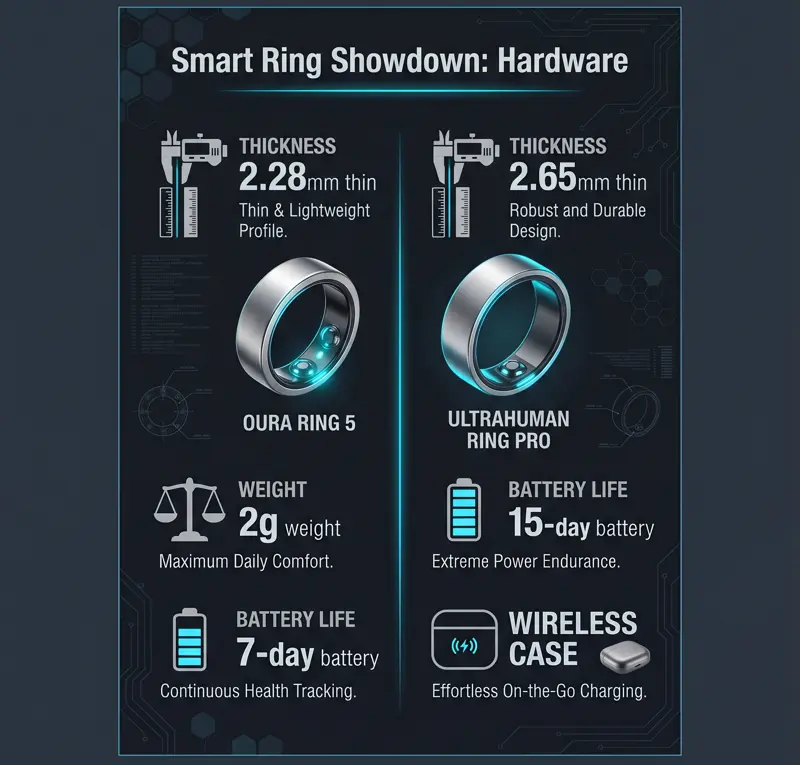
Weighing from a teeny 2 grams and measuring just 2.28mm thick, it is virtually unnoticeable on your finger.
This makes it a staggering 40% smaller than its predecessor, the Oura Ring 4.
On the other side of the arena, the Ultrahuman Ring Pro is no slouch when it comes to a sleek, minimalist aesthetic.
It starts with a thickness of just 2.65mm, keeping it highly competitive in the modern wearable space.
| Feature | Oura Ring 5 | Ultrahuman Ring Pro |
|---|---|---|
| Thickness | 2.28mm | 2.65mm |
| Base Weight | 2g | 2.4g |
| Color Options | 6 Finishes | 4 Finishes |
Hidden Costs: oura ring5 vs ultrahuman ring-pro Ecosystem
One of the biggest deciding factors for consumers is the ongoing cost associated with their smart wearable device.
Unlike many other standard fitness trackers, the Oura Ring 5 requires users to sign up for a monthly subscription.
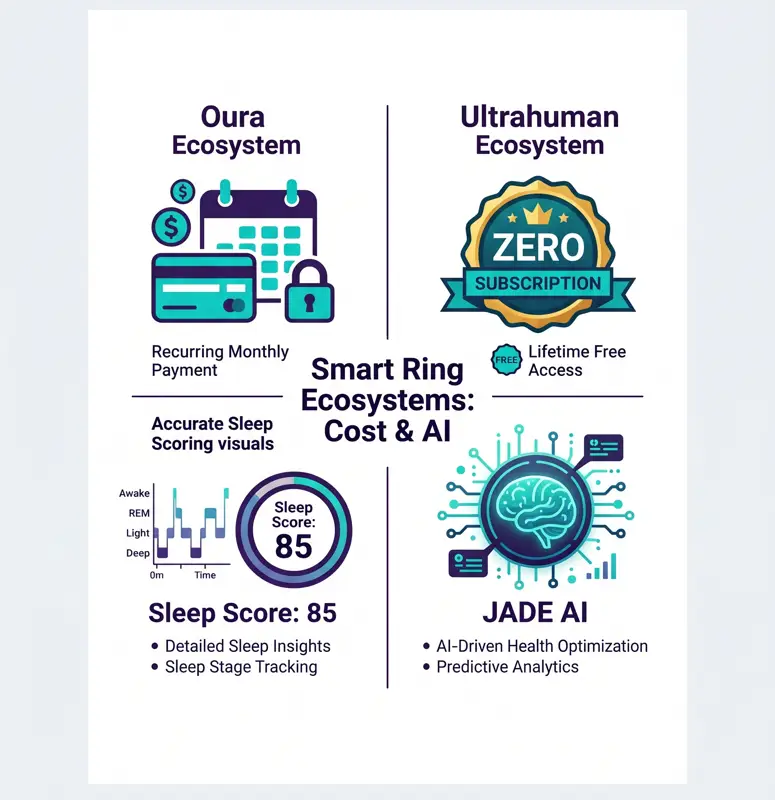
At $5.99 a month, you must pay this recurring fee to actually see your comprehensive health and fitness metrics.
An Oura membership allows you to see your health metrics, which are more accurate than ever before thanks to new signal architecture.
In stark contrast, the Ultrahuman Ring Pro does not require any additional subscription to access its plethora of tracking features.
This means you can easily access your sleep data, recovery scores, and daily activity results without paying extra fees.
Ultrahuman also offers PowerPlugs, which are optional add-on apps for specialized health tracking, such as vitamin D monitoring.
Battery Life and Charging: oura ring5 vs ultrahuman ring-pro
Battery longevity can easily make or break your experience with a continuous health tracking device.
The Oura Ring 5 offers up to a week of battery life, which is a solid and reliable standard for the industry.
However, it comes with a size-specific USB-C charger, and you will need to buy a compatible wireless charger separately for $99.
Meanwhile, Ultrahuman completely revolutionizes the charging experience for smart rings.
The Ring Pro boasts up to a whopping 15 days of battery life on a single charge.
| Battery & Power | Oura Ring 5 | Ultrahuman Ring Pro |
|---|---|---|
| Max Battery Life | Up to 7 days | Up to 15 days |
| Included Charger | USB-C Wired | Pro Charging Case (Wireless) |
| Data Storage | In-app only | Case stores up to 1 year of data |
Artificial Intelligence Features: oura ring5 vs ultrahuman ring-pro
In 2026, artificial intelligence is deeply integrated into the latest wearable health technology.
The Ultrahuman Ring Pro features what the company describes as the world’s first real-time biointelligence AI, named Jade.
Jade connects ring data with markers across the entire ecosystem to produce unprecedented insights, such as triggering Afib detection.
In the future, Jade will be able to order food, change your room temperature, and flag health issues before they occur.
Conversely, Oura relies on its refined hardware and powerful LEDs to deliver its highly trusted Readiness and Sleep Scores.
Final Verdict on the oura ring5 vs ultrahuman ring-pro Comparison
Choosing between these two premium devices ultimately comes down to your personal budget and lifestyle preferences.
If you prioritize having the absolute thinnest hardware and trust a mature health algorithm, Oura is a fantastic choice.
However, if you despise monthly subscription fees and want groundbreaking battery life, the Ultrahuman Ring Pro clearly wins.
For more details on Oura’s specific app features, you can visit Oura’s official website.
| Verdict Category | Winner | Reasoning |
|---|---|---|
| Best Hardware Size | Oura Ring 5 | Unmatched 2.28mm thickness |
| Best Overall Value | Ultrahuman Ring Pro | Zero monthly subscription fees |
| Best Battery Tech | Ultrahuman Ring Pro | 15 days plus the Pro Charging Case |
Frequently Asked Questions
Which device wins the oura ring5 vs ultrahuman ring-pro size comparison?
The Oura Ring 5 is thinner at 2.28mm and lighter at 2g, making it the world’s smallest smart ring.
Does the oura ring5 vs ultrahuman ring-pro debate factor in subscription costs?
Yes, Oura requires a $5.99 monthly subscription, while the Ultrahuman Ring Pro is completely subscription-free for its core features.
Who has better battery life in the oura ring5 vs ultrahuman ring-pro matchup?
The Ultrahuman Ring Pro wins with up to 15 days of battery life compared to Oura’s 7 days.
What is the release date for both rings?
The Oura Ring 5 launches on June 4th, while the Ultrahuman Ring Pro arrives on July 15th.
Does the oura ring5 vs ultrahuman ring-pro comparison cover AI features?
Yes, Ultrahuman introduces Jade, a real-time biointelligence AI, while Oura focuses on highly accurate, proprietary scoring algorithms.
How do the prices compare?
The Oura Ring 5 starts at $399, and the Ultrahuman Ring Pro starts slightly higher at $429, but without ongoing fees.
Which smart ring is better for tracking sleep?
Both rings offer highly accurate, optical sensor-based sleep tracking, but Oura is historically renowned for its deeply detailed Sleep Score.
Disclaimer: This article is for informational purposes only. Smart rings and their respective applications are not medical devices and should not be used to diagnose, treat, cure, or prevent any medical condition or disease. Always seek the advice of a qualified physician regarding any health concerns.