
The Biggest Innovation in Desktop CPUs May Come to Gaming Laptops Too. For years, PC enthusiasts have enjoyed massive performance leaps on desktop computers, but mobile gamers are finally getting their turn. A major shift in processor architecture is on the horizon for portable machines.
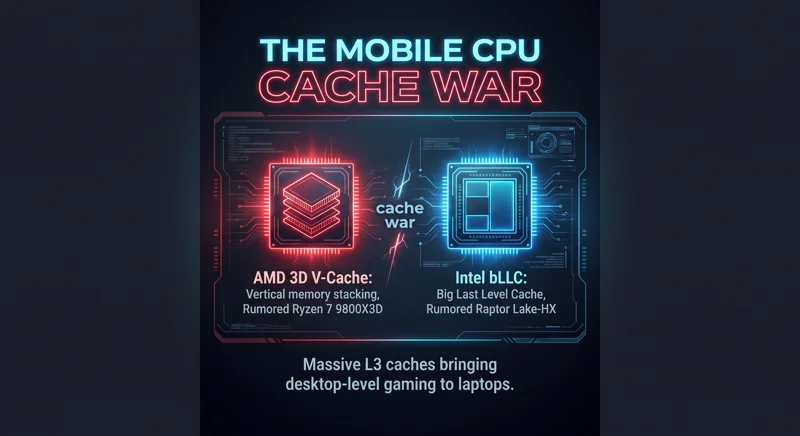
Historically, thermal limits and power consumption have restricted laptop processors. However, advanced memory stacking is changing the game entirely. Now, both AMD and Intel are preparing to bring their most aggressive hardware designs to the mobile market.
This means your next portable rig could rival high-end desktop setups. With new leaks surrounding both major chipmakers, the industry is bracing for a monumental leap in next-gen gaming laptop performance.
The Core Tech: Why The Biggest Innovation in Desktop CPUs May Come to Gaming Laptops Too
The secret lies in the processor cache. AMD revolutionized the desktop market with its 3D V-cache technology. By vertically stacking memory on the processor cores, CPUs can access data much faster. This significantly boosts frame rates in demanding video games.
Now, we are seeing the rise of 3D V-cache gaming laptops. Leaks from Chinese social media suggest AMD is developing a Ryzen 7 9800X3D mobile chip. Based on the Zen 5 architecture, this 8-core, 16-thread beast could feature a massive 96MB L3 cache.
Intel is not sitting idle. The company is actively developing its own competitive response, known as “bLLC” or Big Last Level Cache. This technology aims to match or exceed AMD’s vertical stacking efficiency.
| Technology | Company | Rumored Mobile Processor |
|---|---|---|
| 3D V-Cache | AMD | Ryzen 7 9800X3D (Mobile) |
| bLLC (Big Last Level Cache) | Intel | Nova Lake / Raptor Lake-HX |
“The introduction of massive L3 caches to mobile platforms will fundamentally blur the performance lines between desktop replacements and traditional ultra-thin gaming laptops.”
Intel bLLC vs. AMD 3D V-Cache: When The Biggest Innovation in Desktop CPUs May Come to Gaming Laptops Too
Intel bLLC processor technology was initially planned for data centers and high-end desktops. However, recent Raptor Lake-HX leaks indicate that Intel intends to integrate this massive cache architecture into its mobile HX series.
Intel’s strategy involves taking the microarchitecture from its upcoming Nova Lake chips and adapting it for power-hungry mobile users. If successful, Raptor Lake-HX could dominate the enthusiast laptop segment.
On the other side, AMD Ryzen mobile CPUs have already proven incredibly power-efficient. Adding 3D V-cache to this existing efficiency could give Team Red a significant advantage in battery life while gaming.
Gamers looking for official updates on these architectural changes should keep a close eye on Intel official announcements as we move closer to the new year.
Future Outlook: The Biggest Innovation in Desktop CPUs May Come to Gaming Laptops Too
While the performance gains sound incredible, they come with a catch. The manufacturing process for stacked cache is expensive. Combined with the ongoing industry RAMpocalypse, production costs are soaring.
Consequently, consumers should expect premium price tags. The next generation of gaming laptops will deliver unprecedented frame rates, but they will likely cost significantly more than current models.
Industry insiders point toward CES 2027 as the primary battleground. Both manufacturers are expected to officially unveil these specialized mobile processors during the first week of January.

Q2 2027 Premium laptops hit shelves with higher price tags. “Gamers will need to decide if the massive leap in portable frame rates is worth the inevitable price hike caused by advanced silicon packaging.” Ultimately, the fact that The Biggest Innovation in Desktop CPUs May Come to Gaming Laptops Too is a massive win for consumers. The sheer technological progress ensures that mobile gaming will never be the same. Frequently Asked Questions Question: What does 3D V-cache do for gaming laptops?
It provides the processor with a massive pool of high-speed memory right next to the cores, significantly boosting frame rates in demanding video games.
What is Intel bLLC?
bLLC stands for Big Last Level Cache. It is Intel’s proprietary answer to AMD’s vertical memory stacking technology, designed to increase processor efficiency and speed.
Will these new laptops be more expensive?
Yes. The complex manufacturing process for stacked cache, combined with ongoing industry memory shortages, will likely drive up retail prices.
When will we see these new gaming laptops?
Industry rumors strongly suggest that both AMD and Intel will unveil these advanced mobile processors around CES 2027 in January.
Is AMD releasing a mobile 9000X3D chip?
Leaks indicate AMD is preparing a Ryzen 7 9800X3D mobile chip, bringing the powerful Zen 5 desktop architecture to laptops.
What are the Raptor Lake-HX leaks?
Leaks suggest Intel’s upcoming Raptor Lake-HX mobile processors will utilize the Nova Lake microarchitecture and incorporate the new bLLC technology.
Do I need this technology for casual gaming?
No. This high-end cache technology is designed for extreme performance and enthusiast-level gaming, which may be overkill for casual players.
| Milestone | Expected Timeline | Impact on Market |
|---|---|---|
| Initial Desktop Reveals | Late 2026 | Sets the baseline for expected mobile performance. |
| CES 2027 Announcements | January 2027 | Official launch of massive cache mobile CPUs. |
| Retail Availability |