As the tech world watches closely, openai beefs up chatgpts image generation model with the highly anticipated release of Images 2.0. In the rapidly evolving landscape of artificial intelligence in 2026, staying ahead means offering unparalleled versatility. Creators, digital marketers, and everyday users are constantly seeking platforms that can do more than just produce a single, static picture. With this latest iteration, OpenAI is directly answering that call by integrating deep reasoning features and live web search functionality directly into the visual generation pipeline. This is not just an incremental update; it represents a fundamental shift in how human prompts are interpreted and executed by machines, bridging the gap between textual context and highly detailed visual output.
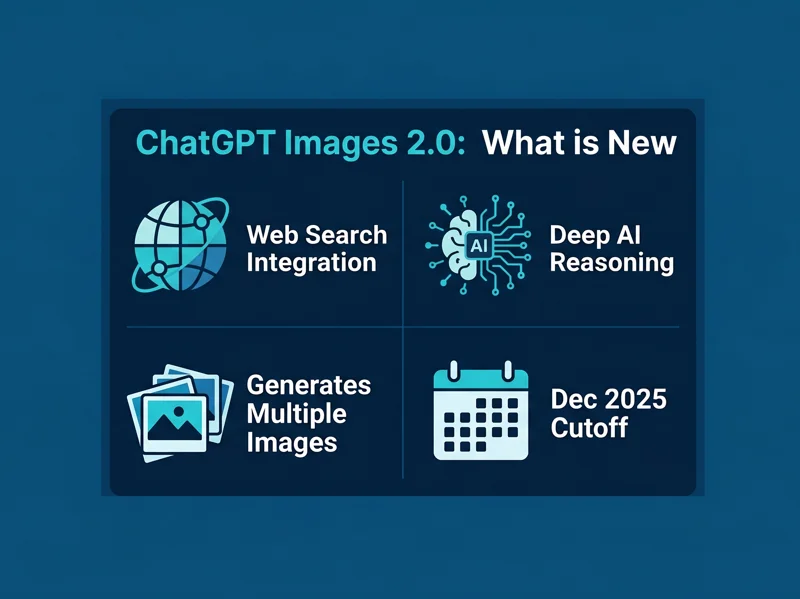
The global launch on Tuesday introduced a system that significantly outperforms its predecessor in almost every metric. The ChatGPT Images 2.0 model has officially landed, bringing with it a suite of powerful capabilities designed to streamline complex creative tasks. One of the standout features is its ability to generate an entire series of images—such as a comprehensive study booklet, a sequential storyboard, or a multi-part marketing campaign—from just one detailed text prompt. This batch-processing capability is a massive time-saver for professionals who rely on visual content at scale.
When any major AI company releases a new image model, it can revive interest and boost usage, shifting the entire social media landscape overnight as users adopt meme-able trends.
Unpacking the Advanced Features and Reasoning
What truly sets Images 2.0 apart is its underlying architecture. Because the new model can tap into the robust “reasoning” capabilities of the broader ChatGPT ecosystem, it operates less like a simple rendering engine and more like a creative partner. When given a complex prompt, Images 2.0 can autonomously search the internet for recent, relevant information before it begins the generation process. For example, if asked to create an infographic about a recent tech event, the bot can use additional steps to fetch up-to-date facts, process that data, and output a much more thorough, accurate generation. To understand more about the company’s foundational models and underlying infrastructure, you can visit the Official OpenAI Website.
| Feature Comparison | Previous Model | Images 2.0 |
|---|---|---|
| Web Search Integration | No | Yes |
| Knowledge Cutoff | Various older dates | December 2025 |
| Output Volume per Prompt | Single Image | Multiple Images (e.g., Booklets) |
The Leap in AI Text Rendering
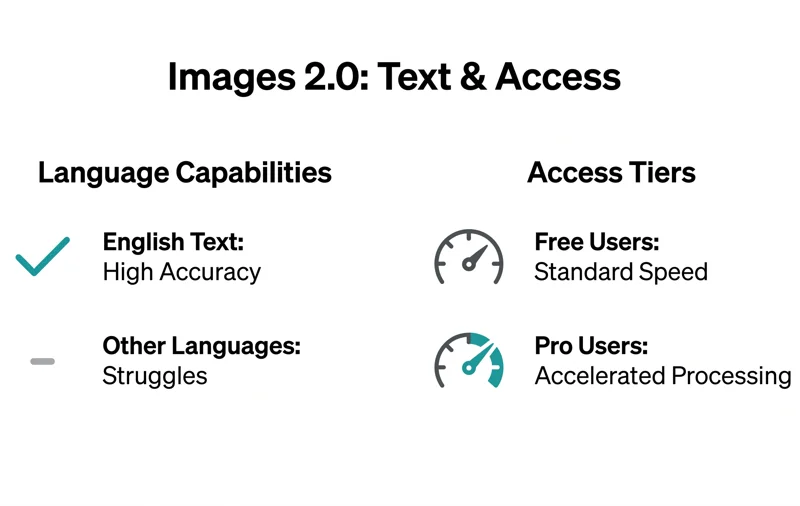
Historically, artificial intelligence has struggled notoriously with rendering coherent text within images. Often, the output would be a scrambled, nonsensical approximation of letters. Images 2.0 makes significant strides in this area, particularly for the English language. Users can now reliably request posters, memes, or diagrams containing specific phrases, and the model will render them with high fidelity. However, this advancement is not universal. Despite the leap in capabilities, our testing shows that it still heavily struggles with languages other than English. Attempts to generate coherent text in Chinese, Hindi, or other character sets often yield mixed or completely inaccurate results, highlighting an ongoing hurdle for global AI accessibility.
| Language Category | Rendering Accuracy | Primary Optimal Use Case |
|---|---|---|
| English | High | Memes, Posters, Infographics, Study Booklets |
| Chinese | Moderate to Low | Basic Labels (High Error Rate) |
| Hindi | Moderate to Low | Simple Captions (High Error Rate) |
Tiered Availability and Current Limitations
OpenAI has made this release available globally, ensuring that a wide audience can test the new waters. Both standard ChatGPT and Codex users have access to the base features of Images 2.0. However, in standard industry fashion, a vastly more powerful version is reserved exclusively for paying subscribers. This premium tier offers accelerated processing times, deeper reasoning steps, and potentially higher resolution outputs, catering directly to power users and enterprise clients. Furthermore, it is important to note the model’s core knowledge cutoff date, which stands at December 2025. While the live internet search function helps mitigate this limitation by fetching current events, the foundational training data remains bound by this timeline.
Despite massive leaps in reasoning and batch generation, the persistent struggle with non-English typography remains Images 2.0’s most notable limitation in a globalized market.
We cannot ignore the cultural and social media impact of these major releases. Last year, the tech community witnessed massive viral trends when users started posting hyperrealistic figurines of themselves online, driven by competitor models. Earlier this year, the first iteration of ChatGPT Images made waves as AI-generated caricatures flooded social feeds. With Images 2.0’s enhanced detail and multi-image generation features, the internet is primed for the next big wave of AI-driven visual trends.
| User Subscription Tier | Feature Access Level | Processing Capabilities |
|---|---|---|
| Free ChatGPT Users | Standard 2.0 Model | Regular Queue & Speed |
| Codex Users | Standard 2.0 Model | Regular Queue & Speed |
| Paying Subscribers (Plus/Pro) | Powerful 2.0 Version | Accelerated Speed & Advanced Steps |
Frequently Asked Questions
What is the biggest update in ChatGPT Images 2.0?
The most significant update is the model’s ability to utilize ChatGPT’s reasoning capabilities. This allows it to search the web for recent information and generate multiple, cohesive images from a single prompt, rather than just one standalone picture.
Can Images 2.0 generate text inside the images?
Yes, the new model is vastly superior at rendering text within generated images. It can create readable posters, memes, and booklets, provided the requested text is in English.
Does the text rendering work for all languages?
Unfortunately, no. While English text rendering is highly accurate, the model still struggles significantly to produce coherent text in non-English languages such as Chinese and Hindi.
Is ChatGPT Images 2.0 available to free users?
Yes, the release is available globally for standard ChatGPT and Codex users. However, paying subscribers have access to a more powerful, accelerated version of the model.
What does the December 2025 knowledge cutoff mean?
It means the core foundational training data for the model only goes up to December 2025. However, because Images 2.0 can search the live internet, it can still reference events that occurred after that date during the generation process.
Can it generate an entire document at once?
Yes, thanks to its multi-image generation capabilities, you can prompt the AI to create something like an entire study booklet containing several distinct, related images in one go.
Much like previous models that sparked trends of AI caricatures or hyperrealistic figurines, Images 2.0 is expected to drive new social media phenomena due to its higher detail and ability to generate sequential content.
Disclaimer: This article is for informational purposes only and does not constitute professional technological advice. AI models and their feature sets are subject to rapid change and updates by their respective developers.