A $500 Switch 2? Why Nintendo Stock is Crashing 45% Despite Massive Sales
A looming Nintendo Switch 2 price increase is currently dominating discussions on Wall Street, terrifying investors and causing a massive sell-off of one of the gaming industry’s most historically stable assets. In 2026, Nintendo finds itself in a bizarre paradox. On the consumer front, the company is experiencing unprecedented success. The latest Super Mario movie, released just a month ago, has blasted past expectations and is on track to generate upwards of $1 billion at the global box office. Furthermore, the newly launched hardware ecosystem is breaking sales records left and right. Yet, despite demonstrating the unparalleled strength of its intellectual property, Nintendo’s stock price has plummeted back to earth.
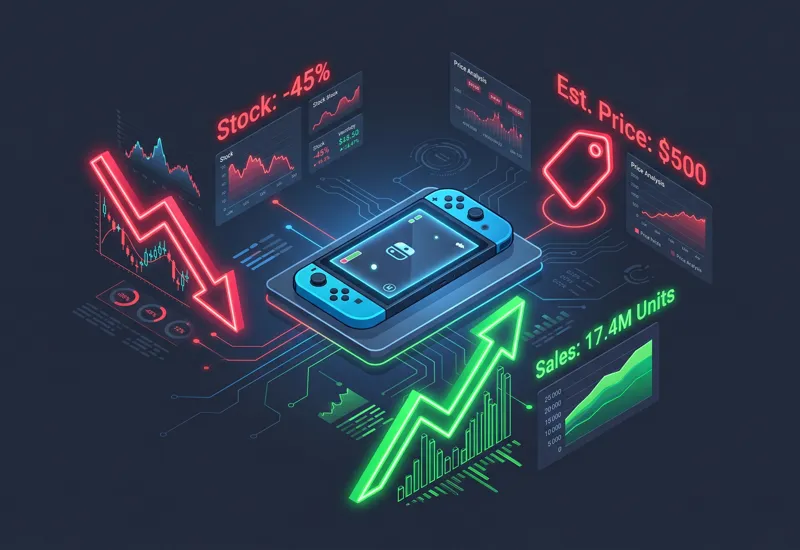
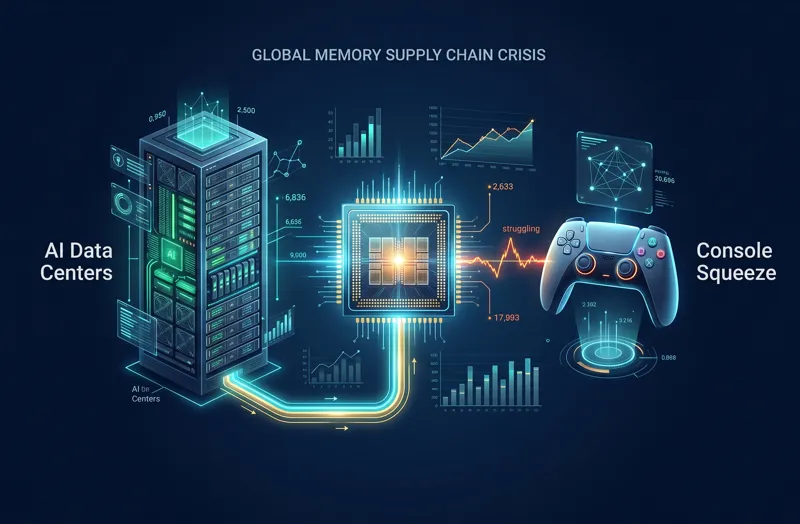
Since reaching a glorious high last August, Nintendo’s shares have sunk by a staggering 45 percent. This dramatic Nintendo stock price drop is not a reflection of poor game design or waning consumer interest, but rather a harsh lesson in global macroeconomic supply chains. The culprit? An aggressive global frenzy to build advanced AI data centers, which is rapidly pushing up the cost of the essential memory chips upon which Nintendo relies to manufacture its consoles. This hardware squeeze is forcing a painful re-evaluation of video game industry profit margins across the board.
“Nintendo is a victim of its own success… it would probably not have the same issues without the memory problems, but investors’ expectations were sky high since the beginning. Now, they are spooked.”
To understand the panic, one must look at the immense pressure placed on hardware manufacturers in the current tech climate. The chip price increases have led institutional investors and retail traders alike to scrutinize Nintendo’s profit margins. When the new console launched last June, the financial models were built on the assumption of stabilizing component costs. Instead, memory prices have skyrocketed. This raises a critical
can Nintendo sell as many devices as it originally projected if the manufacturing costs destroy their margins?
Crucially, the Japanese gaming giant is likely being forced to reconsider its entire software pipeline. Is there a sufficient lineup of new, system-selling games in development to encourage mass consumer adoption of a console that could very soon become significantly more expensive? If Nintendo decides to pass these exorbitant manufacturing costs onto the consumer, the resulting sticker shock could throttle the console’s momentum during its most critical growth phase.
Metric
Original Switch (First 13 Months)
Switch 2 (Launch to Dec 2025)
Units Sold
17.8 Million
17.4 Million
Sales Velocity
Standard Baseline
77% Faster (Adjusted for time)
Software Attach Rate
9.7 games per console (Lifetime)
2.2 games per console (Nascent)
As indicated by the data, sales of the new hardware have been incredibly impressive. By December, 17.4 million units had been sold. When taking into account the exact timing of the launch, independent analysis suggests that sales have been moving 77 percent faster than the original device. However, a console is only a trojan horse for software sales. The original hybrid console sold an astonishing 155 million units and 1.5 billion games. The new iteration desperately needs to rapidly expand its user base to achieve that highly lucrative 9.7 software attach rate, a goal that a price hike could severely jeopardize.
Memory Chip Costs and the Gaming Industry Squeeze
Nintendo is certainly not the only gaming entity feeling the agonizing pain of higher memory chip prices. The entire sector is under siege by the broader technology industry’s insatiable appetite for AI infrastructure. Sony, a direct competitor, has seen its share price shed more than 30 percent since November. Because the PlayStation 5 gaming console relies on even more cutting-edge, expensive hardware than Nintendo’s hybrid system, the rising component costs have severely cut into Sony’s profits, making future hardware iterations incredibly difficult to bring to market at a consumer-friendly price point.
“The huge memory price increases mean consoles are going to take a hit, be it Switch, PlayStation or Xbox. It’s going to take a while before memory supply catches up, which leaves a headwind the console makers need to find a way to offset.”
This macro-economic headwind leaves console manufacturers in a precarious position. The companies manufacturing these memory chips, such as SK Hynix and Kioxia, are operating at maximum capacity, prioritizing high-margin enterprise data center contracts over consumer electronics. Market analysts currently project that it may take until 2028 for global memory output to sufficiently increase and cool prices down to historical norms.
Company
Stock Impact (Since Peak)
Primary Vulnerability Factor
Nintendo
-45%
Price-sensitive, younger demographic
Sony (PlayStation)
-30%
High-end, bleeding-edge memory requirements
Microsoft (Xbox)
Varied (Buffered by software)
Hardware subsidization limits
While both Sony and Nintendo are navigating this storm, it is the home of Mario and Zelda that is arguably more exposed to the immediate fallout. Nintendo has historically dominated by appealing to a younger, more price-sensitive fan base. A family is much more likely to balk at a premium price tag for a secondary family console than a hardcore gamer is for a primary high-end machine.
Will We See a $500 Hardware Price Tag?
This vulnerability is exactly why the rumors of an impending price adjustment are so damaging to investor confidence. Undermining the optimism of early software hits—like the surprise release of Pokémon Pokopia, which secured a massive 2.2 million sales in its first four days—is a growing assumption by financial analysts that Nintendo will be forced into a corner. Experts suggest that to maintain basic profitability, Nintendo may have to increase the US price tag of the console by $50, pushing the retail cost to a daunting $500 in the second half of this year.
For a deeper dive into the company’s financial strategies and corporate governance surrounding hardware pricing, one can review the public documents available via Nintendo Investor Relations.
Looking Ahead: The Upcoming Nintendo Direct June
With the stock battered and hardware margins shrinking, what can stop the bleeding? Investors and gamers alike are closely watching three pivotal factors over the coming months. The first, as mentioned, is the slow trajectory of memory chip supply recovery. The second is whether Nintendo leadership is willing to proactively cut financial forecasts for the next fiscal year enough to assure Wall Street that the absolute worst-case scenario has already been priced into the stock.
The final, and perhaps most exciting, factor is the upcoming Nintendo Direct June presentation. This live digital showcase is Nintendo’s opportunity to change the narrative from hardware costs to software magic. A blockbuster game announcement could easily reignite consumer frenzy and override concerns about a potential price hike.
“You just never know with Nintendo — they could do anything, or nothing.”
Industry insiders are already placing bets on what might be revealed. With 2026 marking the 40th anniversary of the Super Mario franchise, and following the massive success of the space-faring Mario movie, a brand new flagship 3D Mario platformer feels imminent. Furthermore, next year marks a major anniversary for The Legend of Zelda, alongside a highly anticipated movie adaptation. Revealing a massive new Zelda title—the exact type of prestige software that entices serious, older gamers to invest in new hardware regardless of a $500 price tag—could be the ultimate saving grace.
Potential Catalyst
Timeline
Market Impact
New 3D Mario Title Reveal
June 2026 (Direct)
High: Drives immediate hardware adoption
Revised Financial Forecasts
Q3 2026
Medium: Stabilizes institutional panic
Memory Chip Cost Reduction
2028 (Estimated)
Long-term: Restores high profit margins
Ultimately, Nintendo sits at a complex crossroads. They have the intellectual property, the brand loyalty, and the early sales momentum to define this console generation. However, navigating the brutal realities of global silicon economics will require masterful corporate strategy. Whether they choose to eat the hardware losses to build their player base, or raise prices and rely on the sheer undeniable quality of their exclusive games to justify the cost, the next few months will be pivotal in determining if the stock can recover its former glory.
Frequently Asked Questions
Question: Why is Nintendo’s stock price dropping so rapidly?
Nintendo’s stock has dropped roughly 45% since August due to investor fears over rising memory chip costs, which are severely cutting into the company’s hardware profit margins.
Will there be a Nintendo Switch 2 price increase?
While not officially confirmed by Nintendo, financial analysts predict the company may be forced to increase the console’s price by $50, potentially bringing the retail cost to $500 in the second half of the year.
What is causing the global memory chip shortage?
The shortage and subsequent price hikes are largely driven by the global tech industry’s massive investments in building new AI data centers, which require vast amounts of high-end memory chips, starving consumer electronics.
How well is the new console selling?
Despite the financial market panic, consumer sales are incredibly strong. The console sold 17.4 million units by December, selling at a pace 77% faster than the original Switch did in a comparable timeframe.
Are other gaming companies affected by these hardware costs?
Yes. Sony has seen its stock drop over 30% since November, as the PlayStation 5 relies on even more expensive, high-end components that are currently suffering from massive price inflation.
When is the upcoming Nintendo Direct?
The highly anticipated Nintendo Direct is scheduled for June. Investors and gamers expect the live showcase to reveal major upcoming software titles to boost hardware sales.
What games might be announced to save hardware sales?
Analysts are speculating that Nintendo might announce a new 3D Mario game to coincide with the franchise’s 40th anniversary, or potentially a new Zelda title to tie into the upcoming movie adaptation.
Disclaimer: This article is for informational purposes only. The financial analysis, stock market data, and pricing speculations discussed herein do not constitute investment advice. Always consult with a licensed financial advisor before making any investment decisions.