New website names and shames companies that still don’t offer passkeys to users. As we navigate the digital landscape in 2026, securing our online accounts against sophisticated hackers has never been more critical. Traditional passwords are no longer sufficient to protect sensitive personal data.
Today, passwordless authentication security is widely considered the ultimate cybersecurity gold standard. Despite this industry-wide consensus, a shocking number of major platforms refuse to adapt. This alarming reality is exactly why a New website names and shames companies that still don’t offer passkeys to users, forcing the tech industry to confront its security flaws.
The Motivator: New website names and shames companies that still don’t offer passkeys to users
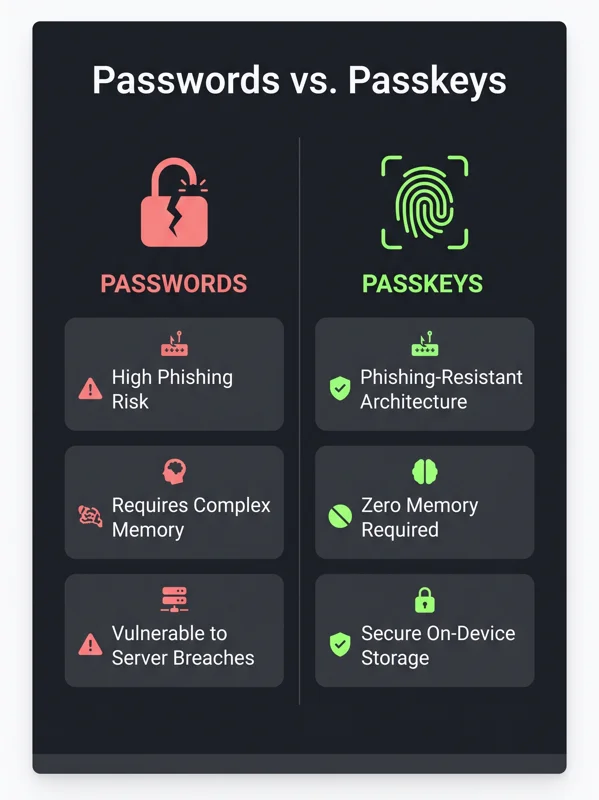
Passkeys provide a superior level of security because they are entirely unique to your specific device. They rely on advanced biometric login options, such as Face ID or Touch ID, or a physical security token. Because you do not have to memorize them, they eliminate the risk of weak or reused passwords.
More importantly, these cryptographic keys are incredibly difficult to steal. A hacker cannot remotely phish your account unless they gain physical control of your unlocked smartphone or computer. This is why the cybersecurity community is so invested in this transition.
| Security Feature | Traditional Passwords | Phishing-Resistant Passkeys |
|---|---|---|
| Phishing Vulnerability | High (Easily tricked into revealing) | Low (Tied to physical device) |
| Memory Requirement | High (Requires complex strings) | None (Stored via biometrics) |
| Data Breach Risk | High (Can be leaked from servers) | Low (Private key stays on device) |
A list is a surprisingly effective motivator. Nobody wants to be on the list.
How the New website names and shames companies that still don’t offer passkeys to users
The directory was created by Scott Helme, a respected and longtime security researcher. He built the whynopasskeys.com directory with a very specific goal in mind. He wanted to highlight the massive platforms that are deliberately leaving their users vulnerable to credential stuffing and phishing attacks.
By putting these digital giants on a public watchlist, the initiative creates public relations pressure. The concept is simple but effective: a New website names and shames companies that still don’t offer passkeys to users so that consumers can demand better protection for their private information.
Tech Giants Exposed: New website names and shames companies that still don’t offer passkeys to users
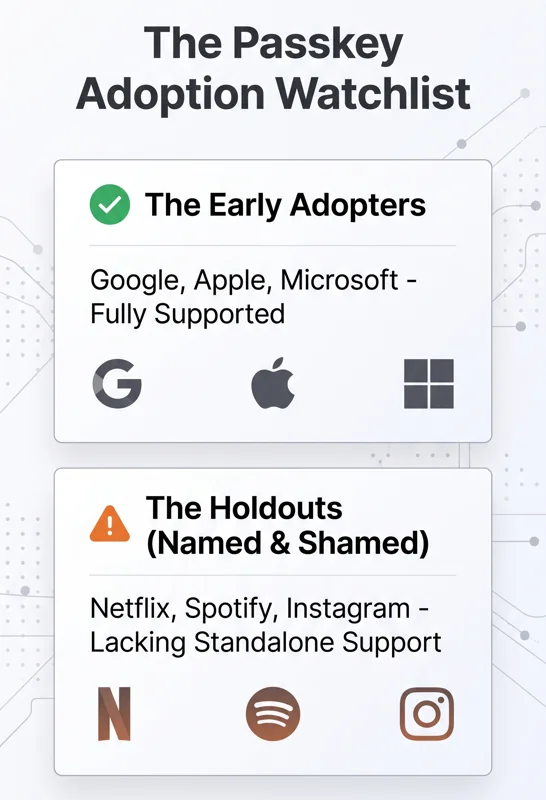
According to the data collected, roughly one in four major apps and services on the internet still do not support this essential security protocol. Heavyweights like Apple, Google, and Microsoft have been on the right side of history for years, fully integrating passkey support into their ecosystems.
However, massive consumer platforms are lagging severely behind. Millions of users log into Spotify, Netflix, and Instagram every single day using outdated security measures. It is this specific failure that ensures the New website names and shames companies that still don’t offer passkeys to users continues to gain viral traction.
| Company / Service | Passkey Adoption Status |
|---|---|
| Google, Apple, Microsoft | Fully Supported (Good Standing) |
| Netflix | Not Supported (Named and Shamed) |
| Spotify | Not Supported (Named and Shamed) |
| Limited (Requires connected Facebook account) |
Passkeys’ crucial advantage is that the user doesn’t have to remember anything, and they are much harder to steal by a hacker.
The Future Impact of a New website names and shames companies that still don’t offer passkeys to users
Interestingly, some platforms have a fragmented approach to security. For example, Meta allows passkeys on Facebook and WhatsApp, but Instagram users can only use them if their account is linked to an enabled Facebook profile. This inconsistency confuses users and weakens overall security postures.
As cyber threats evolve in 2026, public accountability will remain a crucial tool. Because a New website names and shames companies that still don’t offer passkeys to users, consumers are becoming more educated about their digital rights. Moving forward, we expect to see more holding companies actively rushing to implement phishing-resistant passkeys to avoid being featured on this infamous list.
Frequently Asked Questions
What does it mean that a New website names and shames companies that still don’t offer passkeys to users?
It refers to a directory created by a security researcher to publicly list massive tech platforms that fail to provide modern, passwordless login options, thereby pressuring them to upgrade their security.
Why are passkeys considered better than passwords?
Passkeys use cryptography tied strictly to your physical device and biometric login options, making them entirely immune to traditional phishing attacks and data breaches.
Who created the website tracking these companies?
The whynopasskeys.com directory was created by longtime cybersecurity researcher Scott Helme to push the industry forward.
Which major companies are currently on the “shame” list?
Major global platforms such as Netflix, Spotify, and Instagram are currently highlighted for their lack of native, standalone passkey support.
Do any major tech companies support this cybersecurity gold standard?
Yes, tech giants including Apple, Microsoft, and Google have successfully implemented and championed passkey technology for years.
Does Instagram support passkeys at all?
Instagram’s support is currently conditional; users can only utilize them if their Instagram profile is directly tied to a Facebook account that already has the feature enabled.
How do I benefit when a New website names and shames companies that still don’t offer passkeys to users?
Public pressure forces these massive corporations to prioritize your digital safety, ultimately leading to faster rollouts of phishing-resistant passkeys across the apps you use daily.
Disclaimer: This article is for informational purposes only. The security status of the platforms mentioned may change as companies update their authentication methods over time.