
nasa welcomes latvia as newest artemis accords signatory in a landmark event that highlights the rapid expansion of global partnerships in outer space. During a formal ceremony hosted at the agency’s headquarters in Washington, D.C., the Republic of Latvia officially committed to the responsible, safe, and transparent exploration of space. This historic signing makes Latvia the 62nd nation to join the growing coalition, signaling a unified approach to humanity’s next great era of discovery.
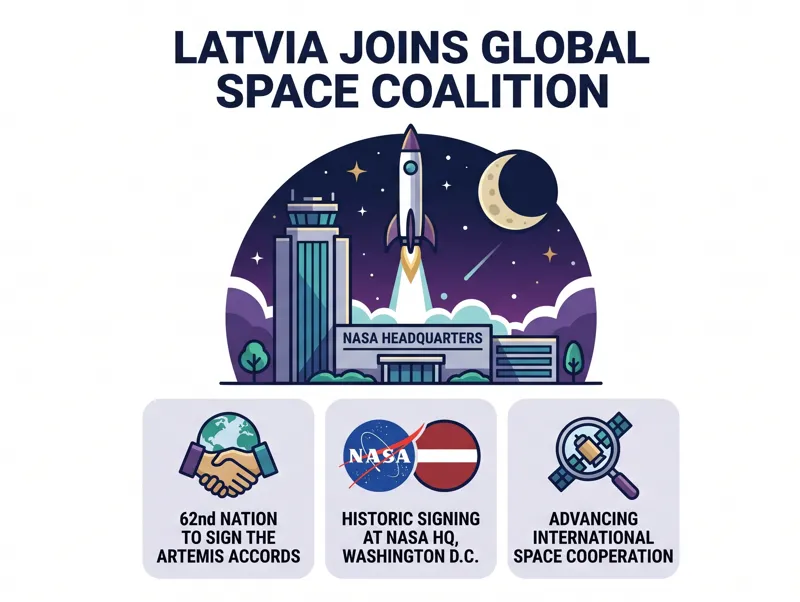
The Historic Signing: Expanding the NASA Lunar Coalition
The addition of Latvia represents a significant win for international space cooperation. The ceremony featured prominent figures from both nations, underscoring the diplomatic and scientific importance of the agreement. NASA Administrator Jared Isaacman expressed immense pride in the partnership, emphasizing that the accords serve as the bedrock for tangible missions and deep-rooted collaboration on the lunar surface. As more nations join, the framework for future exploration becomes increasingly resilient and inclusive.
“Each new signatory strengthens a coalition committed to the transparent and peaceful exploration of space. The accords are the foundation for real missions and real cooperation on the lunar surface.”
Latvia’s Minister for Education and Science, Dace Melbārde, signed the document on behalf of her country, pointing out that Latvia is already an active participant in the global space ecosystem through its research and industrial sectors. The participation of key diplomats further solidified the bilateral commitment to these shared exploration goals.
| Key Participant | Role / Title | Representing |
|---|---|---|
| Jared Isaacman | NASA Administrator | United States |
| Dace Melbārde | Minister for Education and Science | Republic of Latvia |
| Jānis Beķeris | Chargé d’affaires a.i. | Embassy of Latvia to the U.S. |
The Core Principles of Peaceful Space Exploration
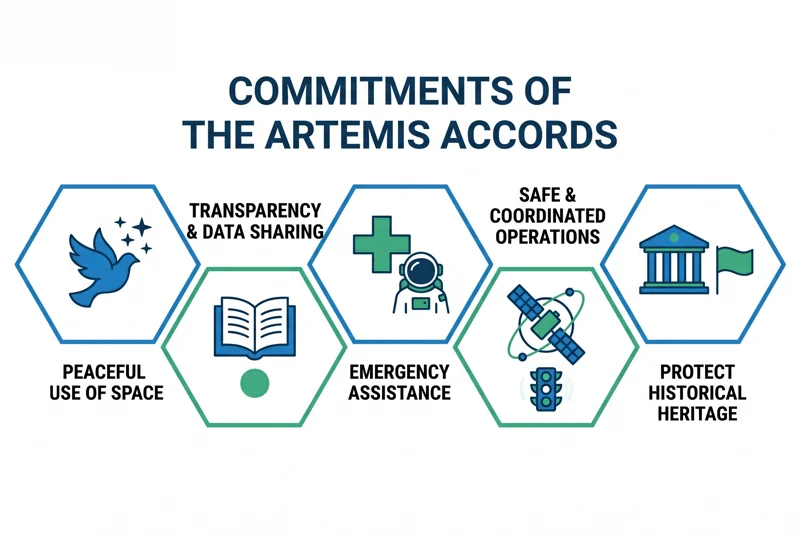
Established initially in 2020 by the United States and seven founding nations, the Artemis Accords were created to address the surging interest in lunar activities from both governmental agencies and private enterprises. The accords are not just political statements; they are a set of practical principles designed to enhance safety and prevent conflicts. Signing the document means committing to explore peaceably, providing emergency assistance to astronauts in distress, sharing scientific data openly with the world, and protecting historically significant lunar heritage sites.
For a country like Latvia, this agreement acts as a catalyst for domestic growth. It opens doors for students, researchers, and tech innovators to collaborate directly with leading global space programs. To learn more about the specific legal and scientific frameworks, you can review the official NASA Artemis Accords guidelines.
| Artemis Accords Principle | Description |
|---|---|
| Transparency | Nations must publicly share their space exploration plans and policies. |
| Emergency Assistance | Commitment to rendering aid to personnel in distress in outer space. |
| Scientific Data Sharing | Ensuring discoveries are made available for the benefit of all humanity. |
| Deconfliction | Preventing harmful interference through established “safety zones.” |
Building a Sustained Lunar Base and Beyond
The momentum behind the NASA lunar coalition is accelerating rapidly. Just last month, NASA outlined its ambitious plans to return to the Moon on a routine and affordable basis. The ultimate goal is not merely to visit, but to establish a sustained lunar base that will serve as a staging ground for deep space exploration, including upcoming Moon and Mars missions. During a recent summit, representatives from over 40 Artemis Accords countries across six continents gathered in Washington to discuss these new scientific opportunities.
“Participation in the Artemis Accords is also an investment in the development of our students, researchers, and innovators.”
This sentiment shared by the Latvian delegation echoes the feelings of many emerging space nations. The democratization of space means that countries do not need massive, multi-billion-dollar launch facilities to contribute meaningfully to off-world science. Through specialized manufacturing, software development, and specialized research, every signatory plays a critical part.
The Future of Moon and Mars Missions
As we look toward the remainder of the 2020s and into the 2030s, the blueprint laid out by the Artemis Accords will be thoroughly tested. As governments and private entities begin to extract lunar resources and build permanent habitats, the rules of engagement established today will be critical. The successful integration of nations like Latvia proves that the vision of a cooperative, unified future in space is highly achievable.
| Milestone | Significance to the Accords |
|---|---|
| Initial Drafting (2020) | Established baseline rules with 8 founding nations. |
| Sustained Lunar Base Planning | Requires international hardware and logistical support. |
| 62nd Signatory (2026) | Proves the model scales globally across varied economies. |
More countries are fully expected to sign the Artemis Accords in the coming months. As NASA continues its vital work, the growing coalition stands as a testament to the fact that the next giant leap for mankind will be taken together.
Frequently Asked Questions
What are the Artemis Accords?
The Artemis Accords are a set of practical principles and international agreements designed to guide safe, peaceful, and transparent space exploration.
Which country recently became the 62nd signatory?
The Republic of Latvia recently became the 62nd nation to sign the Artemis Accords.
Who hosted the signing ceremony for Latvia?
The ceremony was hosted by NASA at the agency’s headquarters in Washington, D.C.
Why is international space cooperation important for the Moon?
It ensures that activities on the Moon are deconflicted, safe, and that scientific discoveries benefit all of humanity rather than a single nation.
What is NASA’s goal regarding a sustained lunar base?
NASA aims to return to the Moon routinely and affordably to build a permanent presence, which will serve as a stepping stone for future Mars missions.
When were the Artemis Accords originally established?
They were established in 2020 by the United States along with seven other founding nations.
What does signing the accords mean for Latvia’s domestic industries?
It opens up new opportunities for integration into the global space ecosystem, acting as an investment in local students, researchers, and technological innovators.
Disclaimer: This article is for informational purposes only. The political and scientific events described are based on official press statements from 2026 and are subject to ongoing international developments.