Linux7 2 Drops strncpy entirely from its source code, marking one of the most significant codebase cleanups in recent history.
This monumental shift in Linux kernel 7.2 updates signals the definitive end of an era for system developers and engineers.
For decades, deprecated C string functions have haunted programmers, creating invisible vulnerabilities that are notoriously difficult to track.
Finally, the open-source development community has successfully eradicated this persistent source of bugs from the world’s most vital operating system.
Why Linux7 2 Drops strncpy After Six Long Years
The monumental decision to remove this specific API was not made overnight or taken lightly by the maintainers.
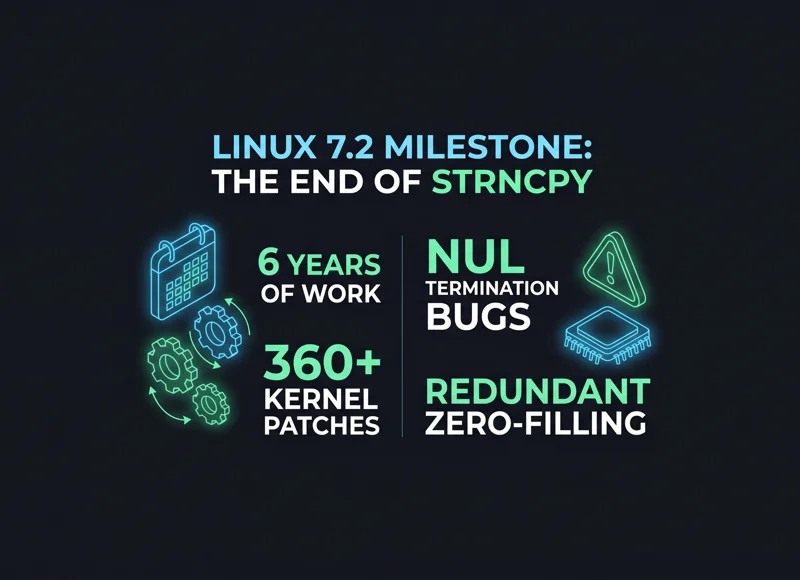
It required an agonizing six years of relentless coding, testing, and rigorous peer review across multiple architecture trees.
Dedicated kernel developers submitted over 360 individual patches to systematically cleanse the kernel of this deeply embedded, problematic code.
The core issue fundamentally stemmed from counter-intuitive semantics surrounding NUL termination memory bugs.
These specific bugs frequently resulted in unpredictable software behavior, silent failures, and potentially serious security vulnerabilities.
Furthermore, significant performance issues constantly plagued systems due to the mandatory, redundant zero-filling of destination memory buffers.
“The systematic removal of this legacy API represents a massive leap forward in kernel security and memory management optimization for the 2026 landscape.”
The Hidden Dangers When Linux7 2 Drops strncpy Alternatives Are Ignored
Understanding the full impact of this necessary update requires a brief look at the historical programming context.
The original function was initially designed to copy up to a specified, strict number of bytes into a buffer.
However, its catastrophic handling of strings that lacked proper termination created widespread confusion among even veteran C programmers.
This widespread confusion is exactly why the recent push for Linux kernel security patches heavily prioritized deprecating this specific API.
Below is a clear comparison illustrating the risks of the old methodology versus the benefits of the modern standards.
| C String Function | Primary Technical Issue or Benefit | Kernel 7.2 Status |
|---|---|---|
| strncpy() | Causes NUL termination memory bugs and forces redundant zero-padding. | Completely Removed |
| strscpy() | Ensures inherently safe NUL termination without unnecessary performance overhead. | Highly Recommended |
How Developers React as Linux7 2 Drops strncpy
The global community reaction to the official news that Linux7 2 Drops strncpy has been overwhelmingly positive.
Software engineers and security researchers are actively celebrating the triumphant conclusion of this massive refactoring effort.
By forcing this change, the kernel maintainers have successfully removed the guesswork from memory buffer management within the operating system core.
To dive deeper into secure coding practices and view the raw commits, you can review the official Linux kernel archives.
The strncpy vs strscpy replacement Guide: What to Use Now that Linux7 2 Drops strncpy
Now that the legacy application programming interface is officially gone, developers must rapidly adapt to the safer, modern alternatives.
This mandatory transition requires a very clear understanding of exactly when and where to deploy specific copy functions.
Utilizing the strictly correct replacement is absolutely critical for maintaining long-term system stability and preventing regressions.
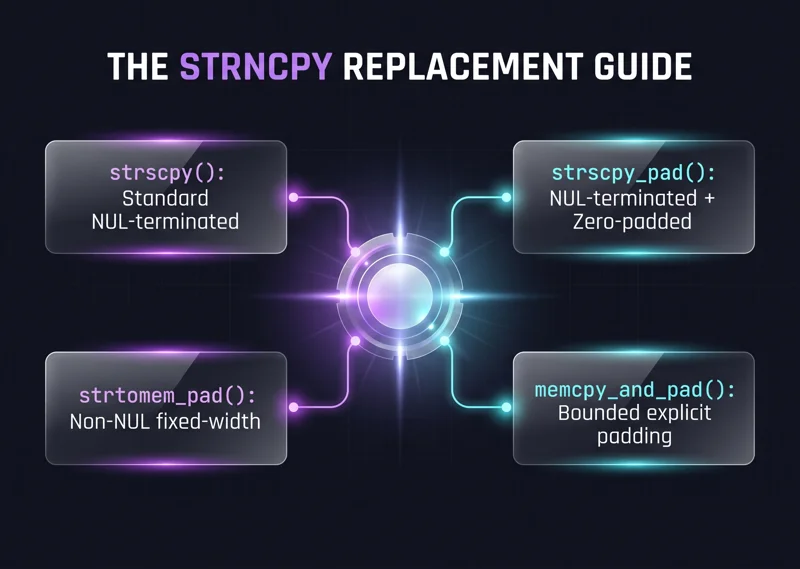
Here is a detailed breakdown of the new functions you must integrate into your upcoming patches.
| Modern Function Name | Optimal Use Case Scenario |
|---|---|
| strscpy() | Standard operations requiring standard NUL terminated destinations. |
| strscpy_pad() | Situations requiring NUL-terminated destinations alongside explicit zero-padding. |
| strtomem_pad() | Handling non-NUL-terminated fixed-width data fields securely. |
| memcpy_and_pad() | Executing bounded memory copies that demand explicit padding rules. |
Future-Proofing Your Code When Linux7 2 Drops strncpy
Proactively adapting your codebase to these new standards today will undoubtedly save you countless hours of complex debugging tomorrow.
The aggressive move away from deprecated C string functions is a crystal-clear signal of the wider software industry’s security direction.
Embracing the designated replacement standards ensures your custom modules will remain fully compatible with all future architecture releases.
“Modern kernel development demands strict, uncompromising adherence to safer memory copy functions to prevent catastrophic, system-wide failures.”
The undeniable fact that Linux7 2 Drops strncpy ultimately proves that no legacy API is too deeply ingrained to be replaced.
If a foundational function is determined to be fundamentally flawed, the open-source community possesses the willpower to eventually root it out.
This relentless, uncompromising pursuit of technical excellence is exactly what keeps the broader Linux ecosystem so incredibly robust.
Every single developer maintaining kernel modules must now thoroughly audit their legacy code to ensure immediate compliance.
Failure to update your logic will quickly result in completely broken builds and permanently rejected merge requests from the maintainers.
The triumphant completion of these 360+ difficult patches is a massive testament to the power of global, open-source collaboration.
Make absolutely certain your entire engineering team is fully aware that Linux7 2 Drops strncpy for good this release cycle.
Frequently Asked Questions About Why Linux7 2 Drops strncpy
Why is it such a big deal that Linux7 2 Drops strncpy from the source?
It is a major milestone because the API was a notorious, persistent source of NUL termination memory bugs and caused noticeable performance issues due to redundant zero-filling overhead.
Exactly how long did it take the community to remove the API completely?
The entire deprecation and removal process took over six years and required more than 360 highly specific patches to eliminate all instances within the kernel codebase.
What was the fundamental technical issue with the old function?
Its counter-intuitive design semantics made it very easy for developers to accidentally leave destination strings without proper NUL termination, directly leading to memory leaks and system crashes.
What is the officially recommended strncpy vs strscpy replacement for standard coding?
For standard NUL-terminated destinations, kernel developers are now strictly advised to use `strscpy()` for all future memory copy operations.
Are there other specialized alternatives provided in this update?
Yes, developers can and should also use `strscpy_pad()`, `strtomem_pad()`, and `memcpy_and_pad()` depending on the specific zero-padding and termination requirements of their code.
Does this deprecation immediately affect my user-space applications?
This specific architectural update applies directly to the Linux kernel source code; however, user-space application developers are also highly encouraged to avoid these deprecated C string functions for security reasons.
Where can I find more technical details on these specific Linux kernel 7.2 updates?
You can track the final commit logs, review the source code changes, and read the mailing list discussions on the official kernel developer portals.
Disclaimer: This article is for informational purposes only. Kernel development practices and technical specifications are subject to change based on ongoing community updates and repository commits.