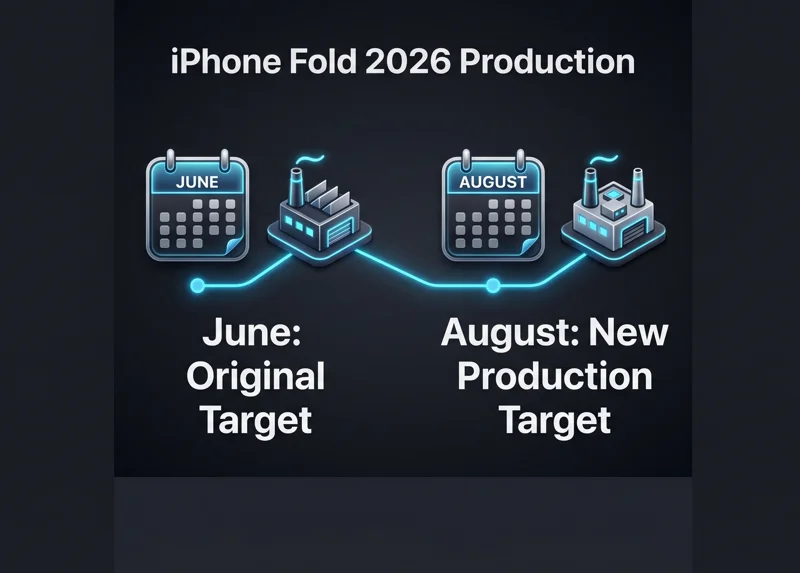
The recent reports confirming that iphone fold production pushed back by roughly one to two months have sent a wave of concern through the tech community, but industry insiders insist Apple remains determined to hit its Fall 2026 launch window. Originally slated to begin mass manufacturing in June 2026, the timeline for Apple’s highly anticipated foldable device has now slipped into early August. This tightened schedule means that while the release date might not change, getting your hands on the device will be an unprecedented challenge.
The Timeline Clash: Engineering Validation Test (EVT) Delays
Developing a first-generation foldable device is notoriously difficult, and Apple is currently navigating a complex Engineering Validation Test (EVT) phase. Rumors suggest that the tech giant is experiencing more manufacturing hurdles than initially anticipated. Some analysts initially feared these engineering bottlenecks could push the entire launch into 2027.
However, recent insights from Bloomberg’s latest technology analysis indicate that the foldable iPhone remains on track to debut either alongside or immediately following the iPhone 18 Pro lineup in September 2026. This aggressive strategy suggests Apple plans to make up for lost time during the transition to Design Validation Testing (DVT) and Production Validation Testing (PVT).
| Manufacturing Phase | Original Target (2026) | Updated Estimate (2026) |
|---|---|---|
| Engineering Validation (EVT) | Early Spring | Late Spring |
| Design/Production Testing | Mid-Spring | Summer |
| Mass Production | June | Early August |
The most immediate consequence of a condensed mass-production window is a severe supply chain bottleneck. By losing almost eight weeks of manufacturing time, Apple’s initial inventory will be significantly smaller than a standard iPhone launch. Historically, when early cycle manufacturing issues arise, it leads to massive stock shortages.
When Apple faces engineering bottlenecks early in a manufacturing cycle, it almost guarantees extreme scarcity at launch, turning pre-orders into a high-stakes race.
Consumers should brace for a launch where the device sells out in a matter of minutes. If you are not among the first to successfully complete a pre-order, you could be waiting until late 2026 or even early 2027 to see a unit ship to your door. Apple’s strict quality control standards mean they are unlikely to rush production at the expense of device integrity.
Design and Specifications: What Does $2,500 Buy You?
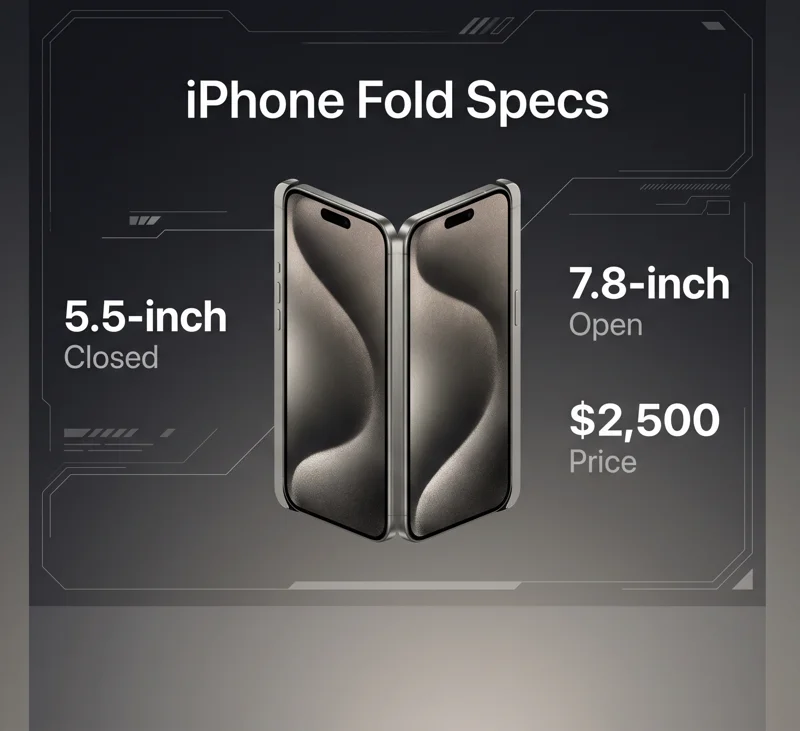
Positioned as an ultra-premium device, the iPhone Fold is expected to command a price tag between $2,000 and $2,500. For this premium price, users will experience Apple’s meticulous hardware engineering applied to a flexible form factor. The device is rumored to feature a traditional smartphone footprint when closed, revealing a tablet-sized canvas when opened.
| Feature | Rumored Specification |
|---|---|
| Cover Display (Closed) | 5.5 inches (OLED) |
| Main Display (Open) | 7.8 inches (Flexible OLED) |
| Estimated Price | $2,000 – $2,500 USD |
| Release Window | September – October 2026 |
Foldable Display Manufacturing Issues
The crux of the delay likely stems from the display technology. Perfecting a crease-free or minimal-crease folding mechanism while maintaining the durability required for an Apple product demands rigorous testing. The hinge mechanism and the flexible OLED panel must survive hundreds of thousands of folds without degrading the visual experience.
The foldable segment is evolving rapidly, and Apple’s calculated entry in 2026 could redefine premium mobility, prioritizing flawless execution over being first to market.
Will the Wait Be Worth It?
Apple rarely rushes a new product category. By allowing competitors to test the waters for years, Apple has learned what consumers value in a folding phone: durability, seamless software integration, and a premium camera experience. While the delays are frustrating for enthusiasts, the extra time spent in validation testing ensures the final product meets the “it just works” standard.
| Device | Estimated Base Price | Internal Screen Size |
|---|---|---|
| Apple iPhone Fold (2026) | $2,000+ | 7.8 inches |
| Samsung Galaxy Z Fold Series | $1,799 | 7.6 inches |
| Google Pixel Fold Series | $1,799 | 7.6 inches |
Frequently Asked Questions (FAQs)
Why was the iPhone Fold production delayed?
The delay is reportedly due to challenges during the Engineering Validation Test (EVT) phase, causing mass production to shift from June to early August 2026.
Will the iPhone Fold still release in 2026?
Yes, current reports indicate that despite the production delays, Apple still plans to launch the device in Fall 2026, likely alongside or shortly after the iPhone 18 Pro.
How much will the Apple foldable phone cost?
Industry analysts expect the device to be positioned as an ultra-premium product, with a price tag ranging between $2,000 and $2,500.
What are the expected screen sizes for the folding iPhone?
Rumors suggest a 5.5-inch exterior cover display when closed, and a larger 7.8-inch internal display when fully opened.
Will it be hard to buy the iPhone Fold at launch?
Absolutely. The shortened mass production window means severe supply chain constraints are highly likely, leading to immediate sell-outs during the pre-order phase.
Is the launch delay officially confirmed by Apple?
No, Apple does not officially comment on unreleased products or supply chain rumors. This information comes from industry analysts and supply chain reports from sources like DigiTimes.
What makes Apple’s foldable different from Android competitors?
While specific features are under wraps, Apple typically focuses on deeper software-hardware integration, premium build materials, and a more durable hinge design compared to early competitors.
Disclaimer: This article is for informational purposes only. The details discussed regarding unreleased products are based on industry rumors, supply chain leaks, and analytical forecasts, and are subject to change prior to any official announcements by the manufacturer.