I teach people over 50 to be mobile 3 low-impact moves that build more stability than a 30-minute walk, and this approach is transforming how we age in 2026.
Do not get me wrong; walking is a fantastic physical activity. I spend countless hours walking my rescue dog, enjoying the fresh air and the cardiovascular benefits.
Walking is well-documented for building stronger bones, ligaments, and a healthier heart. It decreases sedentary time and boosts your resting metabolism naturally.
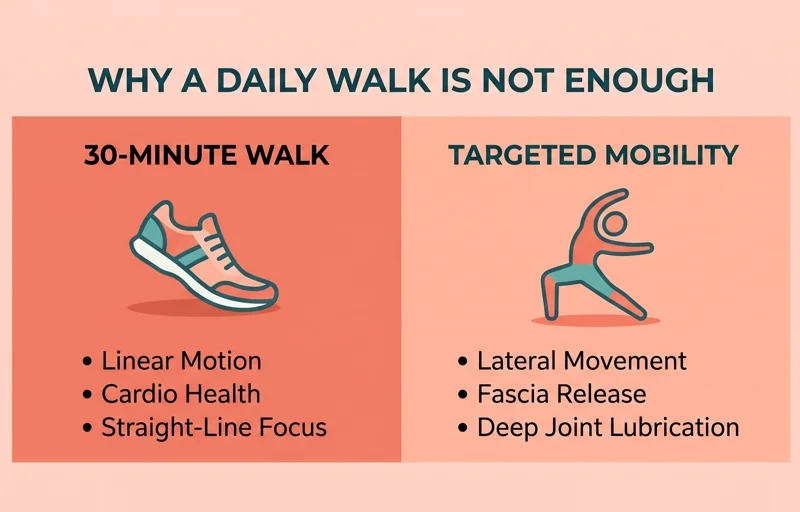
However, walking only moves your body in a single, straightforward plane of motion. It does not adequately challenge your lateral stability or rotational mobility.
That is exactly why I teach people over 50 to be mobile 3 low-impact moves that build more stability than a 30-minute walk. A daily stroll simply is not enough to prevent falls or maintain true functional fitness.
Why I teach people over 50 to be mobile 3 low-impact moves that build more stability than a 30-minute walk
As we age, our bodies require dynamic movement to stay agile. Relying on walking alone can lead to stiff joints and a severe lack of balance.
Improving mobility is not just about holding static stretches. It is about actively moving your joints through their full range of motion while under resistance.
This dynamic loading is the foundation of functional strength over 50. It ensures your muscles, tendons, and ligaments work together in harmony.
To truly combat the physical signs of aging, you need a targeted bodyweight stability workout that challenges your equilibrium safely.
“Mobility is not merely about stretching; it is about being dynamic, loading the muscles, and moving the joints through their entire functional range to build lasting resilience.”
When you combine your daily walks with specialized movements, the results are nothing short of magical for your longevity.
Joint Health and Fascia Release: The Hidden Benefits
One of the biggest reasons I teach people over 50 to be mobile 3 low-impact moves that build more stability than a 30-minute walk is to target the fascia.
Fascia is a complex web of connective tissue that holds your muscles, bones, and organs tightly in place.
When we age or sit for prolonged periods, this fascia becomes incredibly tight and sticky, increasing friction in the joints.
Proper joint health and fascia release are achieved through slow, deliberate, low-impact movements rather than intense, high-impact jumping.
By engaging in specific low-impact mobility exercises for seniors, you effectively hydrate the fascia, allowing your body to move with less pain and more freedom.
| Exercise Type | Primary Benefit | Drawbacks for Aging Bodies |
|---|---|---|
| Daily 30-Minute Walk | Cardiovascular health, bone density | Lacks lateral movement and deep core stability challenges |
| Targeted Mobility Routine | Joint lubrication, fascia release, profound balance | Requires focused technique and concentration |
How I teach people over 50 to be mobile 3 low-impact moves that build more stability than a 30-minute walk
Before beginning, remember to listen to your body. If you feel any sharp pain, stop immediately and rest.
If you are managing an injury or a specific health condition, please consult with your healthcare provider or check the National Institute on Aging guidelines before starting.
You can perform these exercises using only your body weight, or you can add light dumbbells if you feel ready for a challenge.
Here is exactly how I teach people over 50 to be mobile 3 low-impact moves that build more stability than a 30-minute walk in my daily coaching practice.
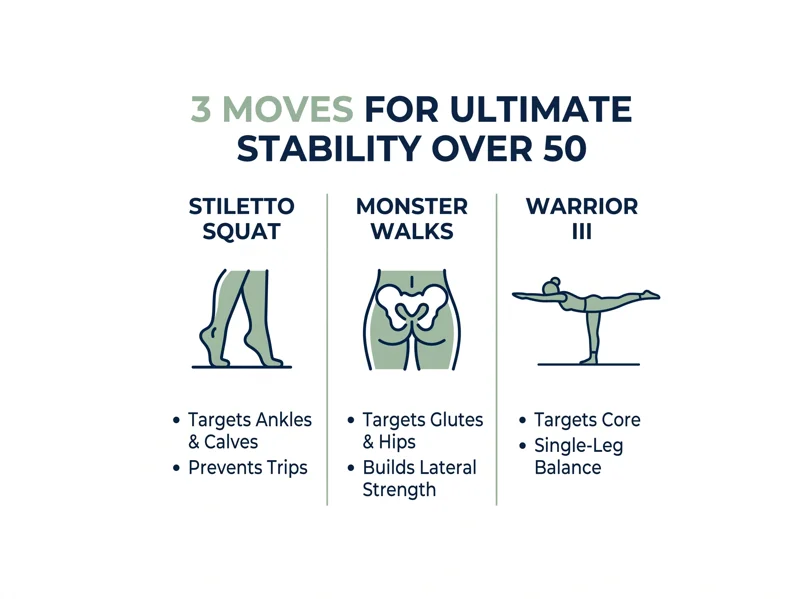
Move 1: The Stiletto Squat x Heel Raises
The first exercise in our routine focuses heavily on the ankles, calves, and core. Ankle mobility is crucial for climbing stairs and preventing trips.
Because ankle weakness is a leading cause of falls, I teach people over 50 to be mobile 3 low-impact moves that build more stability than a 30-minute walk starting right from the ground up.
To perform the Stiletto Squat:
Stand tall with your feet placed hip-width apart. Carefully rise onto your tiptoes, engaging your core muscles to find your balance.
With a straight back and a proud, open chest, bend your knees and send your hips backward to lower into a squat position.
Once you reach the bottom of the squat, slowly lower your heels to the floor, then press upward through your whole foot to stand.
You can reverse this by lowering into a standard squat first, shifting your weight to your tiptoes, and pressing upward to stand before lowering your heels.
Move 2: Monster Walks for Glute Activation
The second move is an absolute powerhouse for your lower body. Monster walks are incredible balance exercises for older adults.
This exercise targets the glutes, the core, and the thoracic spine, building a robust foundation for lateral movements.
This lateral strength is exactly why I teach people over 50 to be mobile 3 low-impact moves that build more stability than a 30-minute walk.
To execute the Monster Walk:
Stand with your feet slightly wider than shoulder-width apart, with your toes pointing out slightly. Sit back into a comfortable half-squat.
Keep your chest proud and place your hands lightly behind your head. Pull your elbows back to knit your shoulder blades together.
From this low position, take deliberate, wide steps forward and slightly outward, and then reverse the movement to walk backward.
Keep your weight sitting back toward your heels to fully engage the glutes throughout the entire range of motion.
| Exercise Name | Sets | Reps / Duration |
|---|---|---|
| Stiletto Squat x Heel Raises | 3 to 4 Sets | 8 to 10 Reps |
| Monster Walks | 3 to 4 Sets | 45 to 50 Seconds |
| Warrior III | 3 to 4 Sets | 8 to 10 Reps (per leg) |
Move 3: Warrior III for Total Equilibrium
The final component is a famous yoga posture designed to test your lower-body strength and single-leg balance.
Being able to balance on one leg is a highly transferable skill for daily life, whether you are putting on shoes or stepping over an obstacle.
When I teach people over 50 to be mobile 3 low-impact moves that build more stability than a 30-minute walk, I always include this highly effective pose.
To master Warrior III:
Start standing with your feet hip-width apart. Shift your entire body weight into your left leg, placing a very soft bend in that knee.
Place your hands on your hips or in a prayer position at your chest. Engage your deep core muscles to stabilize your spine.
Hinge forward slowly at the hips, simultaneously raising your right leg straight out behind you until your chest and leg are parallel to the floor.
Keep your hips square to the ground. Slowly transition back to your starting position with total control, and then switch to the other leg.
“Embrace the wobbles during your balance exercises, for every wobble is your nervous system actively learning how to keep you upright and safe.”
The Incredible Benefits When I teach people over 50 to be mobile 3 low-impact moves that build more stability than a 30-minute walk
You cannot truly rush a balancing exercise. Taking your time is the secret to unlocking the profound benefits of these movements.
Each of these exercises brings something unique to the table, targeting areas that a basic walking routine simply misses entirely.
By practicing this routine regularly, you are investing heavily in your long-term independence and functional freedom.
This is the exact methodology behind why I teach people over 50 to be mobile 3 low-impact moves that build more stability than a 30-minute walk.
| Target Area | Exercise Used | Functional Real-World Benefit |
|---|---|---|
| Ankles & Calves | Stiletto Squat | Prevents ankle rolls and helps with climbing stairs safely |
| Glutes & Outer Hips | Monster Walks | Improves side-to-side agility and stabilizes the pelvis |
| Core & Single-Leg Balance | Warrior III | Stops falls by training the body to recover from sudden shifts |
Creating a Sustainable Routine for Functional Strength Over 50
If you are looking to truly transform your body, consistency is much more important than sheer intensity.
You do not need to spend hours in the gym. Adding these three movements to your routine 3 to 4 times a week is incredibly effective.
Whenever you execute these moves, focus heavily on finding length through your spine rather than hunching your shoulders forward.
It is common to lose perfect form as you fatigue. If this happens, do not hesitate to hold onto a chair or a wall for added support.
Over time, the wobbles will decrease, your joints will feel generously lubricated, and your overall confidence in your body will soar.
This confidence is the ultimate goal when I teach people over 50 to be mobile 3 low-impact moves that build more stability than a 30-minute walk.
Frequently Asked Questions
Why is walking not enough for complete fitness as we age?
While walking is brilliant for the heart and lungs, it only moves the body in a straight line forward. It lacks the lateral movements and single-leg challenges required to build profound core balance and prevent dangerous falls.
How often should I perform this bodyweight stability workout?
Aim to perform these three specific exercises 3 to 4 times a week. You can easily do them right before or immediately after your daily walk to ensure your joints are properly warmed up.
Are these low-impact mobility exercises for seniors safe for bad knees?
Yes, because they are entirely low-impact. However, you should modify the depth of your squats based on your comfort level. Never push through sharp joint pain, and use a chair for support if needed.
Why do I teach people over 50 to be mobile 3 low-impact moves that build more stability than
minute walk instead of weightlifting?
A: Weightlifting is excellent, but building foundational mobility and balance using your own body weight must come first. These three moves prepare the joints and fascia for heavier loads later on without risking severe injury.
What does fascia release mean in this context?
Fascia is the connective web holding your body together. Dynamic, slow, and deep movements hydrate this tissue, reducing joint friction and relieving that “stiff” feeling many older adults experience in the morning.
Can I use extra weights for the Stiletto Squats or Monster Walks?
Absolutely! Once you master the bodyweight version, you can hold light dumbbells or use a resistance band around your thighs to progressively increase your functional strength over 50.
Is it normal to wobble a lot during the Warrior III pose?
It is completely normal and highly encouraged! Wobbling means your nervous system and stabilizing muscles are actively working to correct your posture, which is exactly how you build superior long-term balance.
Disclaimer: This article is for informational purposes only and is not intended as a substitute for professional medical advice, diagnosis, or physical therapy. Always seek the advice of your physician before beginning any new exercise regimen.