
Apples new hardware strategy capitalizes on trust just in time for the AI era, signaling a massive shift in consumer electronics in 2026. The tech giant is redefining our domestic spaces with an expanding ecosystem.
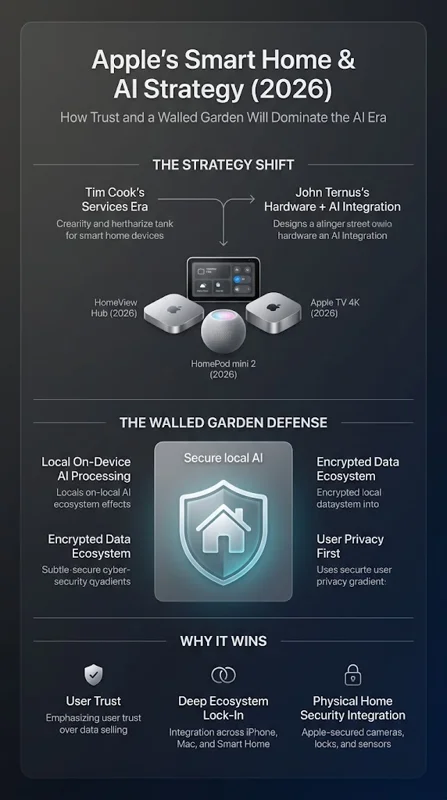
Recent announcements under CEO John Ternus have shown that Apple is not just building devices, but highly secure ecosystems. With the introduction of the HomeView hub, the HomePod Mini 2, and the new Apple TV 4K, the vision is clearer than ever.
Homeowners want convenience, but they demand security. This is exactly where Apple steps in to bridge the gap between smart automation and absolute data privacy.
Why Apples new hardware strategy capitalizes on trust just in time for the AI era
The transition from a pure service-based growth model to a hybridized hardware-AI model marks a pivotal corporate pivot. Apple is doubling down on its signature design language.
By bringing the “walled garden” approach into our living rooms, the company ensures that user data remains local and highly encrypted. This stands in stark contrast to other companies whose business models rely on harvesting user behaviors.
“The future of the smart home belongs to those who can protect user privacy while seamlessly integrating artificial intelligence into everyday routines.”
It becomes evident that Apples new hardware strategy capitalizes on trust just in time for the AI era, especially given the rising concerns over deepfakes and data leaks.
HomeView Hub: Apples new hardware strategy capitalizes on trust just in time for the AI era
The HomeView hub acts as the brain of this new secure household. It integrates flawlessly with the iPhone, making your mobile device the ultimate command center.
To understand the hardware leap, let’s look at the new devices anchoring this ambitious home ecosystem.
| Device Name | Primary Function | AI Integration Level |
|---|---|---|
| HomeView Hub | Centralized Smart Home Display | Advanced (On-device Processing) |
| HomePod Mini 2 | Audio & Voice Command | High (Siri 2.0 Enabled) |
| Apple TV 4K (2026) | Media & Gaming Console | Moderate (Content Curation) |
Users can manage everything from temperature sensors to the new video doorbell without their footage ever hitting a public cloud. For more on how they secure data, you can read about it on the official Apple Privacy page.
How Apples new hardware strategy capitalizes on trust just in time for the AI era vs Competitors
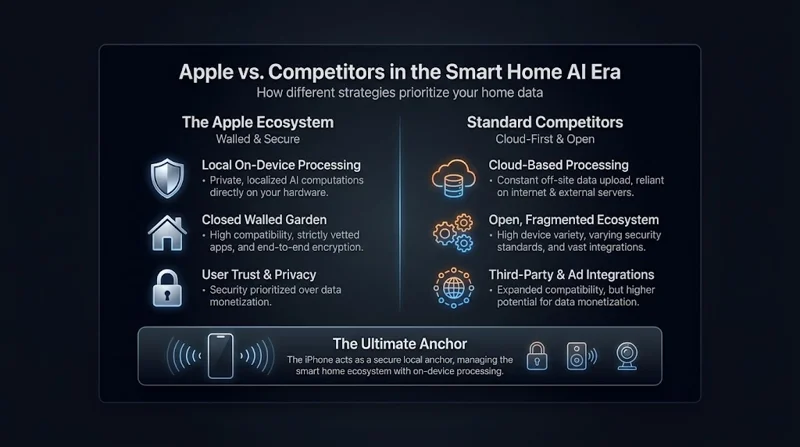
When comparing this approach to market alternatives, the distinction is clear. Competitors often struggle with data privacy controversies.
Apple’s spotless privacy record provides an immediate competitive advantage. It is easier to sell indoor cameras when the buyer inherently trusts the manufacturer.
“Trust is the currency of the AI generation. Without it, even the most advanced hardware becomes a liability.”
Consequently, Apples new hardware strategy capitalizes on trust just in time for the AI era because consumers are experiencing AI fatigue and data paranoia.
Ecosystem Lock-in: Apples new hardware strategy capitalizes on trust just in time for the AI era
The beauty of this corporate strategy lies in its subtlety. For every new Apple smart home gadget you buy, leaving the Apple ecosystem becomes increasingly difficult.
There is currently no AI-first alternative that offers the same level of integration as the iPhone. This effectively buys Apple the time it needs to deploy its superintelligence features securely.
| Feature Focus | Apple Strategy | Competitor Strategy |
|---|---|---|
| Data Processing | Local / On-Device | Cloud-based LLMs |
| Ecosystem | Closed Walled Garden | Open but Fragmented |
| User Trust | Highly Vetted Partners | Third-party Data Sharing |
Ultimately, Apples new hardware strategy capitalizes on trust just in time for the AI era, turning home safety into a premium service. It acts as a shield against the chaos of early-stage AI developments.
By positioning the iPhone as the quarterback of this operation, Apple ensures its hardware remains indispensable. Truly, Apples new hardware strategy capitalizes on trust just in time for the AI era.
Frequently Asked Questions (FAQs)
What is the HomeView hub?
The HomeView hub is Apple’s latest smart home display designed to centralize controls for all your domestic gadgets seamlessly and securely.
How does Apple protect my smart home data?
Apple relies on on-device AI processing and strict end-to-end encryption within its walled garden ecosystem.
Why is the iPhone important in this new lineup?
The iPhone acts as the secure command center, or “quarterback,” for all AI-enabled smart assistants and gadgets in the home.
Is Apple releasing new cameras and locks?
Yes, the new strategy includes vetted indoor/outdoor cameras, thermostats, and door locks to secure your physical home.
Why is John Ternus’s strategy different?
John Ternus is focusing on hardware that directly leverages Apple’s massive trust advantage to sell home-based peace of mind.
Are there any true alternatives to the Apple ecosystem currently?
While competitors exist, none offer a fully integrated, AI-first alternative with the same robust privacy guarantees as Apple.
How does this relate to AI?
Apple is using hardware to harness AI capabilities in a way that tames home-based chaos, prioritizing user relief and security over experimental cloud AI.
Disclaimer: This article is for informational purposes only and represents an analysis of tech industry trends as of 2026.