
The newly published apple counters us smartphone decline as iphone sales grow report highlights a fascinating shift in the 2026 technology landscape. While many competitors struggle to move inventory, Apple is showing remarkable resilience. The overall US smartphone market Q1 2026 saw significant drops, but one brand managed to stand out.
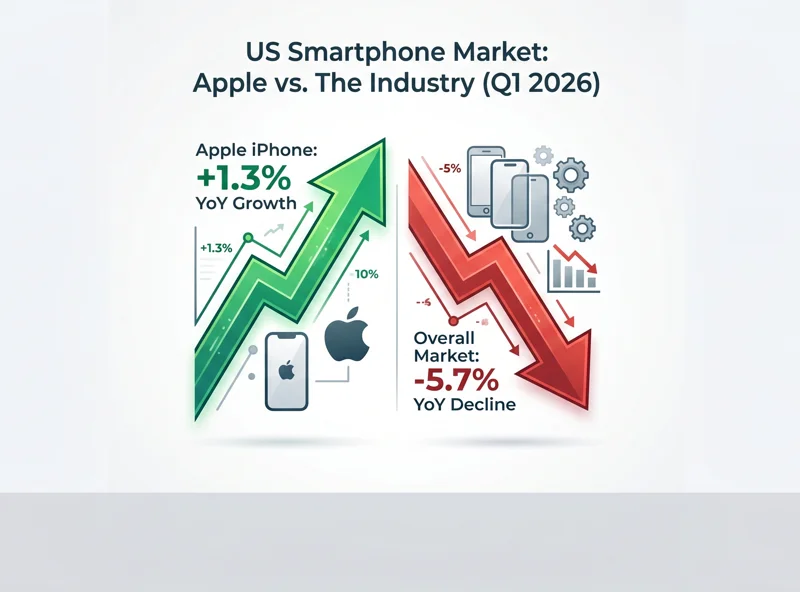
According to the latest data, Apple successfully posted positive growth numbers. This trend reveals exactly how they achieved this feat through strategic hardware updates and calculated pricing models. Understanding this dynamic is crucial for tech analysts and consumers alike.
Understanding the apple counters us smartphone decline as iphone sales grow report
To grasp the full picture of the industry, we must look closely at the Counterpoint Research Apple data. The figures show a stark contrast between iOS device performance and the broader Android ecosystem.
The apple counters us smartphone decline as iphone sales grow report notes a 1.3% year-over-year growth for the iPhone. This happened while the broader mobile market declined by a concerning 5.7%.
“Apple’s strategic pricing and timely releases have solidified its market dominance in Q1 2026, completely defying broader industry downturns.”
Such resilient numbers are rare in an increasingly saturated market. Analysts point directly to specific consumer behaviors, brand loyalty, and aggressive product strategies that kept Apple afloat.
| Market Segment | Q1 2025 Performance | Q1 2026 Performance |
|---|---|---|
| Overall US Market | -2.1% | -5.7% |
| Apple iPhone Sales | +0.8% | +1.3% |
| Android Sales | -3.4% | -8.1% |
How the apple counters us smartphone decline as iphone sales grow report Explains the Android Vacuum
A massive contributing factor to this success is the Samsung Galaxy S26 delayed launch. Historically, Samsung releases its flagship devices in January or February to capture early-year upgrades.
This year, the delay created a massive hardware vacuum. The apple counters us smartphone decline as iphone sales grow report emphasizes that this delay left the premium space wide open for an extra month in Q1.
Apple capitalized heavily on this absence, capturing users who were eager to upgrade but unwilling to wait. For official industry insights and original data sets, you can review reports directly from Counterpoint Research.
Carrier Dominance Boosts Apple’s Position
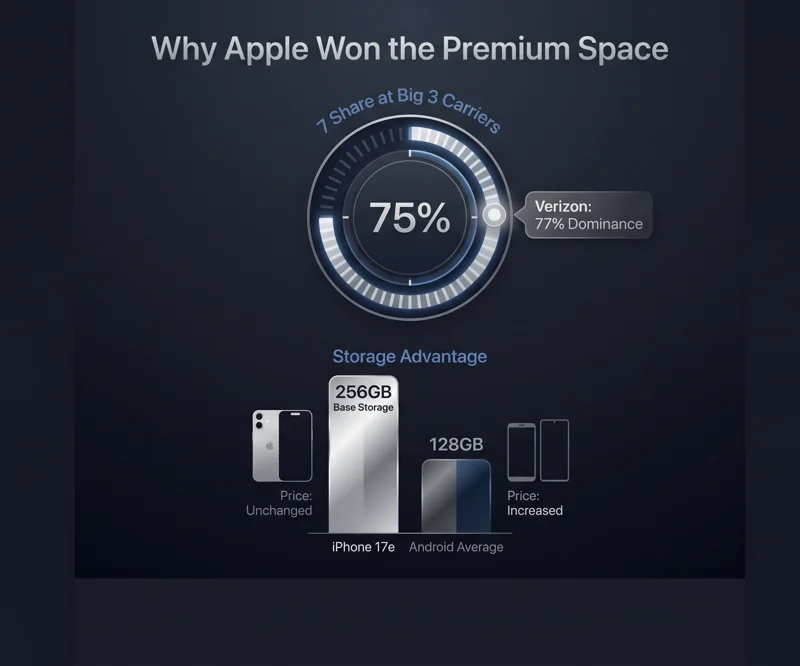
Because of this vacuum, Apple secured an impressive 75% of all smartphone sales at the Big 3 US carriers. This is up from 72% a year earlier, showcasing a tightening grip on network sales.
Interestingly, Verizon saw Apple’s share grow the most, hitting a massive 77% in Q1 2026. Carrier promotions heavily favored available premium stock, which was predominantly the iPhone 17 lineup.
| US Carrier | Apple Share Q1 2025 | Apple Share Q1 2026 |
|---|---|---|
| Verizon | 73% | 77% |
| AT&T | 71% | 74% |
| T-Mobile | 72% | 74% |
Pricing Strategy in the apple counters us smartphone decline as iphone sales grow report
Another major driver for this quarter was the intense iPhone 17 base model demand. Consumers responded exceptionally well to the baseline offerings, choosing them over the more expensive Pro iterations.
The apple counters us smartphone decline as iphone sales grow report highlights that Apple kept pricing consistent. While memory costs rose globally, Apple strategically absorbed the hit rather than passing it to buyers.
“By maintaining consistent pricing and doubling base storage, Apple delivered undeniable value to consumers during a tough economic crunch.”
Specifically, iPhone 17e pricing and storage upgrades played a vital role. Apple increased the entry-level storage to 256GB without raising the base price, a move that severely undercut Android competitors who were forced to raise prices.
| Device Model | Base Storage | Price Trend YoY |
|---|---|---|
| iPhone 17e | 256GB | Unchanged |
| iPhone 17 | 256GB | Unchanged |
| Average Android Flagship | 128GB | Increased |
Final Thoughts on the apple counters us smartphone decline as iphone sales grow report
Ultimately, the latest data serves as a masterclass in market timing and product value. By offering more storage, maintaining consistent prices, and taking advantage of competitor delays, Apple secured a major victory.
As we move further into 2026, these insights will likely dictate how competitors adjust their upcoming strategies. The smartphone market remains volatile, but Apple has proven it knows how to weather the storm effectively.
Frequently Asked Questions
What is the main finding of the apple counters us smartphone decline as iphone sales grow report?
The report shows Apple experienced a 1.3% YoY growth in Q1 2026, while the overall US smartphone market declined by 5.7%.
Why did Apple perform so well in Q1 2026?
Strong demand for the iPhone 17 base model and a delayed launch from key competitors like Samsung boosted Apple’s sales.
How did the Samsung Galaxy S26 delayed launch affect the market?
It created a premium market vacuum for an extra month, allowing Apple to dominate carrier sales during that window.
Apple accounted for an impressive 75% of all smartphone sales across the Big 3 US carriers during the first quarter.
Did Apple raise prices on the new iPhone models?
No, Apple kept iPhone 17e pricing consistent while increasing the base storage to 256GB, providing more value to consumers.
According to the data, Apple’s share grew the most at Verizon, hitting a dominant 77% in Q1 2026.
Who provided the data for this smartphone market analysis?
The insights and data were provided by Counterpoint Research, detailing the shifting dynamics of the 2026 US mobile market.
Disclaimer: This article is for informational purposes only. The market data, percentages, and performance metrics mentioned are based on third-party reports from Counterpoint Research and may be subject to future revisions.