AMD P State Better 1p Lows are officially changing the landscape for Linux gamers in 2026.
A brand new set of patches posted to the Linux kernel mailing list is causing a massive stir in the hardware community. This exciting update implements per-core Energy Performance Preference (EPP) boosting.
This dynamic feature is designed to have a dramatic impact on overall Linux gaming stability. Specifically, achieving AMD P State Better 1p Lows is the primary goal, stopping those annoying micro-stutters during intense gameplay sessions.
The Science Behind AMD P State Better 1p Lows
David Vernet, a Linux kernel hacker at Meta, has taken the lead in improving the current CPU frequency scaling driver. He proposed the “epp_boost” feature to specifically address poor gaming performance scenarios.
In standard active EPP mode, the platform autonomously picks the operating point between minimum and maximum performance. However, this creates a major issue for rendering threads.
A workload dominated by one mostly-busy thread that takes frequent short sleeps fares poorly under the default strategy. This is why securing AMD P State Better 1p Lows requires a totally new approach to frequency scaling.
| Performance Metric | Standard AMD P-State | With epp_boost Patch |
|---|---|---|
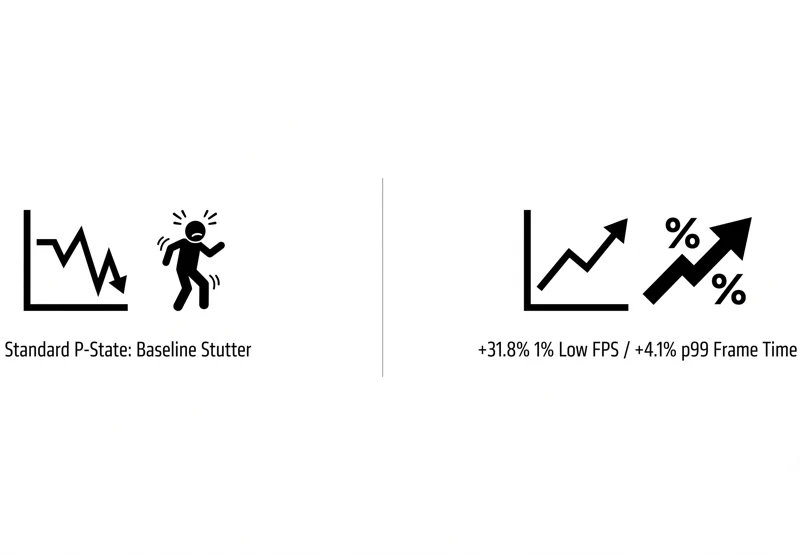
| 1% Low FPS | Baseline stuttering | +31.8% Improvement |
| p99 Frame Time | Noticeable spikes | +4.1% Improvement |
| Power Efficiency | Aggressive downclocking | Surgical per-core boosting |
Each short sleep decays the hardware’s performance signal. This causes post-wakeup bursts to start at a very low operating point, inflating tail latency.
A game’s main render thread typically blocks briefly on a GPU fence every single frame. This resulting frequency droop shows up directly as stale frames and terrible pacing.
How epp_boost Achieves AMD P State Better 1p Lows
Solving this at the cpufreq layer requires walking a fairly narrow path. Globally forcing EPP to maximum performance fixes the tail latency but burns through battery power rapidly.
Battery drain matters significantly on handhelds like the Valve Steam Deck, where the CPU and GPU share a strict power budget. Therefore, pushing for AMD P State Better 1p Lows must be done efficiently.
“This series instead adds an opt-in, per-core EPP boost to intelligently sample residency without draining handheld batteries.”
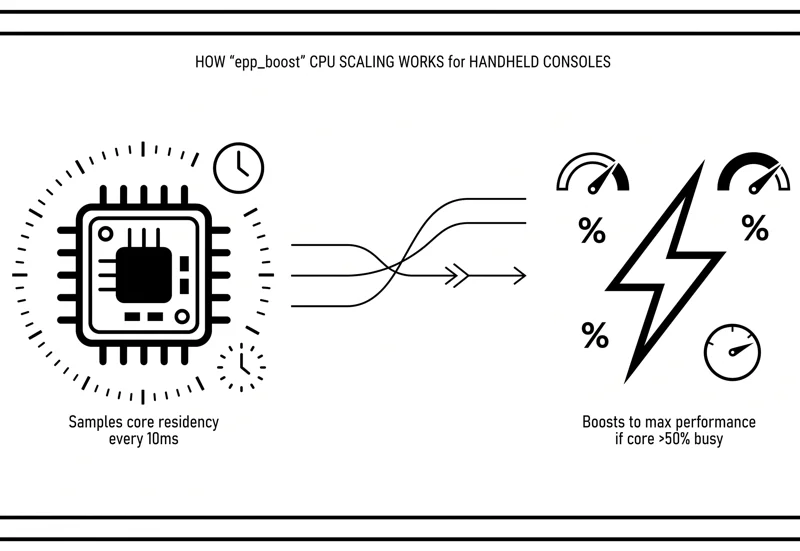
When the module parameter is enabled, a hook samples each core’s C0 residency at most once every 10 milliseconds. This ensures the system does not over-poll the processor.
If a sample shows the core is at least 50% busy, the EPP field is set to performance and held there. It remains until 300 ms pass without another busy sample, delivering consistent AMD P State Better 1p Lows.
Real-World Gains: Steam Deck and AMD P State Better 1p Lows
The end result of this patch is quite exciting for handheld enthusiasts. Early testing utilized the demanding Civilization VI game benchmark.
During this test, developers recorded that the 1%-low FPS improved by an incredible 31.8%. Meanwhile, the p99 frame time was better by 4.1 percent.
These massive improvements mean that gamers experiencing AMD P State Better 1p Lows will notice vastly smoother camera panning and interface navigation.
| Handheld Device | Target OS | Expected Benefit |
|---|---|---|
| Valve Steam Deck (Van Gogh) | SteamOS (Linux) | Massive stutter reduction |
| ASUS ROG Ally (Z1 Extreme) | Bazzite / ChimeraOS | Improved frame pacing |
| Lenovo Legion Go | Linux Gaming Distros | Smoother 1% lows |
Users who compile patched kernels can check the status of the feature directly. It can be set at run-time via a simple sysfs module command.
This promising work still needs to undergo official patch review. Engineers are hoping it will manage to be mainlined in the not too distant future.
Getting this patch into the mainline kernel will change the standard for portable Linux gaming forever.
For more technical details on kernel submissions, you can visit the Linux Kernel Archives.
It will be fascinating to see the impact across a wider selection of games once AMD P State Better 1p Lows becomes a default experience for everyone.
Frequently Asked Questions About AMD P State Better 1p Lows
What exactly does AMD P State Better 1p Lows mean?
It refers to a 31.8% improvement in the lowest 1% of frame rates during gaming on Linux, resulting in significantly fewer stutters and smoother gameplay.
Which devices will benefit from this new kernel patch?
The primary test device was the Valve Steam Deck, but any device running a modern AMD Ryzen processor on Linux will likely experience AMD P State Better 1p Lows.
What causes the initial frame rate drop that this patch fixes?
Game render threads often sleep briefly between frames, causing the CPU to aggressively downclock and fail to ramp back up quickly enough for the next frame.
Who developed this new epp_boost feature?
David Vernet, a Linux kernel hacker who works at Meta, developed and proposed the epp_boost patch to the kernel mailing list.
Does forcing maximum performance globally fix the issue without the patch?
Yes, but globally forcing maximum performance burns through battery power constantly, which is terrible for portable handheld consoles.
How does the new patch save battery while boosting performance?
It uses an opt-in, per-core EPP boost that samples core residency every 10 milliseconds, applying maximum performance only to cores that are over 50% busy.
When will regular users experience AMD P State Better 1p Lows natively?
The patches are currently under review. Once approved by AMD Linux kernel engineers, they will be merged into the mainline kernel for future distribution updates.
Disclaimer: This article is for informational purposes only. Kernel patches are experimental and may require advanced technical knowledge to compile and install safely.