If you are constantly receiving phone calls from the 529 area code, you are dealing with a critical security issue that requires immediate attention.
In the highly advanced telecommunications era of 2026, our smartphones are constantly bombarded by unsolicited communications, making it essential to identify the true origin of incoming calls.
You might be frantically searching for the exact city or state associated with the 529 area code, hoping to recognize the caller or understand why they are reaching out.
We will explore the official status of this prefix within the North American Numbering Plan (NANP), delve deeply into the malicious spoofing tactics utilized by modern fraudsters, and provide you with actionable security measures.
By the time you finish reading this extensive resource, you will possess the exact knowledge and tools required to block 529 area code scams and protect your sensitive personal data permanently.
Where Exactly is the 529 Area Code Located?
When investigating the geographic origin of any phone number, the first step is consulting the official telecommunications registry.
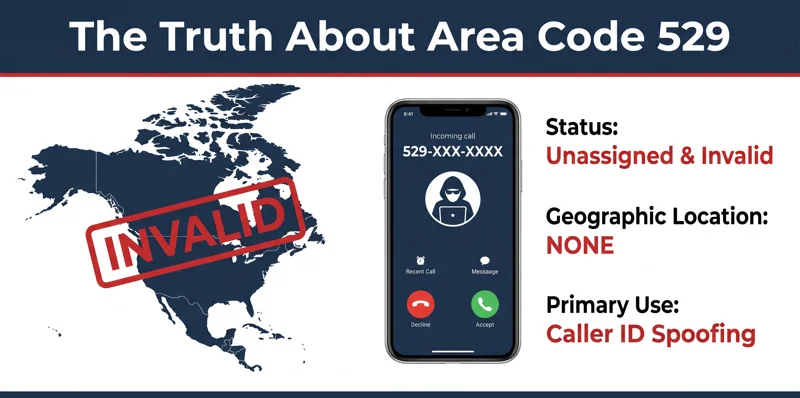
Here is the shocking truth: as of 2026, the 529 area code is completely unassigned and invalid within the North American Numbering Plan.
Unlike recognizable codes such as 212 for New York or 310 for Los Angeles, the 529 area code does not belong to any city, state, province, or Caribbean island.
Because the 529 area code lacks a physical geographic location, any domestic call appearing with this prefix on your smartphone screen is inherently fraudulent.
Telecommunication carriers cannot legally assign a 529 area code phone number to a residential customer or a corporate business.
The Invalid Status of the 529 Area Code in 2026
To understand why you are seeing this number, you must understand how the NANP structures its available prefixes.
While many 500-level codes are designated for personal communication services or specific non-geographic routing, the 529 area code remains firmly in the “reserved” or “unassigned” category.
This means the telecom infrastructure has deliberately kept the 529 area code dormant, likely saving it for future overlay expansion when major metropolitan areas run out of available digits.
Therefore, a ringing phone displaying the 529 area code is a massive, immediate red flag indicating a severe breach of caller ID protocols.
| Area Code Prefix | NANP Status (2026) | Geographic Association |
|---|---|---|
| 500, 533, 544 | Active (Non-Geographic) | Personal Communication Services |
| 512, 516, 518 | Active (Geographic) | Texas, New York regions |
| 529 Area Code | Invalid / Unassigned | None (Fake Location) |
Why Are You Receiving Calls From a 529 Area Code?
If the 529 area code does not technically exist, you are likely wondering how it is physically possible for your phone to ring with this number.
The answer lies in a highly deceptive and illegal technological practice known as Caller ID Spoofing.
International scam rings and aggressive telemarketers utilize sophisticated Voice over Internet Protocol (VoIP) software to manipulate the caller ID data transmitted to your mobile carrier.
They deliberately input the 529 area code into their dialing software, essentially masking their true location—which is frequently an offshore call center.
By using an unassigned prefix like the 529 area code, these malicious actors attempt to bypass basic carrier spam filters that primarily target known, heavily-reported fraudulent numbers.
The Danger of 529 Area Code Spoofing Tactics
Spoofing an invalid prefix like the 529 area code is a calculated psychological tactic used by cybercriminals in 2026.
Scammers know that consumers are increasingly wary of familiar spam numbers, so they generate entirely new, fake numbers using the 529 area code to spark human curiosity.
When you see a completely unrecognized pattern, human nature often compels you to answer just to see who is on the other end of the line.
Once you answer a 529 area code call, the automated system registers your personal phone number as “active,” which guarantees you will be targeted by even more fraudulent campaigns in the future.
“Under no circumstances should you ever provide personal, financial, or sensitive data to a caller dialing from an unassigned prefix like the 529 area code. It is technologically impossible for it to be a legitimate domestic business.”
How to Spot a 529 Area Code Scam Instantly
Because every single call originating from a 529 area code is illegitimate by default, spotting the scam is fundamentally about recognizing the caller’s aggressive tactics.
Fraudsters hiding behind a spoofed 529 area code typically rely on high-pressure scripts designed to induce panic and force you into making irrational decisions.
They frequently impersonate authoritative government agencies, major financial institutions, or prominent utility companies.
If you mistakenly answer a 529 area code call, listen closely for robotic voice recordings, unnatural pauses, or immediate demands for unconventional payment methods.
Legitimate organizations will never require you to settle a sudden debt using retail gift cards, cryptocurrency transfers, or direct wire transactions.
Common Fraud Scripts Used by 529 Area Code Scammers
To better protect yourself, you must be aware of the exact narratives these criminals employ when utilizing the 529 area code.
One of the most prevalent attacks in 2026 is the “Tax Agency Impersonation” scam, where the caller claims you face imminent arrest for unpaid federal taxes.
Another highly destructive tactic associated with the 529 area code is the “Tech Support Alert,” claiming your personal computer is heavily infected with malware.
| Scam Narrative | Scammer’s Goal | 529 Area Code Threat Level |
|---|---|---|
| Imminent Arrest Warrant | Extort immediate payment via gift cards | Critical Risk |
| Bank Account Compromise | Steal login credentials and passwords | Severe Risk |
| Fake Lottery Winnings | Collect upfront “processing fees” | High Risk |
Effective Solutions to Block 529 Area Code Calls
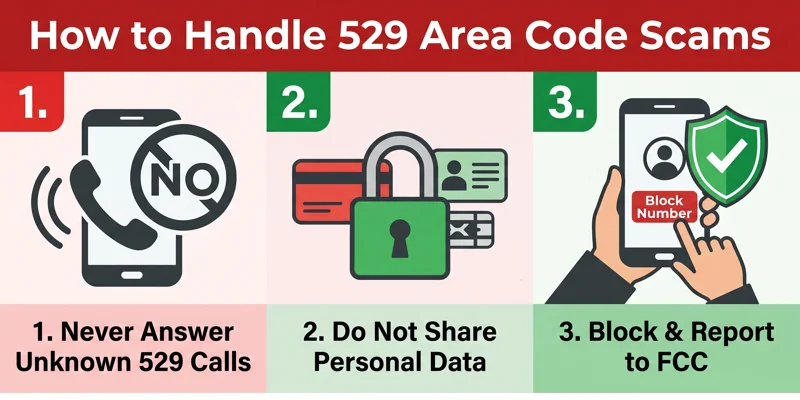
Since we have established that the 529 area code is exclusively used for caller ID spoofing, your primary objective should be entirely blocking these calls from reaching your device.
Relying solely on your own caution is not enough in 2026; you must leverage advanced technological safeguards.
The first and most immediate step is utilizing the native call-blocking architecture built directly into your iOS or Android operating system.
However, because scammers constantly cycle through millions of fake numbers, blocking a single 529 area code number manually is often a losing battle.
To truly secure your phone, you need to implement broader, more aggressive spam filtering techniques.
Network-Level Blocking for the 529 Area Code
The most effective defense against a spoofed 529 area code is enabling network-level blocking through your mobile service provider.
Major telecommunications companies in 2026 offer free, integrated spam-shield applications that cross-reference incoming calls against massive databases of known invalid prefixes.
Because the 529 area code is officially unassigned, high-quality carrier apps will automatically intercept and drop the call before your phone ever rings.
Furthermore, you should strongly consider utilizing reputable third-party call filtering applications to provide an extra layer of security.
| Blocking Method | Effectiveness against 529 Area Code | Recommended Action |
|---|---|---|
| Manual Device Blocking | Low (Scammers change numbers daily) | Use only for repeat identical numbers |
| Carrier Spam Apps | High (Blocks unassigned prefixes) | Enable immediately via carrier settings |
| “Silence Unknown Callers” Feature | Absolute (Sends all to voicemail) | Best strategy for total peace of mind |
Reporting the 529 Area Code to Authorities
Protecting yourself from the 529 area code is vital, but contributing to the broader fight against telecommunications fraud helps protect vulnerable consumers worldwide.
When you receive a spoofed call from the 529 area code, you should officially report the incident to federal authorities.
These reports allow government agencies to trace VoIP routing patterns, identify offshore scam hubs, and penalize complicit telecommunications providers.
You can securely file a detailed complaint regarding malicious 529 area code activity directly with the Federal Communications Commission (FCC).
By providing the exact time, date, and the specific 529 area code number displayed, you empower investigators to dismantle these illegal operations.
Tracking the Future of the 529 Area Code
While the 529 area code is entirely invalid and dangerous to answer today, its status could theoretically change in the distant future.
The North American Numbering Plan Administrator (NANPA) continuously monitors phone number exhaustion across major US and Canadian metropolitan markets.
If a highly populated region completely exhausts its current prefixes, the 529 area code could be pulled from the reserved list and officially activated as a new geographic overlay.
However, until a formal press release is issued by NANPA and local utility commissions, you must treat every single 529 area code call as an active cyber threat.
Staying educated and maintaining digital vigilance is the absolute best way to navigate the complex telecommunications landscape of 2026.
Frequently Asked Questions About the 529 Area Code
What state is the 529 area code located in?
The 529 area code is not located in any state. It is an unassigned, invalid prefix within the North American Numbering Plan.
Why did I get a text message from a 529 area code?
Scammers also use VoIP spoofing for SMS text messages. A text from a 529 area code is a phishing attempt designed to steal your data or distribute malware.
Is it safe to answer a call from a 529 area code?
No, it is never safe. Because the number cannot legally exist, answering confirms to the scammer that your line is active, leading to more harassment.
Can I call back a 529 area code number?
If you attempt to dial a 529 area code number, you will receive an automated carrier message stating the number is disconnected or invalid.
How do scammers get away with using the 529 area code?
They exploit loopholes in international telecommunications routing and use software to fake the caller ID data before the call reaches US networks.
Will the 529 area code ever become a real location?
It is possible that NANPA may assign the 529 area code to a specific geographic region in the future, but as of 2026, it remains strictly unassigned.
What should I do if a 529 area code caller leaves a threatening voicemail?
Ignore the threat completely, block the number immediately, and report the specific 529 area code digits to the FCC to assist in fraud prevention.
Disclaimer: This article is for informational purposes only. Telecommunications networks, geographic area code assignments, and scamming tactics are subject to rapid change. Always verify suspicious callers, avoid sharing personal data, and consult directly with your mobile service provider or the FCC for the most current security advice regarding caller ID spoofing.