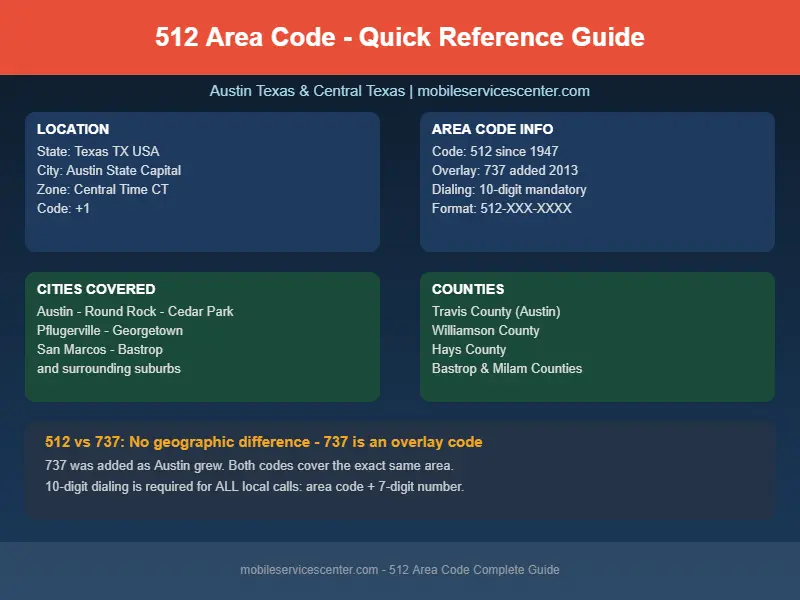
The 512 area code is the iconic telephone area code for Austin, Texas, and its vibrant surrounding region in Central Texas. As one of the most recognized area codes in the United States, the (512) area code serves the state capital and its booming suburbs. Whether you’re searching for “areacode 512” or trying to understand its geography, this guide has you covered for 2026.
Established in 1947 as one of Texas’s original area codes, the area code of 512 has become synonymous with Austin’s unique culture. Today, it operates within an overlay system with area code 737, making 10-digit dialing a mandatory practice for all local calls. The entire system is managed by the North American Numbering Plan Administration (NANPA), which oversees telephone numbering across the country.
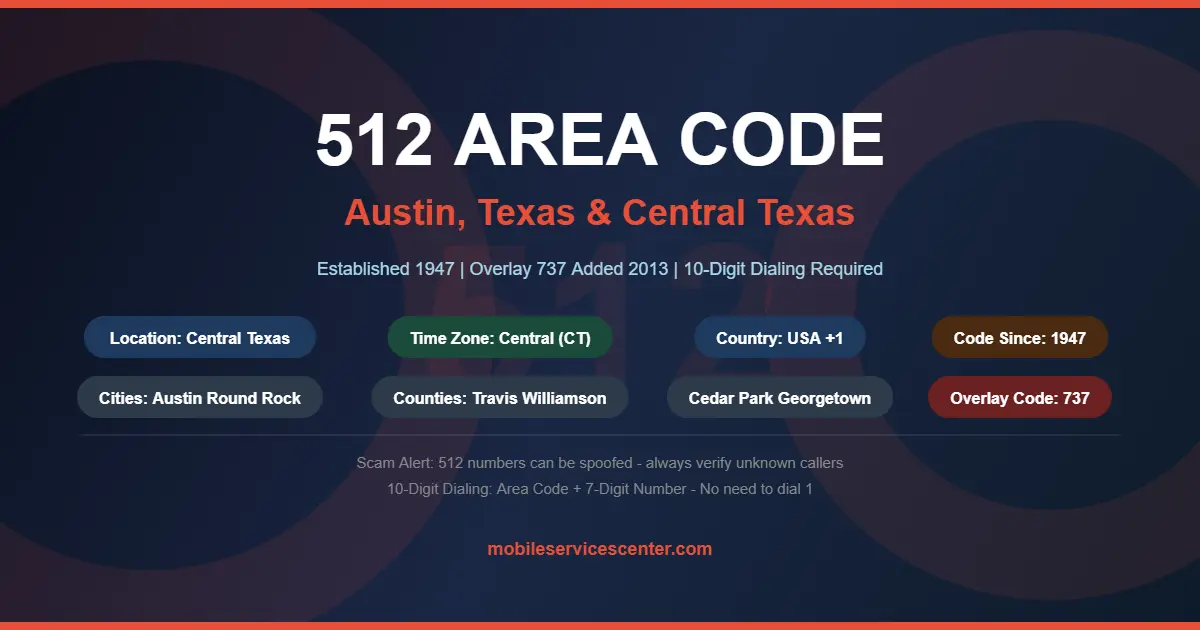
Location and Geographic Coverage
The 512 area code is located squarely in Central Texas, covering the high-tech and academic hub known globally as “Silicon Hills.” It serves a diverse and rapidly growing population.
Primary Location and Time Zone
Here is a quick summary of the key details for the +1 512 area code:
| Attribute | Detail |
|---|---|
| Country | United States |
| State | Texas (TX) |
| Major City | Austin (State Capital) |
| Time Zone | Central Time Zone (CT) – CST/CDT |
| Country Code | +1 (This is the standard +1(512) country code format) |
| Overlay Code | 737 |
Major Cities and Counties Covered
The 512 area code serves a region that has become a global center for technology, music, and government. Key locations include:
- Austin: The core city and cultural heart of the region.
- Round Rock
- Cedar Park
- Pflugerville
- Georgetown
- San Marcos
- Counties: Primarily covers Travis, Williamson, and Hays counties, with smaller portions of Bastrop and Milam counties.
The 737 Overlay and Modern Dialing Rules
Due to Austin’s explosive population growth, the demand for phone numbers exhausted the original 512 supply. This led to the implementation of an overlay code.
The 737 Overlay
In 2013, area code 737 was introduced as an overlay for the entire 512 region. This means both the +1 (512) and +1 (737) area codes serve the exact same geographic area. New phone lines assigned in Austin today could receive either a 512 or a 737 number.
Mandatory 10-Digit Dialing
Because two area codes share the same territory, 10-digit dialing is mandatory for all local calls. You must dial the full 10-digit number (Area Code + 7-Digit Number) for every call, even if you are calling your neighbor across the street.
How to Dial a 512 Number
Proper dialing is essential. Here’s how it works:
- Local Calls: To call a number like (737) 277-5172 from anywhere within the Austin region, you must dial all ten digits: 737-277-5172. The same applies to 512 numbers.
- Domestic Long Distance: To call from outside the Austin area, you dial 1 + area code + number. For example, you would dial +1 (512) 256-9661 or +1 (737) 250-7812.
International Calling and Common Mistakes
When calling from outside the United States, you must use the country code (+1) followed by the area code and number. The correct format is the +1 (512) area code. Some common but incorrect formats to avoid include using a leading zero, like “0512 area code,” or simply using the “+512 code.” The correct international format is always “+1” followed by the 10-digit number (e.g., +1-512-XXX-XXXX). The term “+512 country code” is also a misnomer, as +1 is the country code for the US, and 512 is the regional area code.
Cultural Identity of Austin’s (512) Area Code
The (512) remains deeply woven into Austin’s cultural fabric. It’s more than just a number; it’s a symbol of local identity, often seen in business names, marketing, and local slang. For many long-time residents, having a 512 number signifies an established connection to the city’s roots, before the massive tech boom driven by companies like Apple, Tesla, and Dell made it one of the most in-demand codes in the nation.