When the headline broke that sony just handed control of its tv business to tcl what it actually means for you became the biggest question in the home theater community. The tech world in 2026 is witnessing a massive structural shift as two giants forge an unprecedented alliance. Sony has officially created a new corporate entity named Bravia, Inc. to handle its television division, with TCL owning a 51% majority stake and Sony retaining 49%. While this sounds like a total takeover on paper, the reality of how this impacts the consumer experience is far more nuanced. If you are in the market for a new display today, here is exactly what is happening behind the scenes and why your next purchase might actually benefit from this move.
The Big Shift: What Is Changing and What Remains the Same
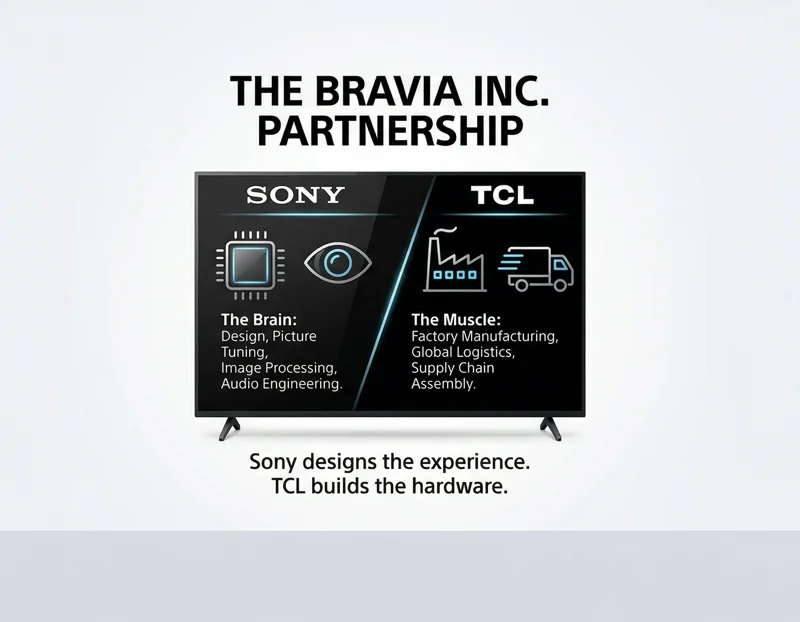
To understand the true impact of the Bravia Inc joint venture, you have to separate the manufacturing process from the user experience. Historically, Sony has maintained tight, in-house control over its production lines. Moving forward, the massive TCL TV manufacturing operations will take over the heavy lifting. TCL will manage the physical production, logistics, and the overarching Smart TV supply chain. They have the global infrastructure to build displays efficiently and at an incredible scale.
However, Sony is not abandoning its legacy. The Japanese tech giant retains absolute control over the core elements that make a Bravia TV look and sound spectacular. Sony picture processing technology, rigorous picture tuning, software design, and custom audio engineering remain strictly under Sony’s roof. When you turn on the TV, it will still feature the iconic Sony interface and deliver the cinematic color accuracy the brand is famous for.
“In simple terms, future Sony TVs will be Sony-designed but TCL-produced. The brain of the television remains distinctly Sony, while the muscle building it belongs to TCL.”
| Division of Labor | Sony’s Responsibilities | TCL’s Responsibilities |
|---|---|---|
| Hardware Production | Initial design and component selection | Physical assembly and factory manufacturing |
| Software & Tuning | Image processing algorithms, OS, and color accuracy | None (handled exclusively by Sony engineers) |
| Logistics | Brand marketing and sales strategy | Global supply chain management and shipping |
The Long-Term Consumer Impact: OLED, Mini-LED, and Pricing
From a business standpoint, this partnership is a masterstroke in efficiency. Sony TVs are premium, but they have historically been very expensive to produce. By leveraging TCL’s manufacturing scale, Sony can significantly reduce production costs. This efficiency could directly benefit consumers by making Sony more competitive in the mid-range TV segment, where they have traditionally struggled against cheaper alternatives. Better availability of high-demand models is also a highly anticipated upside.
The most fascinating aspect of this deal, however, involves the battle of display technologies. TCL is a global leader in Mini-LED development, which aligns perfectly with Sony’s recent shifts toward high-brightness displays. This synergy could result in some of the most powerful Premium Mini-LED and OLED TVs we have ever seen. However, Sony currently sources its OLED panels from LG Display and Samsung Display, whereas TCL heavily favors Mini-LED. This creates a potential long-term tension regarding how much priority OLED will receive in future Bravia lineups.
“While the immediate future remains identical for buyers, the real story will unfold over the next few years as we see how heavily TCL’s Mini-LED expertise influences Sony’s premium lineup.”
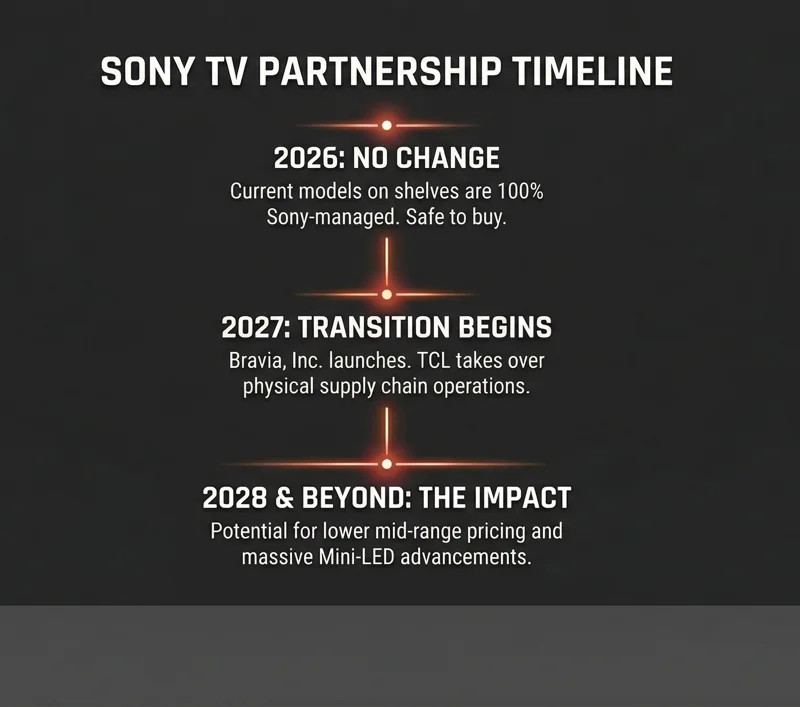
As for the timeline, Bravia, Inc. is not expected to begin full operations until 2027. This means that if you are buying a TV in 2026, nothing changes. The displays currently on shelves were entirely managed by Sony. Any noticeable changes in pricing, availability, or panel focus will likely not materialize until 2028 or later. For current updates directly from the manufacturer, you can visit the official Sony website.
| Timeline | Expected Impact on Consumers |
|---|---|
| 2026 (Current Year) | No change. Current models are 100% Sony-managed. Safe to buy. |
| 2027 | Bravia, Inc. begins operations. Supply chain transitions to TCL. |
| 2028 and Beyond | Potential price drops on mid-range models and heavier Mini-LED focus. |
Frequently Asked Questions
Did TCL buy Sony?
No. TCL did not buy Sony as a whole. Sony created a new subsidiary for its TV and home theater division called Bravia, Inc., and TCL purchased a 51% controlling stake in that specific entity.
Will Sony TVs still have Sony picture quality?
Yes. Sony is retaining complete control over image processing, picture tuning, software, and audio technologies. TCL is only handling the physical manufacturing and supply chain.
Should I avoid buying a Sony TV right now?
Not at all. If you are buying a TV in 2026, the current models were developed and produced under Sony’s traditional systems. There is no immediate change to the quality or experience.
Will Sony TVs become cheaper?
It is highly possible. By utilizing TCL’s massive manufacturing scale, production costs should decrease. This could result in more competitively priced Sony TVs, especially in the mid-range market.
What happens to Sony OLED TVs?
The future of OLED is the biggest unknown. Sony sources OLED panels from LG and Samsung, while TCL focuses on Mini-LED. Sony may continue pushing OLED alongside Mini-LED, but the priority could shift over time.
Will the brand name change to TCL?
No. The branding remains completely unchanged. The televisions will still be branded and marketed globally as Sony Bravia products.
When will we see the first TCL-manufactured Sony TVs?
Bravia, Inc. is slated to begin its operational transition in 2027, meaning the first consumer products heavily influenced by this new supply chain will likely hit the market in late 2027 or 2028.
Disclaimer: This article is for informational purposes only. Business agreements, operational timelines, and product roadmaps regarding the Sony and TCL joint venture are subject to change based on corporate strategies and market conditions.