The era of forced PC reboots is officially over, as the highly anticipated shutdown restart microsoft changes windows on 1 billion pcs update fundamentally alters how the operating system handles system maintenance. For years, Windows users have dreaded the sudden blue screen announcing an unavoidable update, often right in the middle of crucial tasks, gaming sessions, or urgent presentations. As we navigate through 2026, Microsoft has explicitly confirmed major shifts in its update policies, finally giving control back to the user.
According to recent communications from Microsoft representatives, two key complaints persistently dominated user feedback: the severe disruption caused by untimely updates and the frustrating lack of control over when those updates actually happen. By genuinely listening to this feedback, the tech giant is rolling out structural changes to Windows Update. This means that devices will remain secure by design and default, but the end-user gets to dictate the timing of their installations.
Putting Users Back in the Driver’s Seat
The core philosophy of this massive update overhaul is flexibility. Microsoft recognized that an operating system should serve the user’s schedule, not the other way around. The days of feeling held hostage by your own hardware are coming to an end. Users will now experience a vastly improved Windows Update interface that prioritizing transparency and user consent over aggressive, automated patching.
“Restarting or shutting down your PC should always be simple, predictable, and on your terms – even with updates waiting to be installed.”
This commitment to user experience translates into several tangible, highly requested features. Whether you are setting up a brand-new laptop or simply trying to close your workstation after a long day at the office, the operating system will no longer hijack your power options.
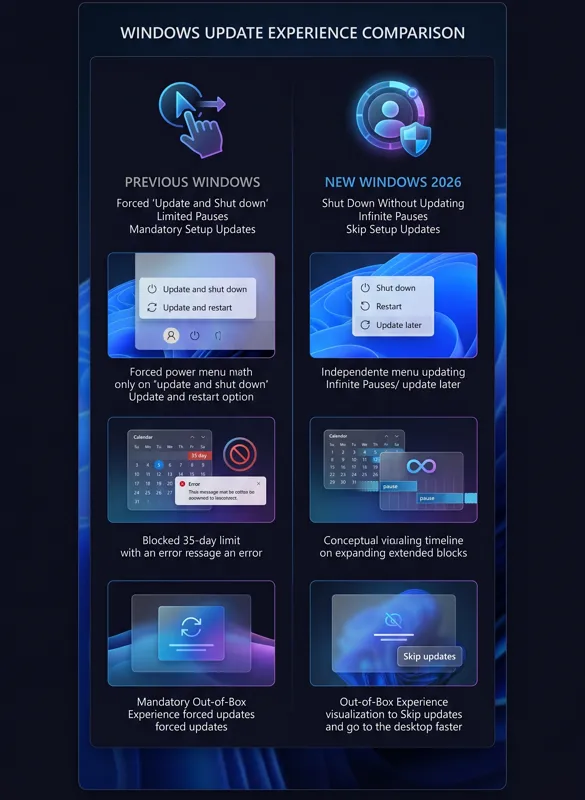
| Feature | Previous Windows Experience | New 2026 Windows Experience |
|---|---|---|
| Power Menu Options | Forced “Update and Shut down” | Always available “Shut down” (no update) |
| Update Pausing | Limited to a few weeks maximum | Extend update pauses as many times as you need |
| Setup (OOBE) | Mandatory background updates before desktop | Skip updates immediately to reach desktop faster |
A Detailed Breakdown of the New Controls
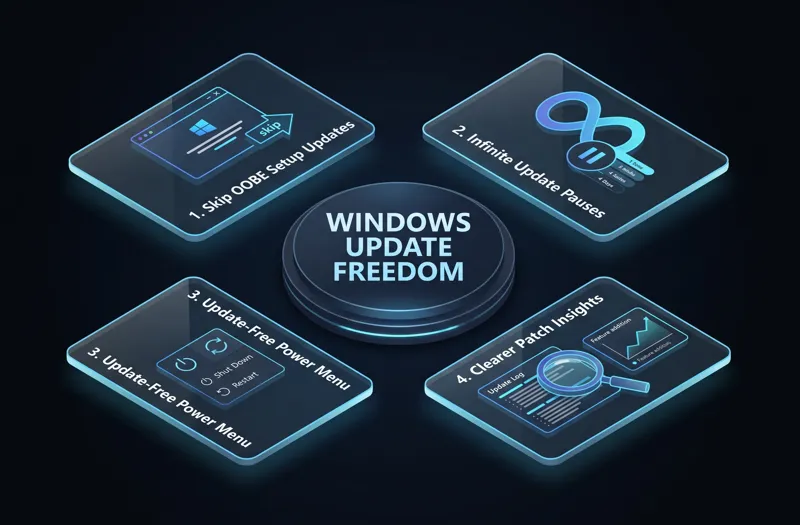
The point-by-point updates coming to your PC are designed to eliminate friction at every stage of the user journey. First, users can now skip updates immediately during the Out of Box Experience (OOBE). This is a game-changer for IT professionals and casual consumers alike who just want to boot to the desktop and start working without waiting for gigabytes of patches to download and install.
Furthermore, Microsoft is allowing users to extend update pauses indefinitely. While cybersecurity experts generally advise against ignoring patches, giving users the agency to delay them during critical project weeks is a massive quality-of-life improvement. To help users make better choices, Windows will now offer deeper insights on available updates so you can make more informed installation decisions. You can read more about security baselines on Microsoft’s Tech Community.
Impact on the Windows Ecosystem
This shift is particularly good news for Windows 11 users, a demographic that now numbers over one billion in Microsoft’s global install base. This number is projected to grow rapidly as the final Windows 10 upgrade deadlines approach and the Extended Security Updates (ESU) program phases out. Ensuring that the flagship operating system is user-friendly is vital for Microsoft’s continued market dominance.
“The company has finally fixed the interruptions from Windows updates and the lack of control over scheduling them, proving they are willing to listen to persistent community feedback.”
Currently, these changes are actively rolling out across various testing channels before hitting the general public. Enthusiasts in the Windows Insider program, specifically within the Canary and Dev channels, are already experiencing the freedom of unrestricted power menus.
| Rollout Phase | Target Audience | Availability |
|---|---|---|
| Phase 1: Canary & Dev | Windows Insiders & Developers | Currently Active |
| Phase 2: Beta Channel | Early Adopters | Rolling Out Soon |
| Phase 3: General Release | All Windows 11 Users (>1 Billion) | Upcoming Cumulative Update |
Frequently Asked Questions
Can I really turn off my PC without updating now?
Yes, Microsoft has permanently added a “Shut down” and “Restart” option to the power menu that bypasses pending updates entirely.
How long can I pause Windows updates?
The new system allows you to extend the pause duration as many times as you need, effectively giving you infinite control over when patches are installed.
Will skipping updates make my PC insecure?
While you have the freedom to skip, Microsoft still recommends installing critical security patches. The new insights feature will help you identify which updates are vital for your safety.
What is the OOBE update skip feature?
During the initial setup of a new PC (Out of Box Experience), you can choose to skip lengthy updates and go straight to your desktop.
Who is getting these changes first?
Windows Insiders in the Canary and Dev channels are currently testing these features before they roll out to the general public.
Does this apply to Windows 10 as well?
These specific structural changes are targeted at the Windows 11 ecosystem, which now boasts over one billion users.
Why did Microsoft make this change?
The company stated it was a direct result of user feedback complaining about the disruption caused by untimely updates and a lack of scheduling control.
Disclaimer: This article is for informational purposes only. Features and rollout schedules for operating system updates are subject to change at the discretion of the software developer.