in

Amazon Bricked Your Device? The Truth About Switching to Kobo in 2026

If you are searching online for answers regarding should you switch to a kobo kindle discontinuation news is likely the reason you are feeling incredibly frustrated today. BookTokers, Bookstagrammers, and the most passionate e-reader enthusiasts across the internet are fuming this week. On April 7, Amazon notified affected users that the company would be officially discontinuing software support on 13 older devices, which includes nine legacy Kindle e-readers. For many users, this feels like an ultimate betrayal, effectively “bricking” their beloved reading devices.
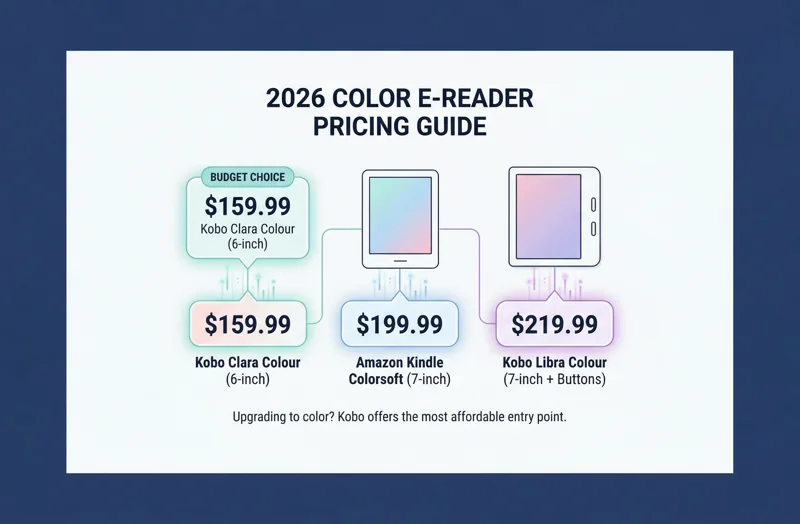
Pricing guide infographic comparing the cost of color e-readers in 2026, showing the Kobo Clara Colour at $159.99, Kindle Colorsoft at $199.99, and Kobo Libra Colour at $219.99.
When it comes to upgrading to a color e-ink display, Kobo currently offers the most affordable entry point on the market.

Amazon already faces plenty of backlash in the publishing world. Last year, the tech giant launched a massive, aggressive book sale that uncomfortably coincided with Independent Bookstore Day, drawing the ire of local booksellers and conscious consumers. This most recent discontinuation news has left some loyal Kindle users with a sour taste in their mouths, prompting a massive wave of readers to ask a singular, pressing
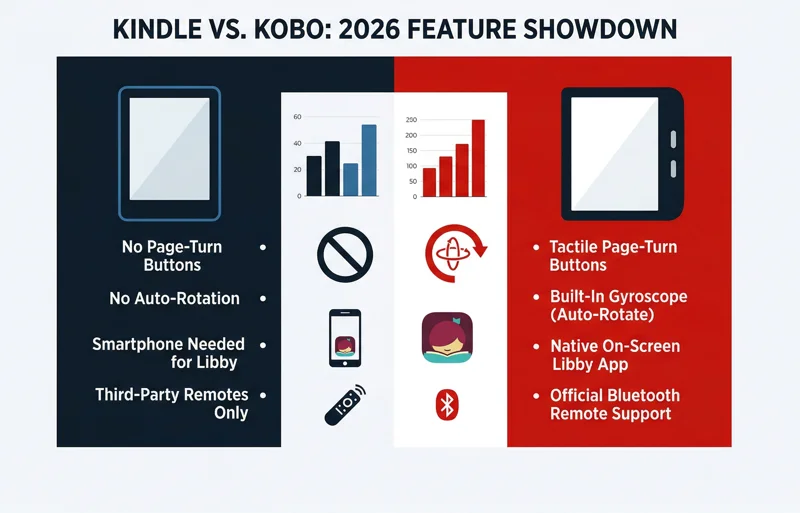
Side-by-side comparison infographic showing Kobo e-reader advantages like page-turn buttons, auto-rotation, and native Libby integration compared to current Amazon Kindle models.
A quick look at the hardware and software features you gain when switching from an Amazon Kindle to a Kobo e-reader.

Is it finally time to abandon the Amazon ecosystem and switch to a Kobo? The Harsh Reality of Planned Obsolescence While Kindle remains the undisputed heavyweight champion in the e-reader market, Kobo devices are rapidly climbing the ranks as formidable alternatives. Tech reviewers and avid readers alike have tested and praised devices like the Kobo Clara and Kobo Libra, noting that the hardware and software are just as premium as anything Amazon produces. However, if your primary motivation for jumping ship to Kobo is the fear that your current device will eventually become unsupported, you need to understand the wider tech landscape. Switching brands will not protect you from the inevitable march of time. Older technology being phased out is an unfortunate, unavoidable reality of our modern digital era. Unlike a mechanical KitchenAid stand mixer or a cast-iron skillet, which do not require routine software updates, Wi-Fi certificates, and security patches to stay functional, a modern smartphone, computer, tablet, or e-reader always will. We have become heavily accustomed to a system of planned obsolescence driven by frequent product releases and evolving software standards. “The lifespan of digital hardware is entirely tethered to its software. When the updates stop, the countdown to obsolescence begins.” To be perfectly fair to Amazon, it is actually quite impressive that devices manufactured 14 years ago are still functioning up to this point. That longevity is a testament to the original hardware design. It feels revolutionary when companies like Google announce plans for automatic updates that make Chromebooks last up to a decade, but 14 years for an e-ink device is remarkable. However, the frustration is entirely valid. But before you impulsively buy a new device, you must switch for the right reasons. Device Category Average Supported Lifespan Reason for Obsolescence Smartphones 3 to 7 Years Battery degradation, OS requirements. Laptops/Computers 5 to 10 Years Processor speed, security updates. E-Readers (Kindle/Kobo) 8 to 14 Years Wi-Fi standards, TLS certificates, Store API changes. Why You Might Regret Switching (The Cons) If you want to switch to a Kobo from a Kindle solely because you believe Kobo will never discontinue your device, you are in for a disappointment. Kobo also has a long, documented history of retiring legacy devices and terminating software support. A quick glance at the company’s official website reveals a comprehensive list of legacy e-readers that are no longer supported. The “Bricked” Misconception Let us clear up a massive misconception spreading rapidly across social media platforms. While older Kindles and Kobos may no longer be supported with active, over-the-air software updates, these past-generation devices are rarely “bricked” in the traditional sense. A truly bricked device will not power on or function at all. These legacy e-readers can usually still operate offline. While they may lose the ability to seamlessly browse the digital storefront or sync via Wi-Fi due to outdated security protocols, users generally retain access to the library of books currently downloaded on the device. Furthermore, tech-savvy users can still manually sideload books by connecting the device directly to a computer via a USB cable. The Digital Rights Management (DRM) Trap The single biggest hurdle when switching from Kindle to Kobo is the inability to easily transfer your digital library. Both Amazon and Kobo heavily utilize Digital Rights Management (DRM) on the ebooks purchased directly from their respective digital storefronts. This means the files are cryptographically locked; you can only read an Amazon-purchased book on a Kindle (or the Kindle app), and you can only read a Kobo-purchased book on a Kobo device or app. E-Reader Brand Primary File Format Library Portability Amazon Kindle AZW3 / KFX Locked to Amazon Ecosystem. Rakuten Kobo EPUB / KEPUB Locked to Kobo (Store purchases). Supports open EPUBs. Unless your current Kindle library consists entirely of DRM-free EPUB files that you sideloaded yourself, you will not be able to natively access your purchased Amazon library on a new Kobo e-reader. You can always revisit those older purchases through the free Kindle smartphone or tablet app, but you will be starting your Kobo library from scratch. Why You Absolutely Should Switch to Kobo (The Pros) If you can accept the loss of a unified library and understand that all tech eventually expires, there are spectacular reasons to jump into the Kobo ecosystem. Across the board, modern Kobo e-readers are lightning-fast, incredibly user-friendly, and boast an interface that is remarkably clean. Kobo also approaches user experience differently—for instance, Kobo numbers pages based on your specific font size and screen layout (digital pages), whereas Amazon attempts to map page numbers to the physical print edition. The Return of Page-Turning Buttons Many older Kindle models featured a highly coveted hardware element that the newest mainline models lack: tactile page-turning buttons. With legacy devices losing support and the beloved, premium Kindle Oasis being officially discontinued, Amazon users who despise tapping a touchscreen have very few first-party options left. If you desperately want the tactile feedback of physical buttons, you should look immediately to the Kobo Libra Colour. It features two perfectly placed, ergonomic page-turning buttons on an asymmetrical bezel, meaning you do not have to smudge your screen to read. This thicker side bezel also provides extra grip space for an incredibly comfortable, secure, one-handed hold. Furthermore, the Libra series features an internal gyroscope—a hardware feature entirely absent from the current Kindle lineup. You can physically flip the device to hold it with your opposite hand, and the text will automatically rotate and adjust in milliseconds. “Physical page-turn buttons offer a tactile satisfaction and ergonomic superiority that a flat glass touchscreen simply cannot replicate.” For readers who love to maximize their cozy reading nooks by mounting their e-reader on an adjustable gooseneck stand, Kobo has introduced a game-changing accessory. Kobo is the first major e-reader brand to release an official, first-party Bluetooth remote control. Connecting seamlessly, it allows you to turn pages while keeping your hands entirely tucked under a warm winter blanket—far superior to the clunky, third-party clip-on page turners Amazon users are forced to buy. Feature Showdown Current Mainline Kindle Current Mainline Kobo Page-Turn Buttons No (Discontinued with Oasis) Yes (Libra series) Auto-Rotating Screen No Yes (Libra series) Official Bluetooth Remote No (Third-party only) Yes Seamless Libby and OverDrive Integration For avid library users, Kobo offers an incredibly compelling feature. If you utilize the Libby by OverDrive service, you will rejoice at the straightforward integration Kobo provides. On an Amazon device, you must browse for library books on a separate smartphone or computer, borrow them, and then navigate a web portal to digitally “Send to Kindle.” On a Kobo, the OverDrive integration is baked directly into the operating system. You can log into your local library card directly on the e-reader’s screen. You can browse your local library’s catalog, borrow titles, and download them instantly without ever touching a second device. The only minor drawback is that if you are a power user who juggles multiple library cards from different counties, you can only be actively logged into one OverDrive account at a time on the Kobo device natively. Color E-Ink at a More Affordable Price The e-reader market has finally embraced color e-ink displays. Both Amazon and Kobo have recently launched devices capable of displaying vibrant book covers, colorful highlights, and graphic novels. However, the pricing strategies are vastly different. Kobo offers entry into the color ecosystem at a significantly lower price point. Color E-Reader Screen Size Retail Price (2026) Amazon Kindle Colorsoft 7-inch $199.99 Kobo Clara Colour 6-inch $159.99 Kobo Libra Colour 7-inch (with buttons) $219.99 The basic Kindle Colorsoft starts at an expensive $199.99. Meanwhile, the highly capable Kobo Clara Colour comes in at just $159.99—which happens to be the exact same price as Amazon’s standard black-and-white Kindle Paperwhite. If you are already looking to upgrade to a color display, it is far more economically sound to do so within the Kobo ecosystem. Final Thoughts Transitioning away from a massive ecosystem like Amazon’s is never a seamless endeavor. You will leave behind a curated library and have to adjust to a new user interface. However, for readers who value physical buttons, native library borrowing, cheaper color displays, and a break from the massive Amazon retail machine, Kobo represents a fantastic, premium alternative. Just remember: no technology lasts forever, but finding the right device for your current reading habits is always worth the investment. Frequently Asked Questions Question: Will my discontinued Kindle stop working immediately?

Is it finally time to abandon the Amazon ecosystem and switch to a Kobo? The Harsh Reality of Planned Obsolescence While Kindle remains the undisputed heavyweight champion in the e-reader market, Kobo devices are rapidly climbing the ranks as formidable alternatives. Tech reviewers and avid readers alike have tested and praised devices like the Kobo Clara and Kobo Libra, noting that the hardware and software are just as premium as anything Amazon produces. However, if your primary motivation for jumping ship to Kobo is the fear that your current device will eventually become unsupported, you need to understand the wider tech landscape. Switching brands will not protect you from the inevitable march of time. Older technology being phased out is an unfortunate, unavoidable reality of our modern digital era. Unlike a mechanical KitchenAid stand mixer or a cast-iron skillet, which do not require routine software updates, Wi-Fi certificates, and security patches to stay functional, a modern smartphone, computer, tablet, or e-reader always will. We have become heavily accustomed to a system of planned obsolescence driven by frequent product releases and evolving software standards. “The lifespan of digital hardware is entirely tethered to its software. When the updates stop, the countdown to obsolescence begins.” To be perfectly fair to Amazon, it is actually quite impressive that devices manufactured 14 years ago are still functioning up to this point. That longevity is a testament to the original hardware design. It feels revolutionary when companies like Google announce plans for automatic updates that make Chromebooks last up to a decade, but 14 years for an e-ink device is remarkable. However, the frustration is entirely valid. But before you impulsively buy a new device, you must switch for the right reasons. Device Category Average Supported Lifespan Reason for Obsolescence Smartphones 3 to 7 Years Battery degradation, OS requirements. Laptops/Computers 5 to 10 Years Processor speed, security updates. E-Readers (Kindle/Kobo) 8 to 14 Years Wi-Fi standards, TLS certificates, Store API changes. Why You Might Regret Switching (The Cons) If you want to switch to a Kobo from a Kindle solely because you believe Kobo will never discontinue your device, you are in for a disappointment. Kobo also has a long, documented history of retiring legacy devices and terminating software support. A quick glance at the company’s official website reveals a comprehensive list of legacy e-readers that are no longer supported. The “Bricked” Misconception Let us clear up a massive misconception spreading rapidly across social media platforms. While older Kindles and Kobos may no longer be supported with active, over-the-air software updates, these past-generation devices are rarely “bricked” in the traditional sense. A truly bricked device will not power on or function at all. These legacy e-readers can usually still operate offline. While they may lose the ability to seamlessly browse the digital storefront or sync via Wi-Fi due to outdated security protocols, users generally retain access to the library of books currently downloaded on the device. Furthermore, tech-savvy users can still manually sideload books by connecting the device directly to a computer via a USB cable. The Digital Rights Management (DRM) Trap The single biggest hurdle when switching from Kindle to Kobo is the inability to easily transfer your digital library. Both Amazon and Kobo heavily utilize Digital Rights Management (DRM) on the ebooks purchased directly from their respective digital storefronts. This means the files are cryptographically locked; you can only read an Amazon-purchased book on a Kindle (or the Kindle app), and you can only read a Kobo-purchased book on a Kobo device or app. E-Reader Brand Primary File Format Library Portability Amazon Kindle AZW3 / KFX Locked to Amazon Ecosystem. Rakuten Kobo EPUB / KEPUB Locked to Kobo (Store purchases). Supports open EPUBs. Unless your current Kindle library consists entirely of DRM-free EPUB files that you sideloaded yourself, you will not be able to natively access your purchased Amazon library on a new Kobo e-reader. You can always revisit those older purchases through the free Kindle smartphone or tablet app, but you will be starting your Kobo library from scratch. Why You Absolutely Should Switch to Kobo (The Pros) If you can accept the loss of a unified library and understand that all tech eventually expires, there are spectacular reasons to jump into the Kobo ecosystem. Across the board, modern Kobo e-readers are lightning-fast, incredibly user-friendly, and boast an interface that is remarkably clean. Kobo also approaches user experience differently—for instance, Kobo numbers pages based on your specific font size and screen layout (digital pages), whereas Amazon attempts to map page numbers to the physical print edition. The Return of Page-Turning Buttons Many older Kindle models featured a highly coveted hardware element that the newest mainline models lack: tactile page-turning buttons. With legacy devices losing support and the beloved, premium Kindle Oasis being officially discontinued, Amazon users who despise tapping a touchscreen have very few first-party options left. If you desperately want the tactile feedback of physical buttons, you should look immediately to the Kobo Libra Colour. It features two perfectly placed, ergonomic page-turning buttons on an asymmetrical bezel, meaning you do not have to smudge your screen to read. This thicker side bezel also provides extra grip space for an incredibly comfortable, secure, one-handed hold. Furthermore, the Libra series features an internal gyroscope—a hardware feature entirely absent from the current Kindle lineup. You can physically flip the device to hold it with your opposite hand, and the text will automatically rotate and adjust in milliseconds. “Physical page-turn buttons offer a tactile satisfaction and ergonomic superiority that a flat glass touchscreen simply cannot replicate.” For readers who love to maximize their cozy reading nooks by mounting their e-reader on an adjustable gooseneck stand, Kobo has introduced a game-changing accessory. Kobo is the first major e-reader brand to release an official, first-party Bluetooth remote control. Connecting seamlessly, it allows you to turn pages while keeping your hands entirely tucked under a warm winter blanket—far superior to the clunky, third-party clip-on page turners Amazon users are forced to buy. Feature Showdown Current Mainline Kindle Current Mainline Kobo Page-Turn Buttons No (Discontinued with Oasis) Yes (Libra series) Auto-Rotating Screen No Yes (Libra series) Official Bluetooth Remote No (Third-party only) Yes Seamless Libby and OverDrive Integration For avid library users, Kobo offers an incredibly compelling feature. If you utilize the Libby by OverDrive service, you will rejoice at the straightforward integration Kobo provides. On an Amazon device, you must browse for library books on a separate smartphone or computer, borrow them, and then navigate a web portal to digitally “Send to Kindle.” On a Kobo, the OverDrive integration is baked directly into the operating system. You can log into your local library card directly on the e-reader’s screen. You can browse your local library’s catalog, borrow titles, and download them instantly without ever touching a second device. The only minor drawback is that if you are a power user who juggles multiple library cards from different counties, you can only be actively logged into one OverDrive account at a time on the Kobo device natively. Color E-Ink at a More Affordable Price The e-reader market has finally embraced color e-ink displays. Both Amazon and Kobo have recently launched devices capable of displaying vibrant book covers, colorful highlights, and graphic novels. However, the pricing strategies are vastly different. Kobo offers entry into the color ecosystem at a significantly lower price point. Color E-Reader Screen Size Retail Price (2026) Amazon Kindle Colorsoft 7-inch $199.99 Kobo Clara Colour 6-inch $159.99 Kobo Libra Colour 7-inch (with buttons) $219.99 The basic Kindle Colorsoft starts at an expensive $199.99. Meanwhile, the highly capable Kobo Clara Colour comes in at just $159.99—which happens to be the exact same price as Amazon’s standard black-and-white Kindle Paperwhite. If you are already looking to upgrade to a color display, it is far more economically sound to do so within the Kobo ecosystem. Final Thoughts Transitioning away from a massive ecosystem like Amazon’s is never a seamless endeavor. You will leave behind a curated library and have to adjust to a new user interface. However, for readers who value physical buttons, native library borrowing, cheaper color displays, and a break from the massive Amazon retail machine, Kobo represents a fantastic, premium alternative. Just remember: no technology lasts forever, but finding the right device for your current reading habits is always worth the investment. Frequently Asked Questions Question: Will my discontinued Kindle stop working immediately?

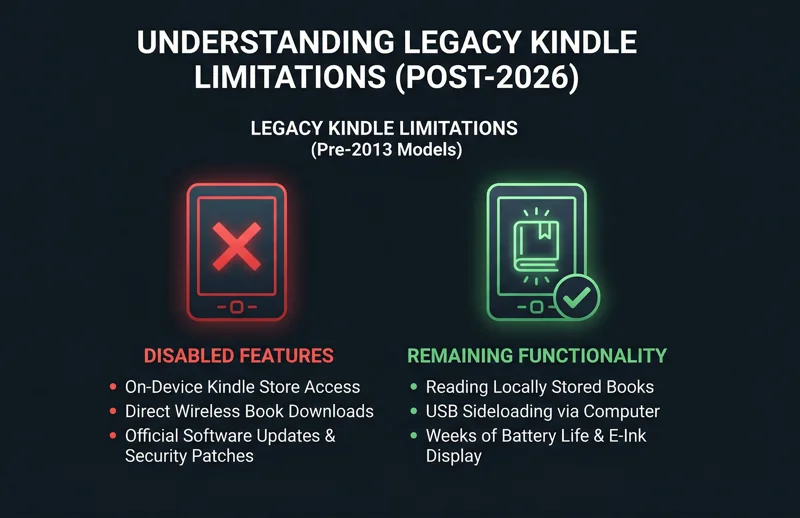
No. While it will no longer receive software updates or security patches—meaning it might eventually lose the ability to access the Kindle store via Wi-Fi—you can still read the books currently downloaded on it and manually transfer files via USB.

Can I transfer my Kindle books to a Kobo e-reader?

Generally, no. Kindle books are protected by Amazon’s proprietary DRM, which prevents them from being read natively on competing devices like Kobo.

Does Kobo also discontinue old devices?

Yes. Like all technology companies, Kobo eventually phases out software support for older models as hardware limitations make it impossible to run modern security protocols.

Which Kobo is best for someone who misses the Kindle Oasis?

The Kobo Libra Colour (or the older black-and-white Libra 2) is the best alternative, as it features a similar asymmetrical design with physical page-turn buttons and an auto-rotating screen.

How does Libby work on Kobo compared to Kindle?

On a Kobo, OverDrive/Libby integration is built directly into the device interface, allowing you to browse, borrow, and download library books straight from the e-reader. Kindle requires you to use a smartphone or PC to borrow and send the book to your device.

Are Kobo devices more affordable than Kindles?

It depends on the model, but generally, Kobo is very competitive. For instance, the entry-level color Kobo (Clara Colour) is significantly cheaper than Amazon’s entry-level color device (Colorsoft).

Can I read standard EPUB files on a Kindle?

Amazon now allows users to send EPUB files to their Kindles via the “Send to Kindle” service, which converts them. However, Kobo natively reads EPUB files without requiring any cloud conversion process.


Disclaimer: This article is for informational purposes only. Device pricing, software features, and product lifespans are subject to change based on manufacturer updates and retail availability in 2026. Consult official brand documentation for the most current technical specifications.
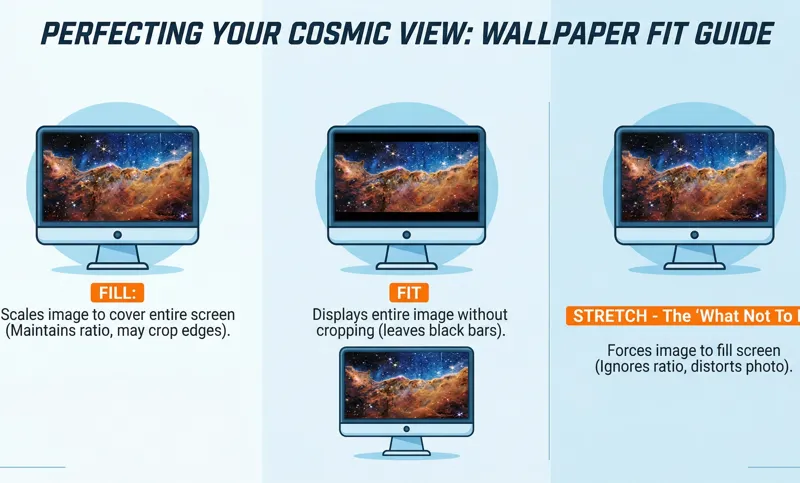
Visual comparison guide showing how Fill, Fit, and Stretch display settings affect a high-resolution desktop wallpaper on a computer monitor.

Stop Using Boring Backgrounds: How to Download NASA’s Stunning Free Artemis II Wallpapers for Mac and Windows

Infographic explaining which features are disabled, like store access, and which features remain functional, like offline reading, on legacy pre-2013 Amazon Kindle e-readers.

Why I’m Done With Kindle: A 10-Year User Explains Why You Should Ditch Amazon Too