It is now official: Samsung will start charging for SmartThings API access. This major policy shift has sent shockwaves through the tech ecosystem, directly impacting enthusiasts who rely heavily on custom setups.
The tech giant recently announced this update to its popular smart home automation platform. While the core changes target commercial partners and enterprise entities, everyday power users are caught in the crossfire.
If you use an open-source automation tool to bridge your ecosystem, your wallet will feel the squeeze. The transition introduces a mandatory monthly plan that alters the open-source landscape.
Understanding Why Samsung will start charging for SmartThings API access
Many smart home enthusiasts are trying to understand why Samsung will start charging for SmartThings API access. The brand states that these newly collected subscription funds will help them invest deeply in premium enterprise-grade features.
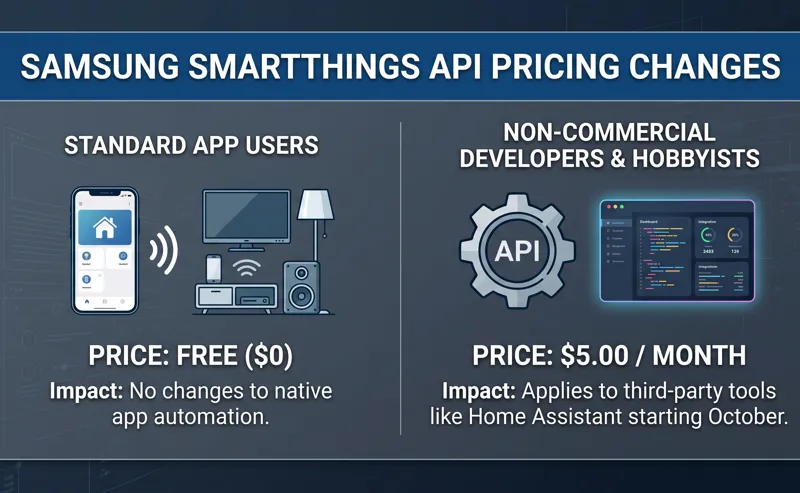
The specific tier hitting the tech community is a flat $5 monthly plan. This rate is tailored for non-commercial individual developers building custom scripts or maintaining complex home connections.
Fortunately, traditional consumers using standard apps to handle standard gadgets will face zero immediate charges. The change strictly targets outward-bound data pipelines connecting via the external programming interface.
| User Category | Monthly Pricing | Platform Impact |
|---|---|---|
| Standard App Users | Free | No impact on native gadget controls |
| Non-Commercial Developers | $5.00 | Applies to third-party server links |
| Commercial Partners | Custom Tiers | Enterprise features and optimized access |
The Impact of Free Tiers Ending as Samsung will start charging for SmartThings API access
As Samsung will start charging for SmartThings API access, open-source automation platforms are taking the hardest hit. The primary example here is the highly popular Home Assistant ecosystem.
Thousands of residential systems leverage this interface to integrate refrigerators, televisions, and laundry suites into unified local dashboards. This change essentially adds another subscription fee to your digital monthly overhead.
For additional details regarding developer agreements, consult the official documentation available directly on Samsung SmartThings Developer Center. The dynamic layout will soon launch new debugging tools.
“We feel very disappointed that users will have to decide whether to shell out for access in the shadow of yet another cloud paywall.”
What Happens Next When Samsung will start charging for SmartThings API access?
When Samsung will start charging for SmartThings API access, the implementation will roll out in fixed stages. According to corporate outlines, the paywall becomes live starting this October.
Until that deadline passes, integration pipelines remain totally free to configure and query. This short buffer allows independent software builders time to refactor code or pay up.
Samsung intends to launch a revamped Developer Center hub to sweeten the deal. This portal will give builders clear analytics, exact data usage tracking, and optimization tools.
| Timeline Target | Expected Feature Implementation |
|---|---|
| Present to September | Free trial period and open portal migration |
| October Onward | Mandatory $5 monthly non-commercial sub active |
| Future Updates | Expanded corporate integrations and data points |
Community Reactions Because Samsung will start charging for SmartThings API access
The realization that Samsung will start charging for SmartThings API access has triggered profound frustration across popular technical forums. Leaders view it as an explicit hurdle against collaborative smart communities.
Many smart setups depend heavily on deep, uninhibited webhooks to run properly. Adding cloud boundaries pushes advanced hobbyists to explore purely offline local solutions like Matter and Zigbee.
“This structural shift signals a clear departure from traditional open-source collaboration towards cloud monetization strategies.”
Ultimately, consumers must choose between absorbing the cost or seeking alternative bridges. The era of completely free enterprise integrations is rapidly drawing to a close.
Frequently Asked Questions (FAQs)
Why exactly is it stated that Samsung will start charging for SmartThings API access?
Samsung is introducing this pricing to fund advanced enterprise features, upgrade developer resources, and improve infrastructure capabilities.
Does this new policy affect standard mobile app users?
No, standard users controlling their home devices via the official application will not pay any subscription fees.
How much will the new developer tier cost?
Non-commercial individual developers will need to pay a subscription fee of $5 per month.
Will my existing Home Assistant configuration break immediately?
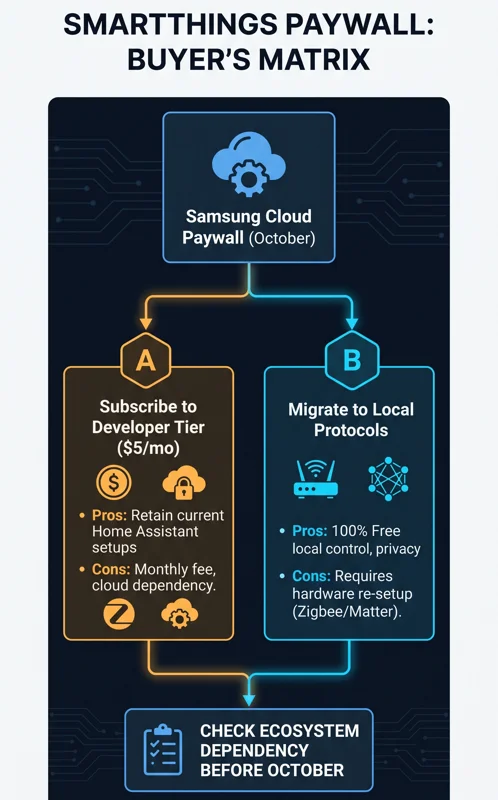
The changes do not take effect until October. After that date, you must subscribe to retain valid token access.
What new features are promised with the paid model?
Samsung promises a new Developer Center hub offering detailed data metrics, code optimization points, and more integrations.
Is there an alternative to paying the monthly token fee?
Users can migrate to local communication frameworks like Z-Wave or Zigbee that bypass external cloud pipelines entirely.
Can I continue using the integration for free right now?
Yes, interface pipelines remain completely free to use without restrictions until the rollout occurs in October.
Disclaimer: This article is for informational purposes only. System details, monthly pricing policies, and platform rollout timelines reflect public announcements available as of June 2026 and remain subject to change by the corporate entity. Always review current official documentation prior to altering home setups.