If you are searching the internet for the phrase old kindle support ending wont buy another model why, you are certainly not alone in your frustration. A few days ago, Amazon quietly emailed thousands of loyal Kindle users to drop a bombshell: some of their most reliable, older e-reader models are about to lose official support. At first glance to a tech outsider, this might read like routine digital housekeeping. After all, smartphones and laptops age out and lose software updates all the time. But e-readers are a completely different breed of technology.
These older Kindle devices are not breaking down. Their batteries still hold a charge for weeks, their e-ink screens remain perfectly crisp, and they do exactly what they were originally designed to do: download, store, and display digital books. There is absolutely no hardware-related reason these devices should be any less useful tomorrow than they were yesterday. Having been a dedicated Kindle user for over ten years, Amazon has chipped away at the user experience before, but this is the very first time I have seriously questioned whether the trade-offs of staying in their ecosystem are worth it.
The Reality of Kindle Obsolescence
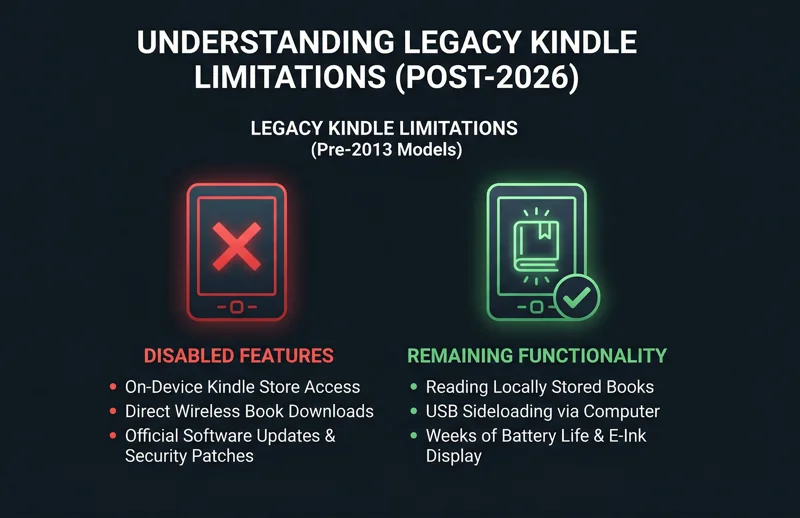
Starting May 20, affected legacy Kindles—specifically models released in 2012 and earlier, such as the beloved Kindle Touch and early Paperwhites—will lose direct access to the Kindle Store. Users will still be able to read whatever is currently stored locally on their devices, but they will not be able to browse, purchase, or download anything new through the official, on-device storefront. Essentially, Amazon is severing the device’s primary lifeline to new content.
People do not hang onto decade-old Kindles simply out of stubborn habit. They keep them because they are robust, purpose-built machines that still work flawlessly. I can pick up my 2012 model, load up a few novels, put it in a drawer for a month, and come back to find it exactly where I left it. That unparalleled reliability is the whole appeal of e-ink technology.
| Feature | Legacy Kindles (Pre-2013) | Modern Kindles (2026) |
|---|---|---|
| Core Function | Displays e-books perfectly | Displays e-books perfectly |
| Page-Turn Buttons | Standard on many models | Removed from current lineup |
| Interface | Minimalist, text-focused | Cluttered with store ads and recommendations |
| Battery Life | Weeks to Months | Weeks to Months |
Upgrading to a new device is also not a clean, straightforward swap. Many of these older models possess hardware features that users vastly prefer. Physical page-turn buttons, for example, have been completely phased out of Amazon’s modern entry-level and mid-tier devices. The user interface on older models was heavily focused on your personal library, whereas newer Kindles are designed to push store recommendations and Kindle Unlimited subscriptions. In many cases, upgrading means you are actively giving up features you love just to maintain basic store functionality. It turns what should be an exciting upgrade into a bitter trade-off.
“When a company forcibly retires perfectly functional hardware by disabling its software, it stops being an upgrade and starts being an ultimatum.”
The Rise of Amazon Ecosystem Restrictions
My very first Kindle was a thoughtful gift from my husband back when we were still dating. I have kept it largely for nostalgia, but practically, I kept it because it never stopped working. Now, alongside thousands of other readers, I am left deciding what to do with a piece of perfectly good, environmentally costly hardware that the manufacturer has deemed obsolete.
A quick scroll through online reading communities and Reddit forums makes it abundantly clear that Amazon’s announcement is not landing well. The conversation is not about which new Kindle to buy; the conversation has shifted drastically toward how to keep these old devices alive, or how to abandon the brand entirely. Users are sharing intensive tutorials on sideloading e-books, advising each other not to factory reset their devices, and even discussing complex jailbreaking methods.
For a very long time, Kindle has never been an open ecosystem, and as consumers, we silently accepted that deal. The trade-off felt reasonable because the Kindle experience was frictionless, the devices were cheap, and there simply were not many viable alternatives on the market. We accepted the walled garden because the garden was comfortable.
The Breaking Point for Loyal Users
Lately, however, those Amazon ecosystem restrictions have become a much harder pill to swallow. Amazon has made changes to how files are handled, pushing users away from standard formats and tightening digital rights management (DRM) restrictions. These subtle but aggressive shifts have steadily eroded user autonomy. The forced retirement of functional hardware is merely the straw that broke the camel’s back.
| Ecosystem Aspect | Amazon Kindle Environment | Open E-Ink Alternatives |
|---|---|---|
| File Support | Proprietary (AZW3, KFX). EPUB requires conversion. | Native support for EPUB, PDF, CBZ, and more. |
| Library Integration | Requires smartphone/PC to send via Libby. | Direct, on-device OverDrive/Libby browsing. |
| App Installation | Strictly prohibited. No third-party reading apps. | Full Google Play Store access (on Android models). |
“The walled garden was tolerable when it protected the user experience, but it has now become a prison designed solely to force new hardware sales.”
Exploring Life Beyond Amazon: Kobo and Boox
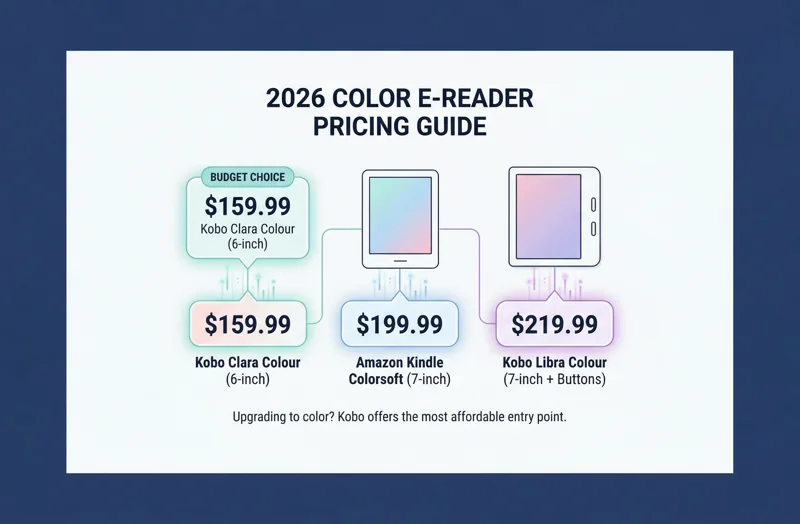
While Amazon has been tightening its grip, the rest of the e-ink hardware space has been getting vastly more interesting and competitive. If you are tired of being dictated to by a trillion-dollar retail giant, 2026 is the perfect year to jump ship.
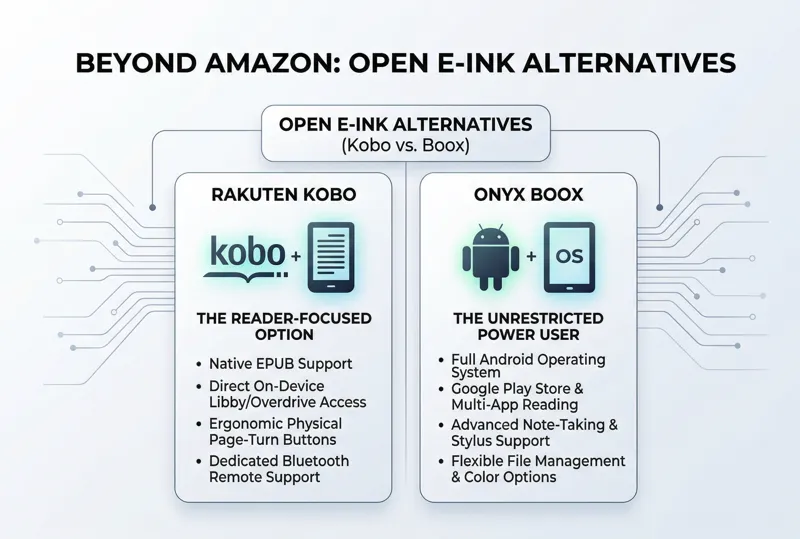
Rakuten Kobo continues to consistently tout reader-focused features that Amazon refuses to implement. Modern Kobo e-reader features include deeply integrated library support through OverDrive, allowing you to borrow local library books directly from the device’s screen without needing a smartphone middleman. Furthermore, Kobo still embraces physical design elements that readers love, including asymmetrical ergonomic grips, physical page-turn buttons, and official bluetooth page-turner remotes. You can learn more about their open philosophy on the official Kobo website.
The Ultimate Freedom: Android E-Ink
If you want to completely escape ecosystem lock-in, the Boox Android e-ink devices offer a revelation in digital reading. Companies like Onyx Boox have essentially created high-end Android tablets that utilize e-ink screens instead of LCDs. Because they run on the Android operating system, you have full access to the Google Play Store. You can download the Kindle app, the Kobo app, Libby, Marvel Unlimited, and any other reading application you desire onto a single device.
| Brand | Target Audience | Key Advantage over Kindle |
|---|---|---|
| Rakuten Kobo | Traditional readers, library users | Native EPUB support, on-device Libby integration, physical buttons. |
| Onyx Boox | Power users, students, manga readers | Open Android OS, multi-app support, advanced note-taking. |
| PocketBook | European market, DRM-free advocates | Massive file format compatibility, no forced ecosystem login. |
These smaller brands are experimenting aggressively with color e-ink displays, advanced stylus note-taking capabilities, and unrestricted file management. No alternative option is 100% perfect, and some lack the hyper-polished sheen of an Amazon product, but they are improving at an astonishing rate. Most importantly, their approach to consumer ownership feels significantly less suffocating.
“When you buy a Boox or a Kobo, you are buying a piece of hardware to use as you see fit. When you buy a Kindle, you are merely renting a storefront display.”
Final Thoughts: Why I’m Moving On
Amazon’s recent policy change echoes a rapidly growing sentiment in the tech community: the Amazon ecosystem simply isn’t as attractive or as consumer-friendly as it used to be. Phasing out devices that people still use every single day fits neatly into a broader corporate pattern of prioritizing recurring revenue over user satisfaction and environmental responsibility.
While a Kindle used to be my default recommendation for anyone looking to get into digital reading—praised for being familiar, reliable, and tied to the world’s largest bookstore—it now feels like a trap. Amazon’s physical hardware may be built to last for a decade, but the software experience and your access to content can be revoked at any time. For the first time in over ten years, that is more than enough reason to make me pack up my digital library and spend my money elsewhere. I won’t be buying another Kindle, and you probably shouldn’t either.
Frequently Asked Questions
What exactly happens to my old Kindle on May 20?
If you own a device released in 2012 or earlier, you will lose the ability to browse, buy, or download new books directly from the Kindle Store on the device itself. The store interface will essentially be disabled.
Will I lose the books I have already downloaded?
No. Any books that are currently downloaded and stored locally on your legacy Kindle’s hard drive will remain accessible and readable. You simply cannot add new official Kindle purchases via the device’s Wi-Fi or 3G connection.
Can I still get new books onto my old Kindle?
Yes, through sideloading. You can purchase books on your computer, download the files, connect your older Kindle to your PC via a USB cable, and manually transfer the files over.
What is sideloading e-books?
Sideloading is the process of manually transferring digital files (like EPUB or MOBI files) from a computer directly to your e-reader using a USB cable, bypassing the official wireless storefronts entirely.
Why are Kobo e-readers considered better for library users?
Unlike Kindle, which requires you to use a secondary device to borrow a book and send it to your e-reader, Kobo devices have OverDrive (Libby) built directly into their software, allowing you to browse and borrow from your local library right on the e-ink screen.
Can I read my purchased Kindle books on an Onyx Boox device?
Yes\! Because Boox devices run on the Android operating system, you can simply download the official Amazon Kindle app from the Google Play Store and log in to access your entire Amazon library.
Is it legal to jailbreak my old Kindle?
In the United States, jailbreaking or rooting a device you legally own (like an e-reader or smartphone) is generally protected under exemptions to the Digital Millennium Copyright Act (DMCA), though it will void any remaining warranties.
Disclaimer: This article is for informational purposes only. The dates and specific device limitations mentioned are based on user reports and public announcements current as of 2026. Methods like sideloading and jailbreaking carry inherent risks and should be researched thoroughly before attempting.