
When reviewing your daily health regimen in 2026, you may not realize that a potential medications dementia risk increase is sitting right inside your medicine cabinet. While certain drugs, such as statins and specific blood pressure treatments, appear to support brain health, emerging observational research suggests that other common pharmaceuticals might do the opposite. Experts are closely examining four specific classes of medications—ranging from over-the-counter allergy pills to prescription mental health aids—to determine how they directly affect long-term cognitive function.
The Hidden Dangers in Your Medicine Cabinet
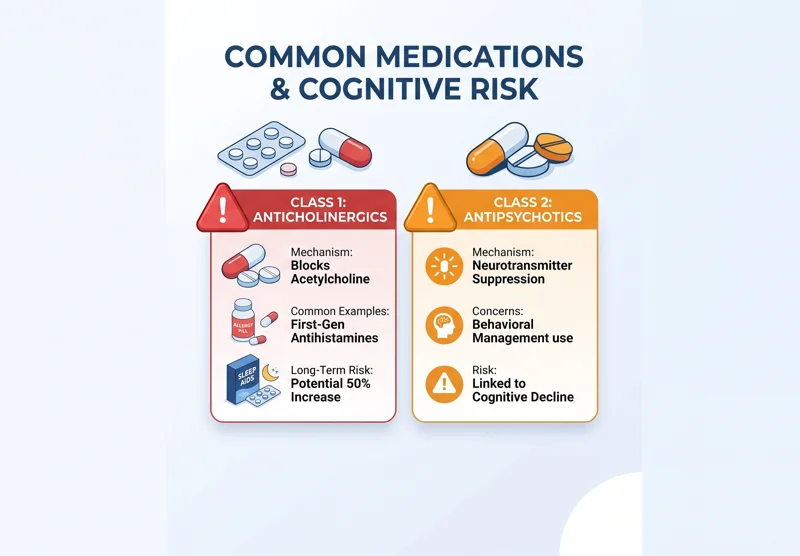
The strongest evidence linking daily medications to cognitive decline points to a class of drugs known as anticholinergics. These medications function by blocking the activity of acetylcholine, a vital neurochemical responsible for memory retention and attention span. Among the most widely used anticholinergics are first-generation antihistamines, commonly utilized to combat seasonal allergies or act as over-the-counter sleep aids.
In the short term, utilizing these drugs can result in typical side effects like drowsiness and temporary memory fog. However, chronic use presents a much more severe picture. Medical professionals note that taking these specific types of medications daily over several years can significantly compromise brain health.
“Long-term, daily reliance on strong anticholinergic medications has been observationally linked to increasing a patient’s dementia risk by roughly 50 percent.”
Experts like Dr. Shelly Gray from the University of Washington School of Pharmacy emphasize that occasional use is unlikely to trigger severe cognitive issues. However, the American Geriatrics Society strongly recommends that older adults avoid these specific antihistamines altogether, as they also elevate the risk of dangerous falls. Fortunately, safer alternatives exist for daily allergy management.
| Medication Type | Anticholinergic Activity | Dementia Risk Association |
|---|---|---|
| First-Generation Antihistamines (e.g., Benadryl) | High | Elevated with long-term, daily use |
| Second-Generation Antihistamines (e.g., Claritin, Zyrtec) | None / Very Low | No significant observed risk |
| Over-the-Counter Sleep Aids (e.g., ZzzQuil) | High | Elevated with long-term, daily use |
The Antipsychotic Dilemma
Antipsychotic drugs represent another category under intense scrutiny. Studies have indicated an association between antipsychotics and an increased risk of cognitive impairment, even in middle-aged users. Furthermore, prescribing these medications to manage behavioral symptoms in patients who already have dementia has been linked to higher mortality rates. While patients prescribed these drugs for severe conditions like schizophrenia should undoubtedly continue their critical treatment, the medical community is actively pushing to reduce unnecessary prescriptions for behavioral management in older adults.
Weighing the Risks vs. Underlying Conditions
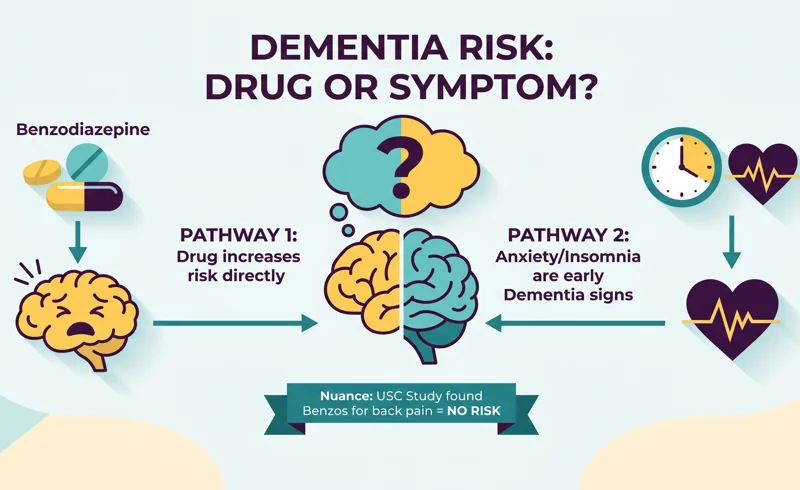
When analyzing psychiatric and sleep medications, researchers frequently encounter a complex “chicken-or-egg” scenario. Do the drugs physically damage the brain, or are the conditions they treat—such as severe anxiety, insomnia, or depression—actually early warning signs of approaching dementia? This is particularly true for benzodiazepines.
Benzodiazepines suppress brain activity to alleviate anxiety and induce sleep. While the American Geriatrics Society advises older adults to avoid them due to risks of delirium and cognitive impairment, determining direct causation is difficult. A notable analysis by Dr. Geoffrey Joyce at the University of Southern California looked at patients prescribed benzodiazepines strictly for back pain—a condition unrelated to cognitive decline. In this isolated group, he found no relationship between the drug and dementia diagnoses, suggesting that the underlying mental health conditions of typical users might be the true driving factor.
| Condition Treated with Benzodiazepines | Link to Early Dementia Symptoms | Observed Cognitive Risk |
|---|---|---|
| Severe Anxiety / Insomnia | High (often early indicators of decline) | High correlation observed |
| Physical Back Pain | None | No relationship found in isolated studies |
“Correlation does not equal causation. In many cases, the very symptoms prompting a prescription are actually the early manifestations of the cognitive disease itself.”
Proton Pump Inhibitors (PPIs) and Brain Health
Proton pump inhibitors (PPIs), commonly used to treat acid reflux and heartburn, present a frustratingly murky picture. Evidence remains highly conflicting regarding their impact on the brain. Some studies indicate a heightened risk of dementia, while robust clinical trials comparing PPIs like pantoprazole against placebos showed no increased risk over three years.
One leading theory regarding the potential harm of PPIs involves nutrient absorption. By suppressing stomach acid, these drugs might cause a deficiency in vitamin B12, a nutrient inherently linked to healthy cognitive function. Because many PPIs are sold over the counter, gathering accurate, long-term data proves incredibly challenging for researchers.
| Drug Class | Common Usage | Proposed Mechanism of Risk |
|---|---|---|
| Proton Pump Inhibitors | Acid Reflux, Heartburn | Potential Vitamin B12 deficiency |
| Antipsychotics | Schizophrenia, Behavioral management | Direct neuro-chemical alterations |
If you have concerns regarding your current prescriptions and brain health, never stop taking a medication without professional guidance. For comprehensive resources on maintaining cognitive health, you can visit the National Institute on Aging for updated scientific literature.
Frequently Asked Questions
Do all allergy medications increase dementia risk?
No. Only first-generation antihistamines with high anticholinergic activity are associated with this risk. Second-generation options like Claritin and Zyrtec are generally considered safer.
How do anticholinergics affect the brain?
They block acetylcholine, a critical neurochemical that the brain requires for memory function and maintaining attention.
Will taking Benadryl once cause memory loss?
Experts state that occasional, once-in-a-while use is highly unlikely to increase your risk for dementia. The danger lies in chronic, daily usage over multiple years.
Are benzodiazepines definitely causing dementia?
The link is currently debated. Recent analyses suggest that the underlying conditions treated by benzodiazepines, such as severe anxiety and insomnia, might actually be the early signs of dementia rather than the drug itself causing it.
Why might heartburn medicine affect my brain?
Some researchers theorize that Proton Pump Inhibitors (PPIs) lower stomach acid to a point where the body struggles to absorb vitamin B12, a deficiency known to cause cognitive impairment.
Should I stop taking my prescribed antipsychotic medication?
Absolutely not. For severe conditions like schizophrenia, the immediate, vital need for treatment vastly outweighs potential long-term cognitive risks. Always consult your doctor before altering your medication schedule.
What should I do if I suffer from chronic insomnia?
Instead of relying on over-the-counter sleep aids with anticholinergic properties, doctors recommend exploring non-pharmacological treatments like Cognitive Behavioral Therapy for Insomnia (C.B.T.-I).
Disclaimer: This article is for informational purposes only and does not constitute medical advice. Always consult with a qualified healthcare provider before starting, stopping, or changing any medication regimen.