The tech landscape is shifting fundamentally today, and the reality is that macOS 27 requires Apple Silicon, as Apple draws down the Intel Mac era. For years, users have wondered when the final cutoff would happen. Now, the answer is officially here.
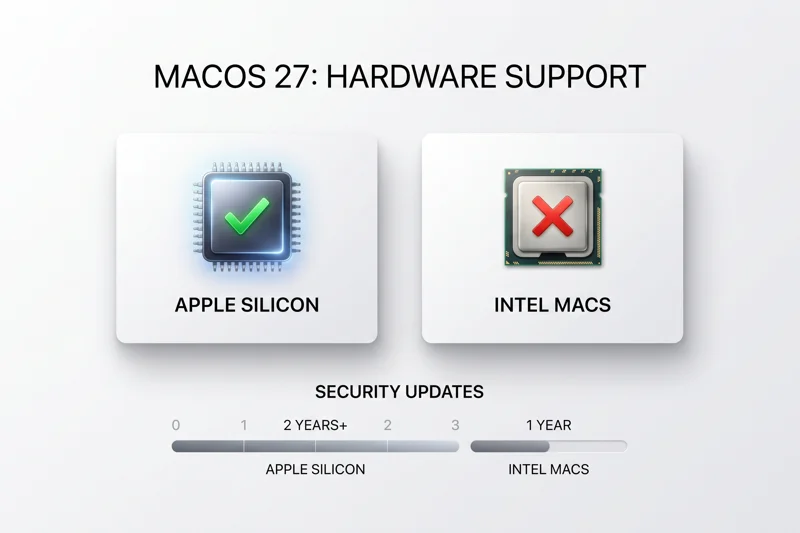
With the announcement of the macOS 27 Golden Gate update, older hardware is finally being left behind. You will officially need an M1 chip or better to run this next generation of the operating system.
The End of an Era: macOS 27 requires Apple Silicon, as Apple draws down the Intel Mac era
This change has been a long time coming. Every new operating system update over the last few years has gradually excluded older models. Now, the hardware transition is absolute and complete.
Many users who purchased late-model machines in 2019 and 2020 could still run recent versions. However, this year’s release firmly ends that grace period for older architectures.
The transition is complete. Apple is permanently closing the chapter on Intel processors, focusing entirely on the unparalleled efficiency of its custom silicon.
Furthermore, third-party utilities that previously helped adventurous owners use unsupported hardware are facing a massive roadblock. Tools like the OpenCore Legacy Patcher will presumably no longer work.
| Mac Hardware Architecture | macOS 27 Golden Gate Support |
|---|---|
| Intel Core Processors (2019-2020) | Not Supported |
| Apple Silicon (M1, M2, M3, M4) | Fully Supported |
Why macOS 27 requires Apple Silicon, as Apple draws down the Intel Mac era and Legacy Code
Apple is actively jettisoning the remaining legacy code from its software. This is very similar to what happened when they ended support for PowerPC machines during the Mac OS X Snow Leopard release.
Without this underlying code, forcing new software versions to run on old machines becomes functionally impossible. The fundamental architecture is simply too different now to maintain dual support.
Transition & New Features When macOS 27 requires Apple Silicon, as Apple draws down the Intel Mac era
If you are currently running older software, you are not entirely abandoned yet. Devices running macOS 26 Tahoe can expect security and Safari patches for about two more years.
Devices stuck on macOS 15 Sequoia will receive one more year of essential updates. This allows users some breathing room to plan their eventual upgrade strategy.
| Current Operating System | Remaining Security Update Timeline |
|---|---|
| macOS 15 Sequoia | Approximately 1 Year |
| macOS 26 Tahoe | Approximately 2 Years |
Rosetta 2 Phasing Out Because macOS 27 requires Apple Silicon, as Apple draws down the Intel Mac era
The Rosetta 2 compatibility layer will still be present in the new software. However, future releases will begin to heavily limit this technology’s overall scope.
While Rosetta 2 remains functional for now, Apple has explicitly stated it will soon be restricted mainly to supporting older games rather than standard applications.
Apple Intelligence is another major factor driving this massive architectural shift. Even some newer chips will miss out on the most advanced AI features showcased at WWDC 2026.
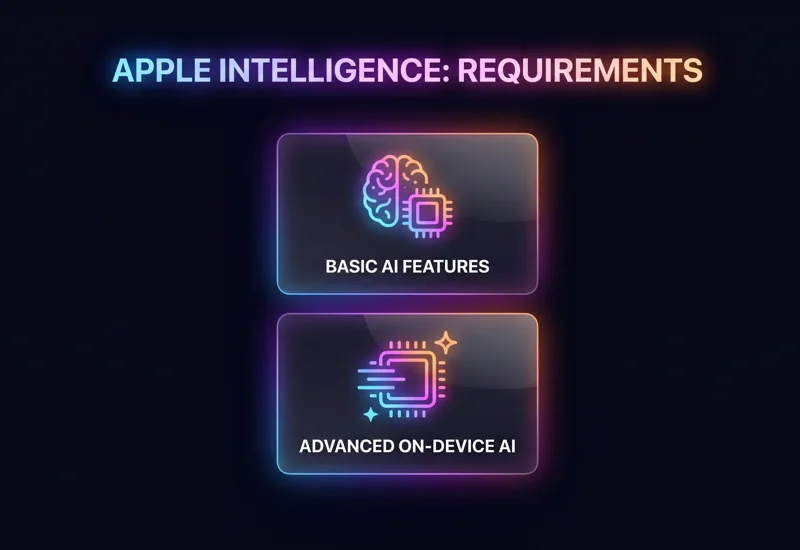
The basic version of Apple Intelligence will work on all M1 devices, including the MacBook Neo with just 8GB of RAM. However, advanced on-device processing has much stricter limits.
| Apple Intelligence Feature Tier | Minimum Hardware Required |
|---|---|
| Basic AI Features | M1 Chip (8GB RAM Minimum) |
| Advanced On-Device AI Models | M3 Chip (12GB RAM Minimum) |
Understanding Advanced Requirements Since macOS 27 requires Apple Silicon, as Apple draws down the Intel Mac era
To unlock the more capable on-device AI models, you will need an M3 Mac or newer. Additionally, this hardware must be equipped with at least 12GB of RAM.
This strict requirement ensures that complex AI tasks run smoothly without draining the system or causing overheating. Hardware efficiency is the primary goal for these advanced workloads.
For those eager to test the waters, the first developer beta is available right now. You can learn more by visiting the official Apple Developer website.
A version aimed at public beta testers will follow in July. The final, stable consumer release will officially land in the fall, marking a new chapter in computing.
Frequently Asked Questions
Will my 2020 Intel MacBook Pro receive the macOS 27 update?
No, macOS 27 completely drops support for all Intel-based Macs. You will need an Apple Silicon chip (M1 or newer) to install it.
Is OpenCore Legacy Patcher going to work with macOS 27?
It is highly unlikely. Apple is removing the core Intel code necessary for the OS to function on older hardware, breaking these workarounds.
Will I still get security updates on my older Mac?
Yes, if you are running macOS 26 Tahoe, you will receive security patches for about two more years.
Does Rosetta 2 still work in macOS 27 Golden Gate?
Yes, it still works, but Apple is beginning to limit its use, focusing mainly on supporting older Intel-coded games.
What are the minimum requirements for the new basic Apple Intelligence features?
The basic Apple Intelligence features will work on any Apple Silicon Mac, starting from the original M1 chip with 8GB of RAM.
How much RAM do I need for the advanced on-device Apple Intelligence models?
You will need an M3 Mac or newer equipped with at least 12GB of RAM to run the advanced on-device AI models.
When will macOS 27 Golden Gate be available to the general public?
The public beta will be available in July 2026, with the final official release landing in the fall of 2026.
Disclaimer: This article is for informational purposes only. Beta software can be unstable and should be installed with caution. Hardware requirements and software features are subject to change prior to the final public release.