A prominent industry Leaker indicates that Nvidia s GeForce RTX 3060 returns this June retaining its 12GB VRAM offering, marking a highly unusual strategy for the tech giant in 2026. Just when the PC gaming community expected to transition fully into the next generation of graphics architectures, widespread memory shortages and severe price hikes have altered the trajectory of the hardware market. With the entry-level RTX 50-series seemingly hitting major roadblocks, Team Green is falling back on a tried-and-true champion to satisfy budget-conscious builders.
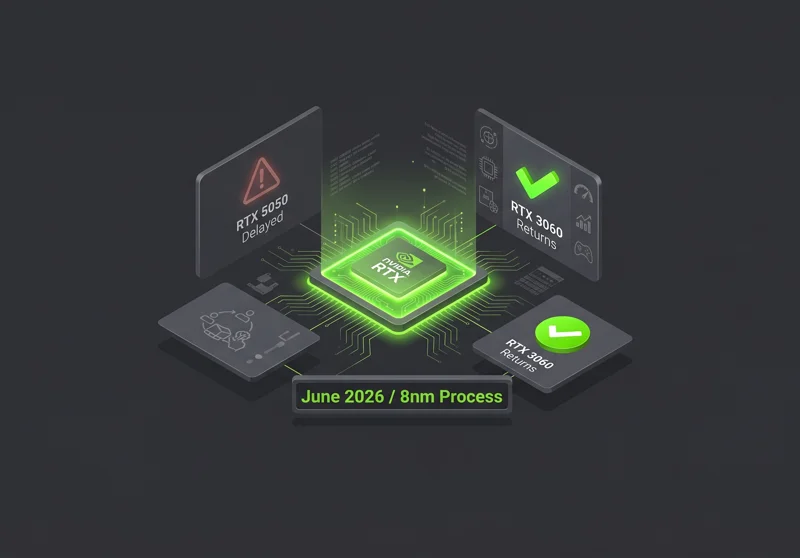
Originally discontinued in August 2024, the GeForce RTX 3060 12GB remains one of the most popular GPUs in the Steam Hardware Survey. Its generous VRAM buffer and capable 1080p performance made it a staple for mainstream gamers. Now, rather than pushing out a compromised, low-VRAM entry-level card for the new generation, Nvidia is allegedly firing up its older production lines. This is not merely a clearance sale of old stock; it is a deliberate resumption of manufacturing.
“The decision to restart RTX 3060 production highlights the intense pressure of the 2026 memory crunch and the undeniable delays facing the entry-level RTX 50-series.”
Bypassing the Blackwell Bottleneck with Samsung 8nm
The global tech market is currently suffering from acute resource limitations, particularly concerning advanced manufacturing nodes and GDDR7 memory required for next-generation hardware. By reviving the RTX 3060, Nvidia performs a brilliant logistical pivot. The company is reportedly utilizing Samsung’s older 8nm Ampere process to fabricate these “new” chips.
This strategic move allows Nvidia to keep supplying the lucrative budget sector without sacrificing the TSMC wafer allocations needed for its high-margin Blackwell AI accelerators and premium gaming GPUs. It is a win-win for supply chain management, ensuring that Add-in Board (AIB) partners have silicon to sell while next-gen entry-level cards are finalized.
| Feature | RTX 3060 (2026 Re-release) | Rumored RTX 5050 |
|---|---|---|
| VRAM Capacity | 12GB GDDR6 | 9GB GDDR7 (Expected) |
| Manufacturing Process | Samsung 8nm | TSMC 4NP |
| Architecture | Ampere | Blackwell |
According to sources like the prominent leaker MEGAsizeGPU, the much-anticipated RTX 5050 9G is indefinitely delayed, creating a massive void in the sub-$300 market. The newly minted batch of RTX 3060s is explicitly designed to fill this gap, with mass production slated for June 2026 and retail availability targeting July. For more technical context on Nvidia’s architecture history, you can visit Nvidia’s official website.
AIB Partners and the Pricing Conundrum
Major AIB partners, including MSI, ASUS, Colorful, and GALAX, are reportedly already prepping their assembly lines for the July launch. Because the cooler designs and PCB layouts for the RTX 3060 have been optimized over the years, these manufacturers can churn out these cards with minimal R&D costs.
“While the hardware is proven, the ultimate success of the resurrected RTX 3060 hinges entirely on its retail price tag.”
However, the real test of this strategy will be the pricing. In 2026, gamers are exhausted by inflated hardware costs. The RTX 3060, while still capable, features an architecture from 2021. It still holds up well at 1080p and 1440p—largely thanks to its 192-bit memory bus and DLSS support—but it cannot compete with modern ray-tracing efficiency or frame generation technologies natively.
| AIB Partner | Expected Models | Cooler Types |
|---|---|---|
| MSI | Ventus & Gaming X | Dual and Triple Fan |
| ASUS | Dual & TUF Gaming | Dual Fan optimized |
| Colorful | BattleAx series | Budget Dual Fan |
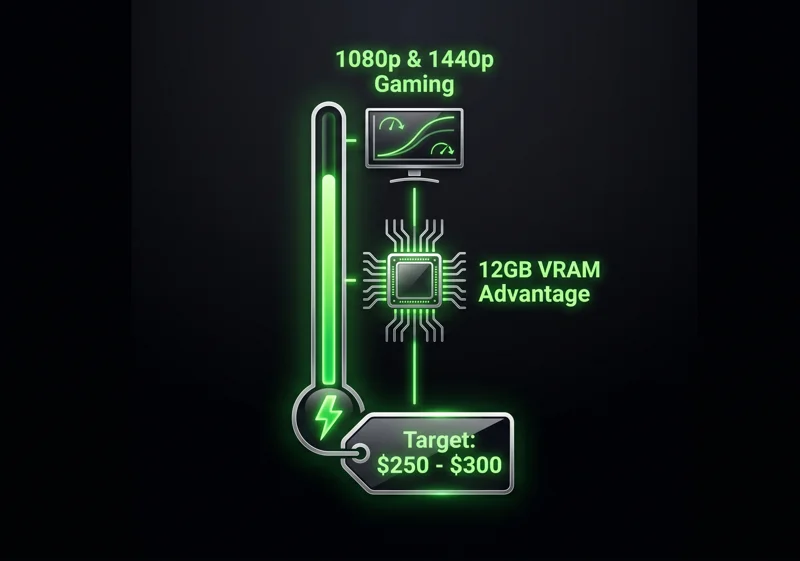
Industry analysts suggest that if Nvidia and its partners can keep the price strictly between the $250 to $300 mark, the card will sell out instantly to budget builders desperate for 12GB of VRAM. Anything higher, and consumers may balk at paying premium prices for last-generation silicon.
Is the RTX 3060 Still Worth It in 2026?
The simple answer is yes, depending on your expectations. The 12GB of GDDR6 memory is the savior of this card. Modern games are incredibly VRAM-hungry, frequently pushing past 8GB even at 1080p resolution. While the RTX 3060 may be estimated at 10–15% slower in raw rasterization than the delayed RTX 5050, that extra memory buffer prevents catastrophic stuttering and texture pop-in found on lower-VRAM alternatives.
“The enduring legacy of the RTX 3060 proves that high VRAM capacity is often more critical for longevity than raw architectural speed.”
| Resolution Target | Expected Performance | VRAM Utilization |
|---|---|---|
| 1080p (High Settings) | Excellent (60+ FPS) | Safe (6GB – 9GB used) |
| 1440p (Medium Settings) | Playable (45-60 FPS) | Nearing Limit (9GB – 11GB used) |
| 4K (Low/Med Settings) | Struggles (Under 30 FPS) | Maxed Out |
Ultimately, Nvidia’s choice to bring back the RTX 3060 12GB is a pragmatic response to a chaotic supply chain. For gamers who have been waiting on the sidelines for an affordable GPU upgrade, June 2026 might finally offer a lifeline—provided the price is right.
Frequently Asked Questions
Why is Nvidia bringing back the RTX 3060 12GB?
Reports indicate it is due to severe delays with the entry-level RTX 50-series (like the RTX 5050) and ongoing memory shortages in the tech market.
Are these refurbished cards or brand new?
They are brand new. Nvidia is reportedly restarting production using Samsung’s 8nm Ampere chips, meaning these are freshly manufactured GPUs.
When will the re-released RTX 3060 be available?
Production is rumored to begin in June 2026, with AIB partners targeting a retail launch in July 2026.
How much will the new RTX 3060 cost?
Official pricing is unconfirmed, but analysts hope it will land in the $250 to $300 range to remain competitive as a budget option.
Why use the older Samsung 8nm process?
Using the older node allows Nvidia to produce budget cards without utilizing the highly constrained TSMC nodes needed for their advanced AI chips and high-end RTX 50-series GPUs.
Is 12GB of VRAM still enough in 2026?
Yes, 12GB is highly capable for 1080p and 1440p gaming, often performing better in VRAM-heavy titles than newer cards limited to 8GB.
Will this card support DLSS 3 Frame Generation?
No. Because it relies on the older Ampere architecture, it only supports DLSS 2 upscaling, not the newer Frame Generation tech found in the 40 and 50 series.
Disclaimer: This article is for informational purposes only. The information provided is based on industry leaks, rumors, and unofficial reports regarding hardware manufacturing. Official product releases, specifications, and pricing are subject to change until officially confirmed by Nvidia.