Lazarus Exploits Windows Zero Day to Gain SYSTEM Access and Deploy Backdoor, marking one of the most sophisticated and alarming cyber espionage campaigns of 2026. The notorious North Korean threat actor, widely known as the Lazarus Group, has recently been attributed to a massive wave of attacks targeting defense, aerospace, and critical infrastructure sectors. This highly coordinated effort leverages a newly patched security flaw to compromise high-value targets globally.
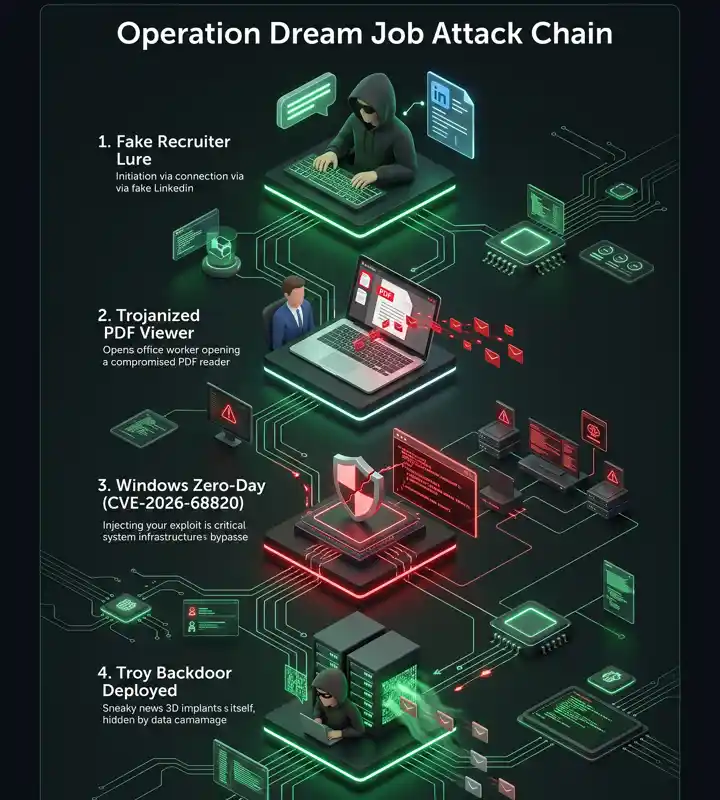
The activity is a direct continuation of Operation Dream Job, a long-running social engineering campaign orchestrated by Pyongyang-backed hackers. By posing as legitimate recruiters on professional networking platforms like LinkedIn, these threat actors build trust with unsuspecting professionals. Eventually, this meticulously crafted deception leads to a devastating technical breach where Lazarus Exploits Windows Zero Day to Gain SYSTEM Access and Deploy Backdoor on the victim’s machine.
Operation Dream Job: How Lazarus Exploits Windows Zero Day to Gain SYSTEM Access and Deploy Backdoor
The core strategy of this campaign revolves around delivering fake but highly compelling job offers. The attackers impersonate prominent organizations, such as Lockheed Martin or Enveil, to tempt industry experts. Once the target engages, the attackers instruct them to open a malicious PDF or install a trojanized PDF viewer.
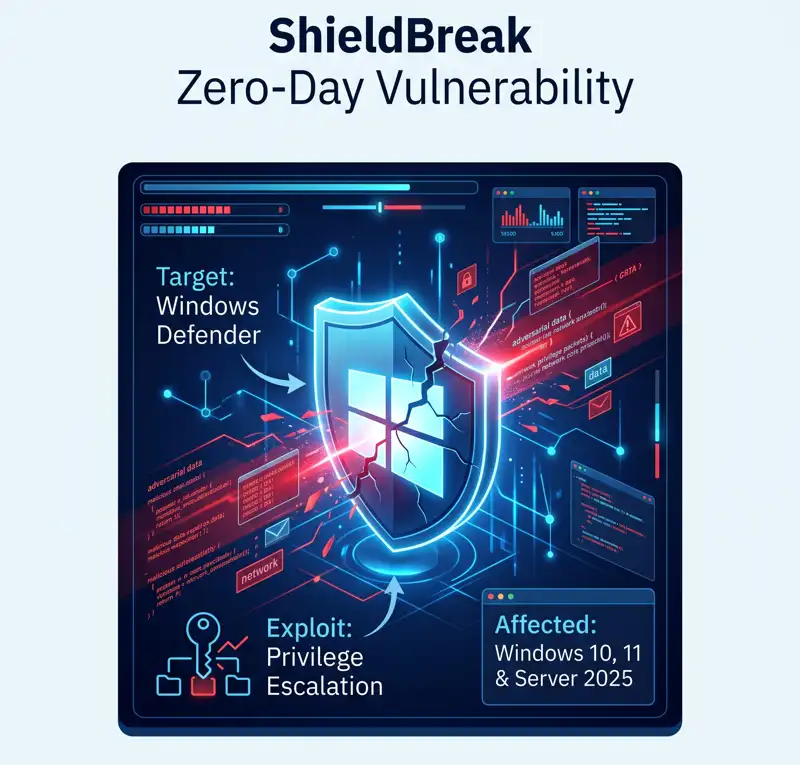
This tactic is the entry point for the entire infection chain. It is precisely through these trojanized applications that Lazarus Exploits Windows Zero Day to Gain SYSTEM Access and Deploy Backdoor, utilizing a vulnerability designated as CVE-2026-68820. This specific flaw affects the Windows Ancillary Function Driver for WinSock (“AFD.sys”) and carries a high CVSS severity score of 7.0.
| Attack Phase | Methodology / Tool Used | Primary Objective |
|---|---|---|
| Social Engineering | Fake LinkedIn Recruiter Profiles | Build trust with aerospace professionals |
| Initial Infection | Trojanized “SecurityPDF” Viewer | Execute hidden malicious payloads |
| Privilege Escalation | CVE-2026-68820 (AFD.sys exploit) | Gain full SYSTEM-level network access |
The Mechanics Behind Why Lazarus Exploits Windows Zero Day to Gain SYSTEM Access and Deploy Backdoor
Once the initial payload is executed via the fake PDF viewer, the attackers trigger a DLL side-loading chain. A malicious DLL stealthily downloads and executes a lightweight downloader dubbed MISTPEN directly into the system’s memory. This memory-only execution helps the malware evade traditional antivirus detection.
“When the website, the download, and the recruiter all appear authentic, staying safe means assuming that trust itself can be counterfeited by state-sponsored actors.”
MISTPEN then communicates with threat actor-controlled infrastructure using legitimate APIs like Microsoft Graph and OneDrive. It is at this critical juncture that Lazarus Exploits Windows Zero Day to Gain SYSTEM Access and Deploy Backdoor, injecting the devastating Troy malware directly into the host to grant the attackers persistent remote control.
Deep Dive: When Lazarus Exploits Windows Zero Day to Gain SYSTEM Access and Deploy Backdoor
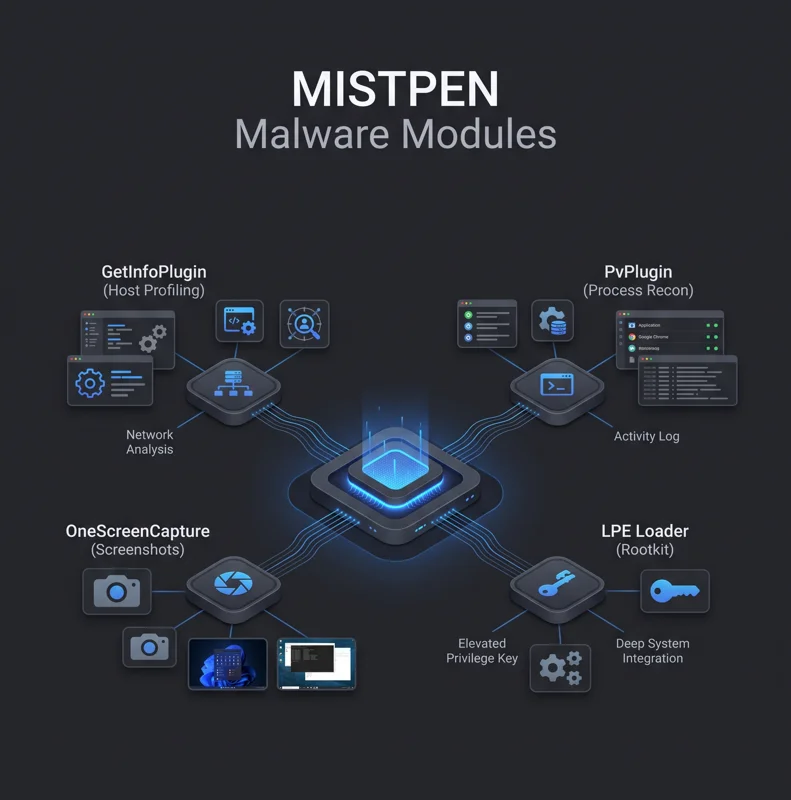
The Troy backdoor is a highly advanced piece of malware. It supports numerous operator commands to facilitate file enumeration, archive exfiltration, interactive shell access, and in-memory DLL injection. To fully understand the scope of the threat, we must examine the specific modules loaded by MISTPEN during the attack.
The use of modular malware allows the North Korean hackers to customize their attack based on the value of the compromised host. Because Lazarus Exploits Windows Zero Day to Gain SYSTEM Access and Deploy Backdoor, these modules run with the highest possible privileges, effectively making them invisible to standard security software.
| MISTPEN Plugin | Functionality |
|---|---|
| GetInfoPlugin | Profiles the host and exfiltrates system data as a string |
| PvPlugin | Collects deep reconnaissance data on running processes |
| OneScreenCapture | Takes hidden screenshots of the current desktop and monitors |
| LPE Loader | Decrypts and runs the FudModule rootkit using ML-KEM |
FudModule 3.1: How Lazarus Exploits Windows Zero Day to Gain SYSTEM Access and Deploy Backdoor
The attack chain employs an updated version of a known kernel-mode rootkit called FudModule 3.1. This rootkit allows the attackers to tamper with a critical Windows security feature called Smart App Control. By disabling this feature, Lazarus Exploits Windows Zero Day to Gain SYSTEM Access and Deploy Backdoor without triggering any alarms.
“The integration of legitimate infrastructure like compromised SharePoint sites makes this campaign exceptionally dangerous, hiding malicious traffic in plain sight.”
To defend against these advanced persistent threats, organizations must ensure their operating systems are fully updated. For the latest patches regarding CVE-2026-68820, administrators should consult the Microsoft Security Update Guide immediately.
The fact that Lazarus Exploits Windows Zero Day to Gain SYSTEM Access and Deploy Backdoor proves that state-sponsored actors are continuously refining their tradecraft. Security teams must adopt zero-trust architectures to combat these highly evasive social engineering and zero-day exploitation tactics.
Frequently Asked Questions
What is Operation Dream Job?
Operation Dream Job is a cyber espionage campaign run by the North Korean Lazarus Group, using fake recruiter profiles to trick professionals into downloading malware.
How exactly does the attack start?
It typically begins with a malicious PDF or a trojanized “SecurityPDF” viewer sent by a fake recruiter on platforms like LinkedIn.
What is the specific vulnerability being exploited?
The attackers are exploiting CVE-2026-68820, a privilege escalation flaw in the Windows Ancillary Function Driver for WinSock (AFD.sys).
What happens when Lazarus Exploits Windows Zero Day to Gain SYSTEM Access and Deploy Backdoor?
The attackers gain full administrative control over the infected machine, allowing them to steal sensitive data, bypass security controls, and deploy the Troy remote access trojan.
What is the MISTPEN downloader?
MISTPEN is a lightweight, in-memory downloader that retrieves additional malicious modules like screen capturers and the FudModule rootkit.
How does the malware bypass Windows Smart App Control?
It uses the FudModule 3.1 kernel-mode rootkit to tamper with system policies in memory, tricking the OS into believing the malicious code is reputable.
Are the attackers using their own servers to host the malware?
To avoid detection, they often hijack legitimate but vulnerable WordPress, SharePoint, and Roundcube servers to use as command-and-control infrastructure.
Disclaimer: This article is for informational purposes only. The cybersecurity landscape is constantly evolving, and readers should consult official vendor advisories to ensure their systems are fully patched and secured against active zero-day threats.