If you have ever chatted with a friend about a specific brand of shoes and suddenly saw an Instagram Reel or TikTok video about them 30 minutes later, you have undoubtedly asked yourself: is your phone listening to you? In 2026, this creepy phenomenon feels more common than ever. People talk about booking a trip to New York or buying a new carrot peeler, and moments later, their social media feeds are flooded with highly specific advertisements. It feels like absolute proof of corporate eavesdropping, but the actual technology behind this hyper-specific targeting is far more complex—and arguably much creepier—than a hidden microphone.
The Eavesdropping Myth Debunked
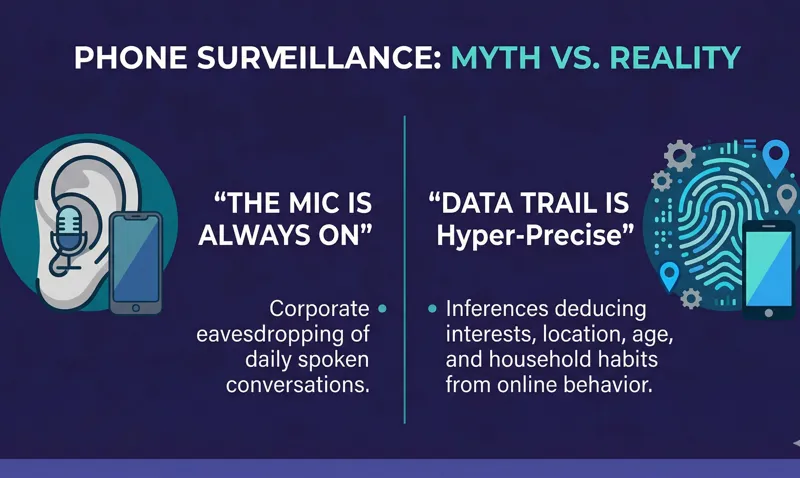
To put it bluntly, no, your smartphone is not secretly recording your daily conversations to sell you products. Ad industry veterans and cybersecurity experts alike confirm that passive audio surveillance for advertising purposes is a logistical impossibility. Processing the audio from billions of smartphones globally, interpreting the context of every spoken sentence, searching for monetizable keywords, and matching them to an ad network in real-time would require an unfathomable amount of computing power.
“Listening to every conversation around the world, and interpreting them and looking for certain words, and then matching them to the ads is impossible.”
David Choffnes, a professor of Computer Science at Northeastern University, actively sought to test this widespread theory. In a massive study analyzing thousands of Android applications, his team looked for any signs that apps were surreptitiously recording audio and transmitting it to third-party servers. The result? They found zero evidence of audio espionage. However, what they did find was a massive, highly sophisticated network of digital footprint data collection that renders actual eavesdropping completely unnecessary.
| The Myth (What It Feels Like) | The Reality (How It Actually Works) |
|---|---|
| The microphone is always on, listening to your verbal conversations. | Algorithms track your clicks, location data, and search history to predict your behavior. |
| Advertisers send audio clips to servers to find keywords. | Data brokers build massive consumer profiles based on demographic inferences. |
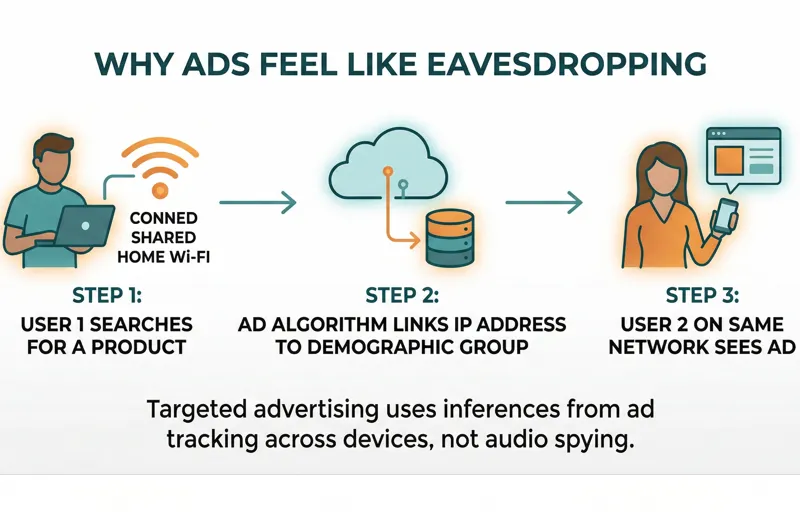
| Your phone heard you talk about a carrot peeler. | Someone on your shared home Wi-Fi searched for a carrot peeler, linking the ad to your IP address. |
The Reality of Predictive Tracking & How to Stop It
If the microphone is off, how do targeted advertising algorithms know exactly what you were discussing? The answer lies in inferences and ad tracking across devices. Advertisers do not need to listen to you because they are already watching your digital behavior with terrifying precision. They know your age, your location, the websites you visit, the apps you linger on, and even the digital habits of the people you live with.
Consider the carrot peeler scenario. You mention to your spouse that you need a better peeler, and later, an ad pops up on your feed. What actually happened is that your spouse likely searched for peelers online. Because your devices share the same IP address and location data, the algorithm groups you into the same household demographic. The ad network simply pushes the peeler ad to every device in that specific household, creating the illusion of a listening phone.
This is driven by massive data broker consumer profiling. These companies collect and sell vast portfolios of inferences about you. While they don’t necessarily know your exact name, they categorize you into thousands of highly specific micro-demographics. Interestingly, these profiles are often filled with errors—assuming you own an Xbox when you don’t, or predicting you want to go on a cruise when you hate the ocean. But when they get it right, it feels like magic.
“They can infer or deduce things about you, like where you live, and your age, and probably what you’re interested in, based on what websites you went to. And that whole combination can get pretty precise.”
To fight back against this surveillance capitalism, consumers must actively manage their smartphone privacy settings. Simple changes, like switching your default browser, can make a massive difference. Browsers like Apple’s Safari proactively block a significant amount of cross-site tracking, making them deeply unpopular with the advertising industry. Furthermore, utilizing tools to delete your data from broker registries is becoming easier, thanks to new consumer protection laws. You can learn more about protecting your digital privacy by visiting the Federal Trade Commission’s official privacy and security guidelines.
| Actionable Step | Privacy Benefit |
|---|---|
| Switch to a Privacy-Focused Browser | Safari and Firefox block third-party cookies and cross-site trackers by default. |
| Submit Data Deletion Requests | Forces major data brokers to scrub your predictive profile from their servers. |
| Limit App Permissions | Stops apps from accessing your location, camera, or Bluetooth when not in use. |
Frequently Asked Questions
Is my phone recording my conversations for ads?
No. Cybersecurity experts and academic studies have repeatedly shown that phones do not secretly record audio to serve you targeted advertisements. The logistics and computing power required make it impossible.
If my phone isn’t listening, why did I get an ad right after talking about a product?
It is usually due to predictive algorithms and shared IP addresses. If a friend or family member on the same Wi-Fi network searched for that product, the algorithm will show the ad to you as well.
What is a data broker?
A data broker is a company that collects information about your digital habits, demographics, and location, packages it into a profile, and sells it to advertisers for targeted marketing.
Can I stop companies from tracking my digital footprint?
While you cannot stop it entirely, you can severely limit it by adjusting your smartphone privacy settings, using privacy-focused browsers, and turning off cross-app tracking.
Does my choice of web browser actually matter?
Yes. Browsers like Safari have built-in tools that block a significant amount of tracking technologies, which makes it harder for advertisers to follow you around the web.
Are the consumer profiles built by data brokers always accurate?
No. Because they are based on algorithms and inferences, these profiles are often filled with incorrect assumptions about your hobbies, income, and lifestyle.
What can lawmakers do about this?
Privacy advocates urge consumers to push lawmakers for stricter data privacy regulations, similar to tools recently rolled out in California, which allow citizens to easily request the mass deletion of their personal data from broker registries.
Disclaimer: This article is for informational purposes only. Technology, privacy laws, and advertising algorithms are subject to rapid change. Always review the privacy policies of the apps and devices you use to ensure your data is protected.