Intel’s Project Firefly Takes Best of Phones To Build Laptops In A Slim Chassis With No Vents, revolutionizing the modern entry-level market in 2026. The computing industry is currently facing a massive shift toward mobile-inspired efficiency. While professional workstations running on Intel Xeon or Core i9 architectures handle heavy processing tasks perfectly, the budget laptop segment has historically suffered from cheap plastics and bulky, noisy fans.
Team Blue intends to change this narrative completely. By borrowing high-volume manufacturing techniques from the mobile and tablet sectors, Intel has crafted a brand-new recipe for success. This unique approach allows manufacturers to source premium materials incredibly cost-effectively.
Why Intel’s Project Firefly Takes Best of Phones To Build Laptops In A Slim Chassis With No Vents
Delivering a truly premium device on a strict budget is notoriously difficult. To solve this engineering hurdle, Intel turned directly to the expansive Chinese tech ecosystem, which produces billions of mobile components annually. This incredible scale dramatically lowers the production cost of high-quality metal shells and compact, vibrant screens.
By integrating these readily available mobile parts, brands can finally assemble beautiful machines for everyday users. It is fascinating to see exactly how Intel’s Project Firefly Takes Best of Phones To Build Laptops In A Slim Chassis With No Vents without sacrificing standard daily performance or durability.
| Component Source | Traditional Budget Laptops | Project Firefly Laptops |
|---|---|---|
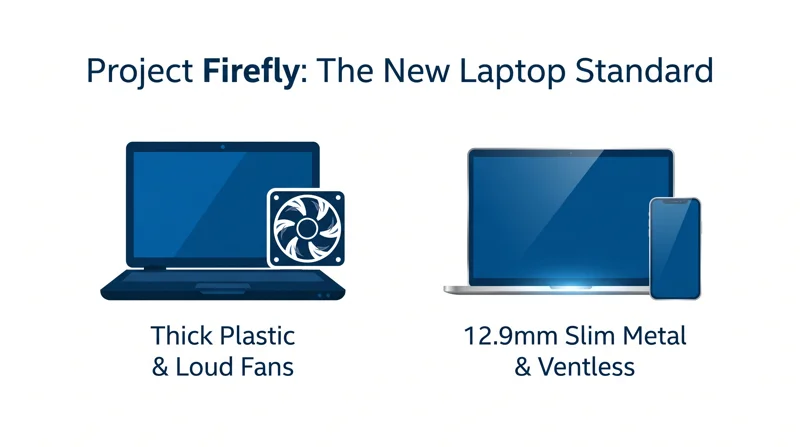
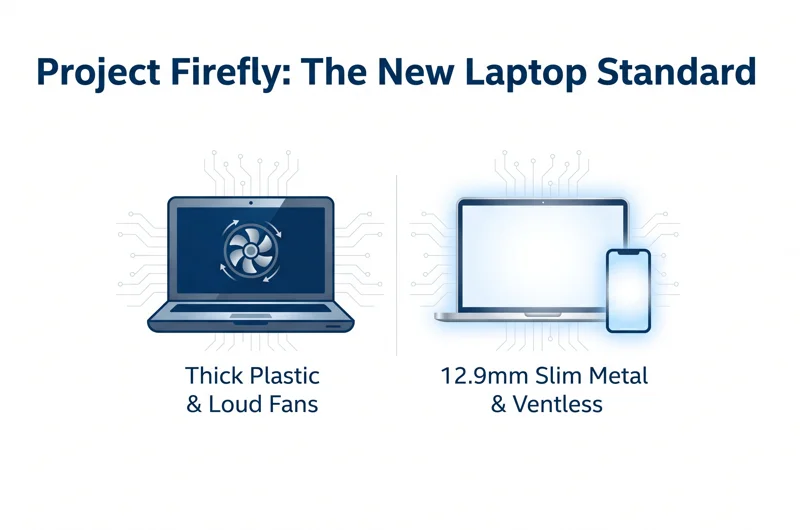
| Chassis Material | Thick, heavy plastics | 12.9mm ultra-slim metal |
| Cooling System | Loud mechanical fans | Completely fanless (No vents) |
| Memory Integration | Standard bulky RAM sticks | Smartphone derived memory chips |
“By leveraging smartphone supply chains, Intel has unlocked a new era of premium, fanless computing for the masses.”
How Intel’s Project Firefly Takes Best of Phones To Build Laptops In A Slim Chassis With No Vents Using Wildcat Lake
The beating heart of this new initiative is the Intel Wildcat Lake processor. This specific chip is essentially a highly optimized, stripped-down version of the successful Panther Lake architecture. Instead of utilizing standard performance clusters, it relies entirely on a clever combination of Performance (P) and Low-Power Efficient (LP-E) cores to handle day-to-day web browsing and office applications.
Because it removes the standard Efficient cores altogether, the Wildcat Lake SoC runs exceptionally cool. This specific thermal efficiency is the exact reason why Intel’s Project Firefly Takes Best of Phones To Build Laptops In A Slim Chassis With No Vents. It simply does not generate enough sustained heat to ever require active mechanical cooling.
| Processor Family | Core Configuration | Target Market |
|---|---|---|
| Intel Core i9 / Xeon | High P-Core & E-Core count | Heavy processing tasks |
| Panther Lake | P, E, and LP-E Cores | Mainstream premium |
| Wildcat Lake | P and LP-E Cores only | Premium budget notebooks 2026 |
You can read more detailed information about these architectural thermal limits directly on Intel’s official processor portal. The drastic reduction in thermal output translates directly to sleeker, highly attractive notebook designs.
Intel’s Project Firefly Takes Best of Phones To Build Laptops In A Slim Chassis With No Vents via the Core Logic Module
Another massive hardware breakthrough in this ecosystem is the Core Logic Module. This specialized motherboard layout tightly integrates the Intel SoC directly with two smartphone-derived memory chips. This high-density integration saves a massive amount of crucial internal chassis space.
Shrinking the motherboard allows manufacturers to pack much larger batteries into the razor-thin 12.9mm profile. It mathematically proves that Intel’s Project Firefly Takes Best of Phones To Build Laptops In A Slim Chassis With No Vents while simultaneously improving overall battery life for the end user.
“The Core Logic Module brilliantly bridges the gap between mobile energy efficiency and desktop functionality, creating the ultimate budget hybrid.”
Major OEM partners are already rapidly adopting this reference design, which is known internally by the codename “Intel Color.” Because Intel’s Project Firefly Takes Best of Phones To Build Laptops In A Slim Chassis With No Vents seamlessly, these external partners can easily customize the core recipe to fit their specific brand aesthetics.
| OEM Partner | Adoption Strategy | Release Window |
|---|---|---|
| Dell & ASUS | Full recipe integration | Mid 2026 |
| Acer | Customized hybrid designs | Late 2026 |
| Colorful | Entry-level lifestyle models | Q3 2026 |
FAQs: Intel’s Project Firefly Takes Best of Phones To Build Laptops In A Slim Chassis With No Vents
What exactly is Intel Project Firefly?
It is an innovative manufacturing initiative that utilizes smartphone and tablet supply chains to build high-quality, ultra-thin, budget-friendly laptops.
Which processor powers these new notebooks?
These new fanless devices run on the Intel Wildcat Lake SoC, a highly efficient chip designed specifically for everyday workloads and premium budget notebooks 2026.
Why do these laptops not need cooling fans?
The Wildcat Lake processor uses only Performance and Low-Power Efficient cores, generating minimal heat and allowing for a completely fanless, ventless slim laptop chassis.
How thin are the Project Firefly laptops?
The standard reference designs, such as the widely showcased “Intel Color,” feature an incredibly slim 12.9mm metal chassis.
What is the Intel Core Logic Module?
It is a compact motherboard design that integrates the Wildcat Lake processor directly with smartphone-derived memory chips to save immense internal space.
Are these laptops meant for 4K video editing?
No, they are strictly designed for everyday tasks like browsing and media consumption. Heavy processing tasks still require higher-end chips like Intel Xeon or Core i9.
Which computing brands are releasing these new laptops?
Major global industry players like Dell, ASUS, Acer, and Colorful are actively developing consumer models based on this innovative manufacturing recipe.
Disclaimer: This article is for informational purposes only. Hardware specifications, product dimensions, and anticipated release dates may vary as Intel and its OEM partners finalize their upcoming commercial designs.