
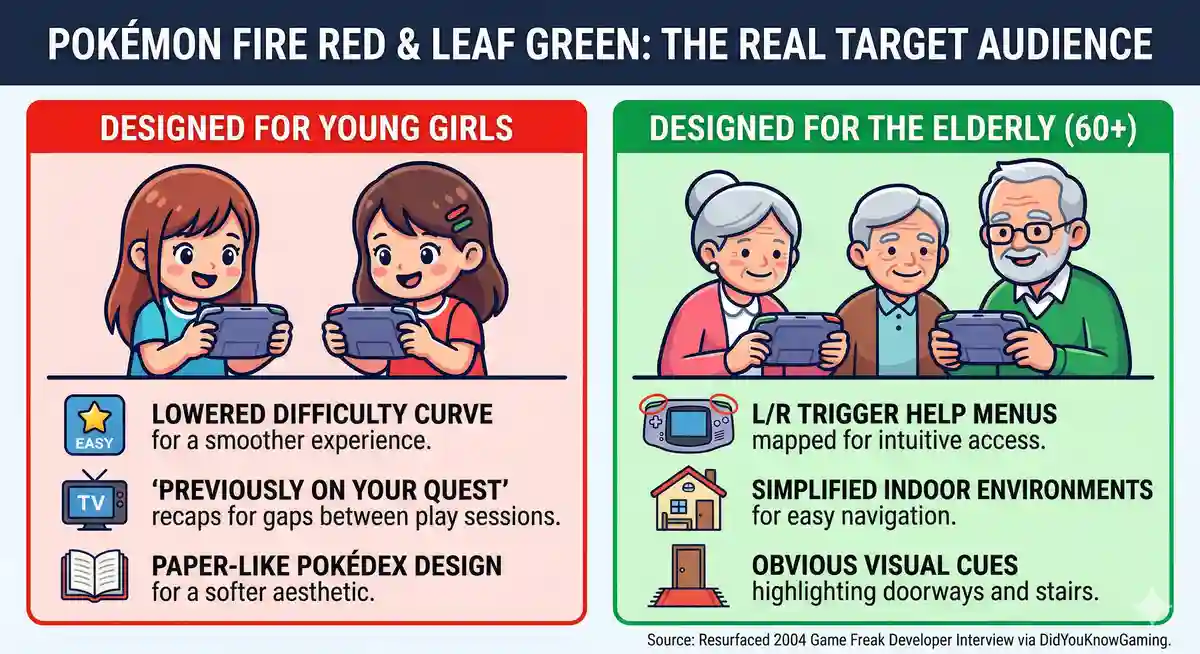
A newly translated 2004 Game Freak developer interview has completely shattered what we thought we knew about the iconic Game Boy Advance titles, Pokémon FireRed and LeafGreen. For decades, fans assumed these titles were strictly nostalgia trips aimed at the original boys who played Pokémon Red and Blue in the late 90s. However, thanks to a recent translation by the YouTube channel DidYouKnowGaming, the gaming community has been thrown a curveball. The primary target audience for these legendary remakes was entirely different: Game Freak deliberately designed them to appeal to young girls and 60-year-old seniors. This revelation not only changes how we view these classic games but also highlights the incredible foresight of director Junichi Masuda and his team regarding accessibility in video game design.
The Resurfaced 2004 Nintendo Dream Interview
Originally published in the March 2004 issue of the Japanese magazine Nintendo Dream, this Game Freak developer interview remained largely inaccessible to the English-speaking world for over two decades. It wasn’t until DidYouKnowGaming took the initiative to translate the extensive conversation that the United States gaming audience learned the truth behind the development of Pokémon FireRed and LeafGreen. The interview featured key figures such as director Junichi Masuda and graphics lead Takao Unno, who openly discussed the drastic pivot in their target demographic.
When the original Pokémon Red and Green (Blue in the US) launched, the player base was overwhelmingly male. As the franchise exploded into a global phenomenon, Game Freak realized that to sustain long-term growth, they needed to bring new players into the fold. The Game Boy Advance era presented the perfect opportunity to hit the reset button, updating the Kanto region not just with better graphics, but with a completely overhauled User Experience (UX) designed specifically for absolute beginners.
“We wanted to create a Pokémon experience that felt welcoming to everyone, breaking the barrier to entry so that even someone’s grandmother could pick up a Game Boy and understand exactly what to do.”
Designing for a New Demographic: Girls and the Elderly
The decision to target girls and the elderly was not merely a marketing slogan; it fundamentally altered the DNA of Pokémon FireRed and LeafGreen. Every mechanic, visual cue, and interface element was scrutinized through the lens of a player who had never held a gaming console before. This accessibility-first approach was revolutionary for 2004, a time when many games were becoming increasingly complex.
Adjusting the Difficulty Curve
One of the most significant changes revealed in the Game Freak developer interview was the adjustment of the game’s difficulty. Masuda explained that the difficulty curve of Pokémon FireRed and LeafGreen was intentionally lowered to appeal to young girls. The developers observed that the intense, grind-heavy nature of the original Game Boy titles might be off-putting to this new demographic. By smoothing out the leveling process and providing clearer guidance on type matchups, the game became a less punishing and more enjoyable adventure.
The “Previously On” Quest Recaps
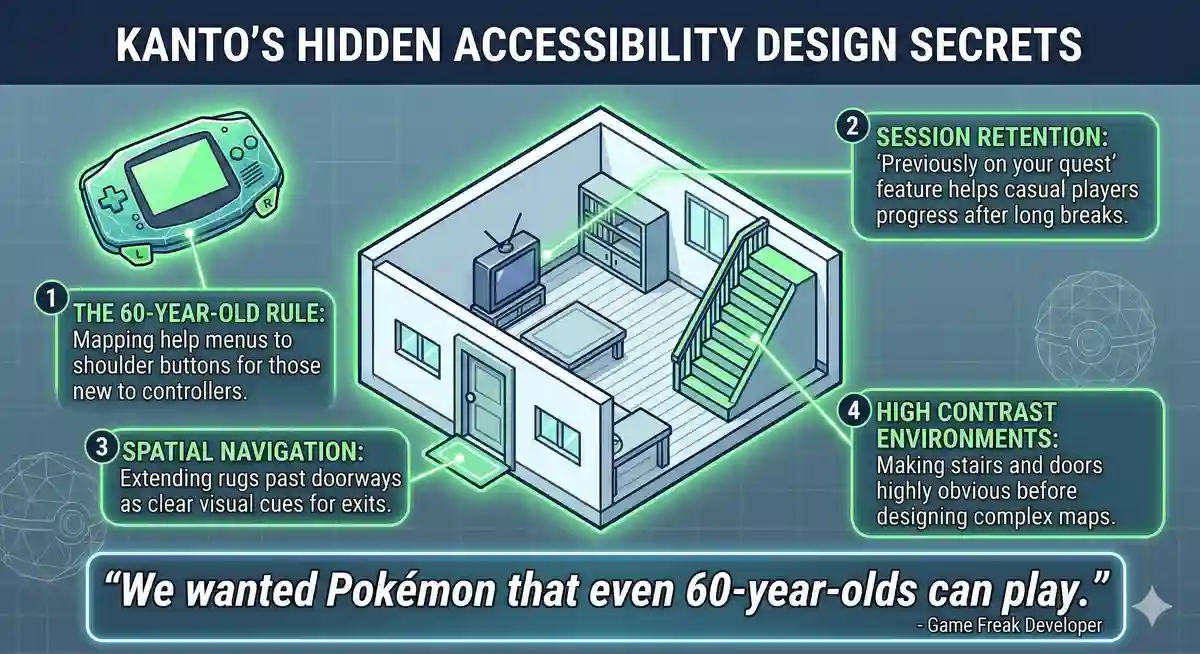
If you’ve played these remakes, you likely remember the black-and-white recap sequence that plays every time you boot up your save file. This feature, reminiscent of television shows, was specifically added because playtesting showed that girls tended to have longer gaps between their gaming sessions compared to boys. The recap served as a gentle memory jogger, ensuring players wouldn’t feel lost if they hadn’t touched the game in a week. It is a brilliant piece of UX design that modern games still utilize today.
| Game Feature | Original Red/Blue (1998 US) | FireRed/LeafGreen (2004 US) | Intended Audience Benefit |
|---|---|---|---|
| Game Difficulty | High, requires heavy grinding | Lowered, smoother progression | Young girls; beginners seeking a relaxed pace |
| Session Resumption | Silent load into the game world | “Previously on your quest” visual recaps | Players with long gaps between play sessions |
| Help Menus | Buried in text or non-existent | Mapped directly to L/R Trigger buttons | The elderly; 60-year-olds unfamiliar with D-pads |
| Environment Design | Basic tilesets, sometimes confusing exits | Obvious rugs, highlighted doors and stairs | Total gaming novices needing clear visual cues |
“Pokémon That Even 60-Year-Olds Can Play”
Perhaps the most charming revelation from the translated text is the internal development slogan used by Game Freak: “Pokémon that even 60-year-olds can play.” The developers recognized that the elderly demographic was an untapped market. However, senior citizens often lacked the muscle memory required to navigate a traditional D-pad and face-button layout. The team observed that when older individuals picked up a Game Boy Advance, their index fingers naturally rested on the L and R shoulder triggers, and they tended to press those first.
To accommodate this, Game Freak mapped an extensive, easy-to-read help menu directly to the L and R buttons. This allowed older players to instantly pull up tutorials on how to catch Pokémon, understand menus, and navigate the world without having to dive into complex pause screens. This level of empathy in game design is a testament to the studio’s dedication to universal accessibility.
“By mapping the help features to the shoulder buttons, we ensured that the very first accidental button press a senior citizen made would immediately provide them with the guidance they needed.”
Visual Cues and Environmental Design
Graphics lead Takao Unno shared his own struggles and triumphs during the development process. According to the interview, Unno was strictly directed to make indoor environments as simple as possible. Before he was allowed to design the sprawling routes and intricate caves of the wider Kanto region, he had to prove he could make a basic house easily navigable.
This mandate led to specific design choices that players can still notice today. For instance, the rugs placed in front of doorways extend slightly past the edges of the room. This wasn’t a graphical glitch; it was a deliberate visual cue designed to draw the player’s eye and clearly indicate “this is an exit.” Stairs were made highly contrasted and obvious. For a seasoned gamer, these details fade into the background, but for a 60-year-old picking up a game for the first time, these visual breadcrumbs are the difference between enjoying an adventure and putting the console down in frustration.
The Legacy of FireRed and LeafGreen in 2026
Fast forward to 2026, and the impact of the Game Freak developer interview resonates louder than ever. To celebrate Pokémon Day this year, Pokémon FireRed and LeafGreen were re-released, making them available to a brand new generation of players on the Nintendo Switch. With future Pokémon Home compatibility promised, these titles remain incredibly relevant. Knowing the history behind their development changes the context of a modern playthrough.
When you revisit LeafGreen on your Switch, you can’t help but appreciate the paper-like design of the Pokédex, a choice specifically made to appeal to a female audience who might appreciate a softer, journal-like aesthetic over a hyper-futuristic computer interface. These Game Boy Advance remakes have always felt like the quintessential beginner-friendly Pokémon games. Now, thanks to the tireless work of preservationists and translators, we know that this approachability was a massive, intentional undertaking.
The philosophy of making games for everyone eventually culminated in titles like Pokémon Let’s Go, Pikachu\! and Let’s Go, Eevee\!, which heavily borrowed from the FireRed and LeafGreen playbook of accessibility. Game Freak’s commitment to expanding their audience is a masterclass in product design that tech developers in the United States and beyond still study today.
| Developer | Role Mentioned | Key Contribution / Insight |
|---|---|---|
| Junichi Masuda | Director | Lowered difficulty, envisioned the “60-year-old” accessibility rule, added quest recaps. |
| Takao Unno | Graphics Lead | Designed obvious visual cues for doorways and stairs to aid spatial navigation for beginners. |
Why This Matters for Modern Game Design
The insights gleaned from this Game Freak developer interview are crucial for modern UX and UI designers. The concept of “universal design” is heavily pushed in today’s tech landscape, but Game Freak was actively practicing it in 2004. By stepping outside their core demographic of young boys, they forced themselves to evaluate their product objectively. If a game is intuitive enough for a 60-year-old and engaging enough for a casual young girl, it will ultimately be a smoother, more polished experience for the hardcore fan as well. For more information on official Pokémon releases, you can visit the official Pokémon website.
As we continue to enjoy these Nintendo Switch Pokémon games, let’s raise a glass to the developers who understood that true innovation isn’t always about better graphics or more complex systems. Sometimes, the most revolutionary thing a developer can do is ensure that everyone, regardless of age or gender, can join in on the fun.
Frequently Asked Questions
What did the 2004 Game Freak developer interview reveal?
The translated interview revealed that Pokémon FireRed and LeafGreen were primarily designed to appeal to young girls and 60-year-old elderly players, rather than the original male fanbase.
Why did Game Freak target girls and the elderly for Pokémon FireRed and LeafGreen?
Game Freak wanted to expand the Pokémon audience beyond young boys. By targeting demographics entirely unfamiliar with gaming, they ensured the remakes would be highly accessible and easy to understand for absolute beginners.
Are Pokémon FireRed and LeafGreen easier than the original games?
Yes. According to director Junichi Masuda, the game’s difficulty curve was intentionally lowered to make the progression smoother and less frustrating for new players, particularly young girls.
How did the game design cater to older players?
The developers noted that older people often press the L and R trigger buttons first when holding a Game Boy Advance. Therefore, they mapped an easy-to-read help menu to those buttons so seniors could instantly access tutorials.
Why did the remakes include a “previously on your quest” recap?
Playtesting showed that girls tended to have longer gaps of time between their gaming sessions. The recaps were added to remind them of what they had accomplished previously so they wouldn’t feel lost.
Who translated the resurfaced Nintendo Dream interview?
The interview was translated by the popular gaming history YouTube channel, DidYouKnowGaming, making it widely accessible to the English-speaking audience for the first time.
Can you play Pokémon FireRed and LeafGreen on the Nintendo Switch in 2026?
Yes, to celebrate Pokémon Day this year, Pokémon FireRed and LeafGreen were re-released and are currently available on the Nintendo Switch, with Pokémon Home compatibility coming in the future.
Disclaimer: This article is for informational purposes only. The information regarding game development, translations, and re-releases is based on available public interviews and news up to the year 2026. Nintendo, Game Freak, and Pokémon are registered trademarks of their respective owners.