The highly anticipated feature is finally here: you can now Change Gmail Address details without losing years of precious data or starting from scratch. For years, Google Account holders who outgrew their embarrassing childhood email handles or underwent a legal name change had only one frustrating option—create a brand-new account, set up complex email forwarding rules, and manually migrate gigabytes of Google Drive files, YouTube subscriptions, and Google Photos. Fast forward to 2026, and Google has fundamentally transformed this experience for users in the United States. This monumental shift in the Google ecosystem means your digital identity can now evolve just as naturally as your real-world identity, all while keeping your historical data locked in safely.
The Era of Digital Flexibility: Why This 2026 Update Matters
To truly understand the impact of this update, we have to look at how intertwined our Google Accounts have become with our daily lives. Your email is no longer just a digital mailbox; it is your passport to the internet. It serves as your primary login for banking apps, social media, and vital government services. Historically, changing your core identifier meant risking access to third-party sites via OAuth (the “Sign in with Google” button). Google recognized this massive pain point. By allowing users to seamlessly transition to a new username, they are prioritizing user convenience and data retention. Whether you are stepping into the professional world and need a cleaner email, or you simply want a refresh, this update eliminates the friction of [Internal Link: digital workspace organization].
When you initiate the process to update your Google Account email, you are not creating a new container for your data; you are simply changing the label on the outside of the box. All your previous emails, contacts, calendar events, and purchased media remain completely untouched. This is a brilliant engineering feat on Google’s part, moving away from rigid, immutable database keys to a more fluid architecture that serves modern user needs.
Detailed Step-by-Step Guide: How to Change Your Username
Google has made the interface for this transition remarkably intuitive. However, given the importance of your primary email, you must execute these steps carefully. Before beginning, ensure you are logged into the correct Google Account and have a stable internet connection. It is also highly recommended to double-check your account recovery options, such as your backup phone number and secondary email, just in case you need to verify your identity during the process.
Here is the exact pathway to make the change:
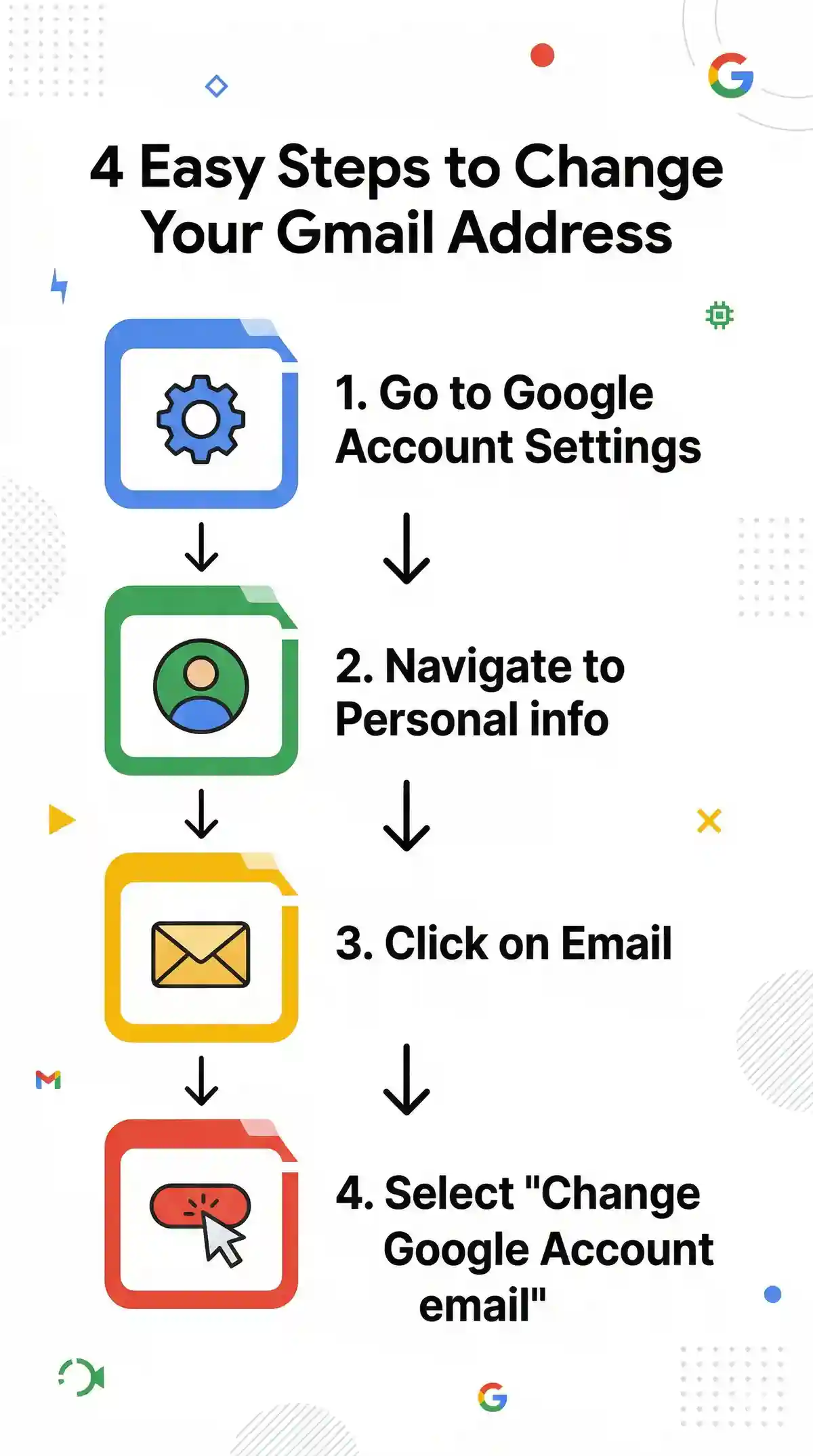
1. Open your preferred web browser and navigate to your Google Account settings.
2. On the left-hand navigation panel, click on the Personal info tab.
3. Scroll down to the “Contact info” section and click on Email.
4. Locate the Google Account email section. If your account is eligible for the rollout, you will see a prominent button labeled “Change Google Account email”.
5. Tap on the button, authenticate with your current password or passkey, and follow the on-screen prompts to check the availability of your desired new username.
6. Once confirmed, finalize the change. The system will update your credentials across all connected Google services.
If you do not see the option yet, do not panic. The feature is rolling out gradually to users in the US, and it may take a few weeks to reach every single account on the server infrastructure. Staying patient is key while Google ensures system stability across billions of active users.
Understanding the Mechanics: What Happens to the Old Address?
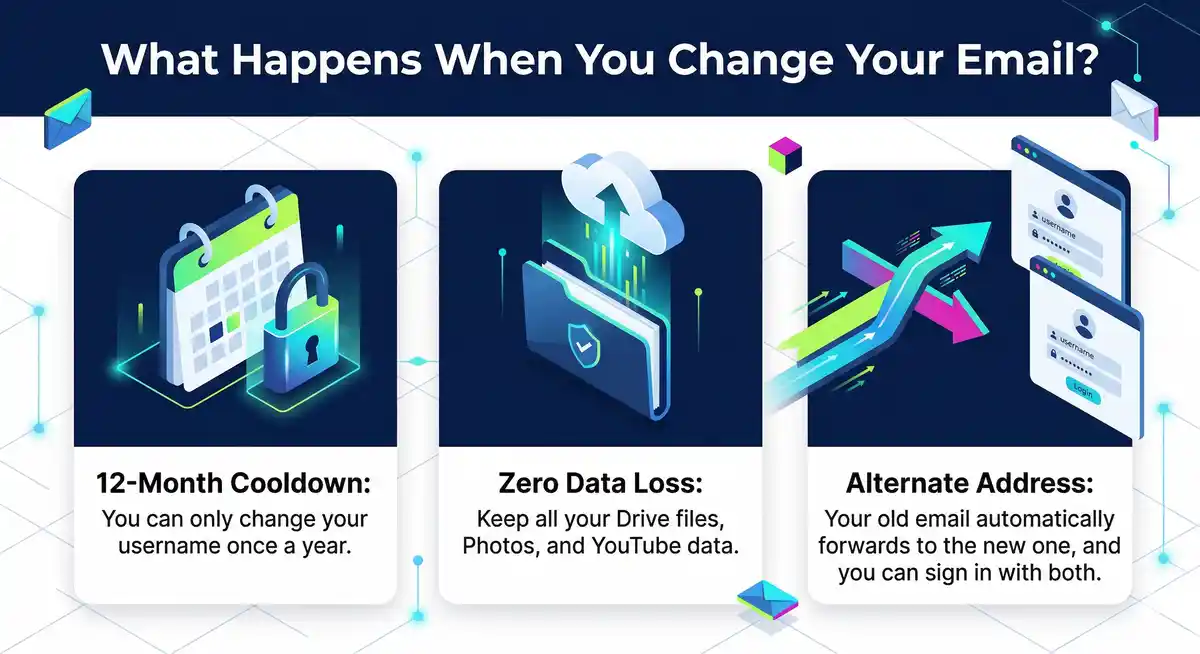
One of the most brilliant aspects of this update is how Google handles your legacy data and communications. The biggest fear users have when changing an email is missing important messages sent to the old address by people who haven’t updated their address books. Google has solved this elegantly. When you apply your new username, your old email address is immediately preserved and automatically converted into an alternate address tied to your exact same account.
This means any message dispatched to your old address will still arrive seamlessly in your new inbox. You will not miss a single notification, invoice, or personal message. Furthermore, users will be able to sign in to Google services using both the old and the new addresses, utilizing the same password. This dual-login capability significantly reduces the anxiety associated with [Internal Link: enhancing account security] and account recovery.
| Feature | Old Method (Creating New Account) | New 2026 Method (Changing Address) |
|---|---|---|
| Data Retention | Manual migration required; high risk of data loss. | 100% data preservation (Drive, Photos, YouTube). |
| Old Emails | Requires complex forwarding rules. | Old address acts as an automatic alternate alias. |
| Sign-in Capability | Must remember multiple login credentials. | Can sign in using either the old or new address. |
| Time Investment | Hours of manual setup and notification. | Takes less than 5 minutes via Account Settings. |
The 12-Month Cooldown Rule: Limitations to Keep in Mind
While the freedom to change your email is liberating, Google has implemented strict guardrails to prevent abuse, spam, and system overload. The most critical limitation is the 12-month cooldown period. Users will be able to change their username only once every 12 months. This is a hard limit. Therefore, you must be absolutely certain about your new username before you click the confirm button. Typos or spontaneous, regretful choices will be locked in for a full year.
Additionally, users will not be able to delete their new email address during that same 12-month period. This policy ensures that the infrastructure remains stable and prevents malicious actors from rapidly cycling through email addresses to evade bans or conduct phishing campaigns. It forces users to treat their digital handles with the seriousness they deserve.
“Your digital identity should reflect your current self, not who you were a decade ago. Google’s new address change feature bridges the gap between digital permanence and personal evolution.”
The Security Implications
From an Authoritativeness and Trustworthiness standpoint, it is essential to discuss the security layer of this change. Whenever you alter core account details, threat actors might see an opportunity. Google mitigates this by requiring strong authentication before the “Change Google Account email” button can even be accessed. However, users should take this opportunity to conduct a comprehensive security audit.
After changing your address, review your connected third-party apps. While Google handles its native ecosystem perfectly, some poorly coded third-party applications that use your email as a primary database key instead of your unique Google ID might require you to update your profile on their end manually. For official guidance on maintaining your account integrity during major updates, you should always consult the Google Account Help Center.
Furthermore, if you use your account for business or freelance work, consider the branding implications. A professional email inspires trust. Taking advantage of this feature to drop a casual handle in favor of a “Firstname.Lastname” format can dramatically improve how clients perceive you, integrating perfectly with [Internal Link: Google Drive storage solutions] where you share professional documents.
Conclusion: A Massive Leap Forward for User Experience
The 2026 rollout of the Gmail address change feature marks the end of an era of frustrating workarounds. By navigating to Personal info > Email, US users can now seamlessly upgrade their digital presence. The careful balance Google has struck—allowing flexibility while maintaining data integrity through alternate addresses and implementing reasonable cooldown periods—demonstrates a deep understanding of modern internet usage. As this feature gradually rolls out across all accounts, millions will finally say goodbye to the legacy usernames that have haunted their resumes and professional correspondence for years.
Frequently Asked Questions (FAQs)
Can I change my Gmail address more than once a year?
No. Google enforces a strict 12-month cooldown period. Once you change your username, you are locked into that choice for a full year to prevent system abuse.
Will I lose my Google Drive files or YouTube channel?
Absolutely not. Your underlying Google Account remains exactly the same. All your data, including Drive files, Google Photos, YouTube subscriptions, and Google Play purchases, are perfectly preserved.
What happens if someone emails my old address?
Google preserves your old email address as an alternate alias for your account. Any emails sent to your previous address will automatically be routed to your new inbox without any manual forwarding setup required.
Can I use my old email address to log in?
Yes. You retain the ability to sign in to all Google services using either your brand-new email address or your legacy email address, using the exact same password.
Is this feature available worldwide?
As of the initial rollout, Google stated this feature is specifically rolling out to users in the United States, following earlier tests in certain Hindi-speaking territories. Global expansion details are pending.
Google is releasing this feature gradually. It is a phased rollout across massive server infrastructures, so it may take time before the button appears in your specific Personal info settings.
Can I delete my new email address if I don’t like it?
No. Google’s policy states that you cannot delete the new email address for the duration of the 12-month period following the change. You must wait until the year concludes before making further core alterations.
Disclaimer: This article is for informational purposes only. Features, rollout schedules, and interface settings are subject to change based on Google’s official updates and regional availability. Always refer to official Google documentation for the most current procedures and security advice.